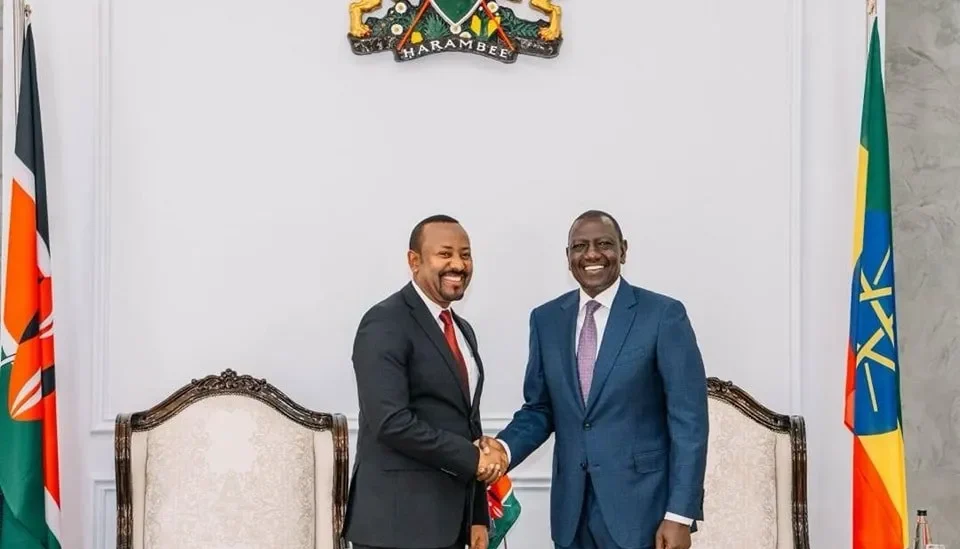
Kenyan President William Ruto has offered to mediate in the long-standing dispute over the Grand Ethiopian Renaissance Dam (Gerd) while also expressing interest in purchasing electricity from Ethiopia. His proposal came during the official inauguration of the dam on September 9, 2025, in Ethiopia’s Benishangul-Gumuz region.
The ceremony, marked by traditional performances and attended by dignitaries, celebrated the completion of one of Africa’s most ambitious infrastructure projects. The dam, located on the Blue Nile, has been a point of tension between Ethiopia, Egypt, and Sudan, as downstream countries worry about its impact on water flows.
President Ruto described the Gerd as a continental asset whose benefits could extend beyond Ethiopia. He emphasized that Kenya is prepared to facilitate dialogue between the parties involved in the dispute. His government is also seeking a power purchase agreement that would allow Kenya to import electricity generated by the dam to strengthen its national grid.
Ethiopia has long maintained that the project is essential for its development and energy security. The Gerd is expected to generate more than 6,000 megawatts of electricity, transforming Ethiopia into a major energy exporter in the region. Egypt and Sudan, however, have expressed concerns that the dam could reduce their water supply from the Nile, on which millions of people depend.
By offering to bridge the diplomatic divide, Ruto is positioning Kenya as a neutral actor capable of bringing together competing interests. His move also reflects Kenya’s strategic interest in securing cheaper and more sustainable energy sources to support its growing economy.
The inauguration of the Gerd represents a milestone not only for Ethiopia but for the broader vision of regional integration. Whether Ruto’s initiative can ease the stalemate remains uncertain, but his call underscores the growing recognition that shared resources require cooperative solutions.