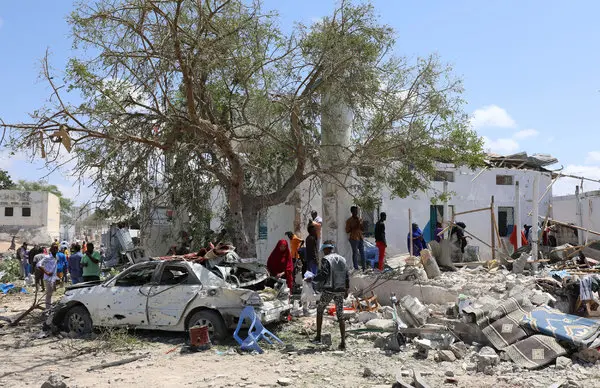
On Tuesday, July 9, 2025, a suicide bomber attempted to carry out an attack on Somalia’s Jaalle Siyaad Military Academy in Mogadishu. The attacker was intercepted at the gate before reaching the main compound, but the explosion injured at least two people, including a Somali soldier. Somali security officials say the bomber was targeting foreign military personnel training Somali troops at the facility. The militant group al-Shabab quickly claimed responsibility, describing the attack as part of its ongoing campaign against what it calls “foreign invaders” and “apostate forces.”
The Jaalle Siyaad Academy is one of the most prominent military training sites in Somalia and regularly hosts personnel from the European Union, Turkey, and the United States. While no foreign nationals were harmed in the blast, the symbolism of the target was not lost on analysts. The facility has become a linchpin of Somalia’s national army reform efforts, and any attempt to undermine it carries political weight. According to sources within the academy, a joint session involving EU and Turkish trainers had concluded just hours before the attack.
This incident comes at a critical juncture in Somalia’s ongoing security transition. President Hassan Sheikh Mohamud has recently intensified the national counter-insurgency campaign against al-Shabab, announcing new timelines for defeating the group and extending military operations into previously inaccessible regions. The attack appears to have been calibrated not just for damage, but for message: a statement by al-Shabab that Somalia’s security sector remains penetrable, even with extensive international backing. As security analyst Ahmed Nur explained, “This is a symbolic strike. Al-Shabab is reminding both the Somali government and its partners that no site is completely secure. It’s an attempt to stall momentum and challenge the narrative of progress.”
Al-Shabab has been engaged in violent insurgency since 2006 and remains one of the most persistent security threats in the Horn of Africa. Although the group has lost significant territory, it retains the capacity to carry out asymmetric attacks. This includes urban bombings, rural ambushes, and coordinated strikes on government and AU facilities. The group has also adapted to counterinsurgency tactics by embedding operatives in local communities and expanding its financial networks across East Africa. In the past two months alone, the group has staged deadly assaults in Lower Shabelle and Beledweyne, killing dozens of security personnel and civilians.
The latest suicide bombing also has diplomatic and strategic implications. International actors responded swiftly. The United Nations Assistance Mission in Somalia condemned the attack, describing it as a “cowardly attempt to derail Somalia’s progress.” Turkey’s foreign ministry issued a statement reaffirming its commitment to Somalia’s stabilization, though it declined to confirm whether its trainers were present during the attack. The European Union’s ambassador to Somalia, Tiina Intelmann, publicly declared that “such attacks will not deter us from supporting long-term peace and stability.”
Somali authorities responded by locking down surrounding areas and deploying additional military police in Mogadishu’s Hamar Jajab district. The government has since pledged a full investigation into the incident, vowing to track down anyone involved in planning or facilitating the bombing.
The Ministry of Defence issued a statement describing the attack as “a failed attempt to spread fear,” and reiterated that Somalia’s fight against terrorism will continue with greater urgency.
Although the bomber did not achieve his full objective, the event serves as a stark reminder of the fragile security situation in Mogadishu and across Somalia. It highlights the enduring capabilities of al-Shabab, the complex challenges facing Somalia’s security sector, and the high stakes involved in rebuilding trust in national institutions. As international partners deepen their involvement in Somalia’s military training and governance reform, events like this underline the dual nature of progress: gains on the ground must be matched by vigilance, coordination, and resilience.