

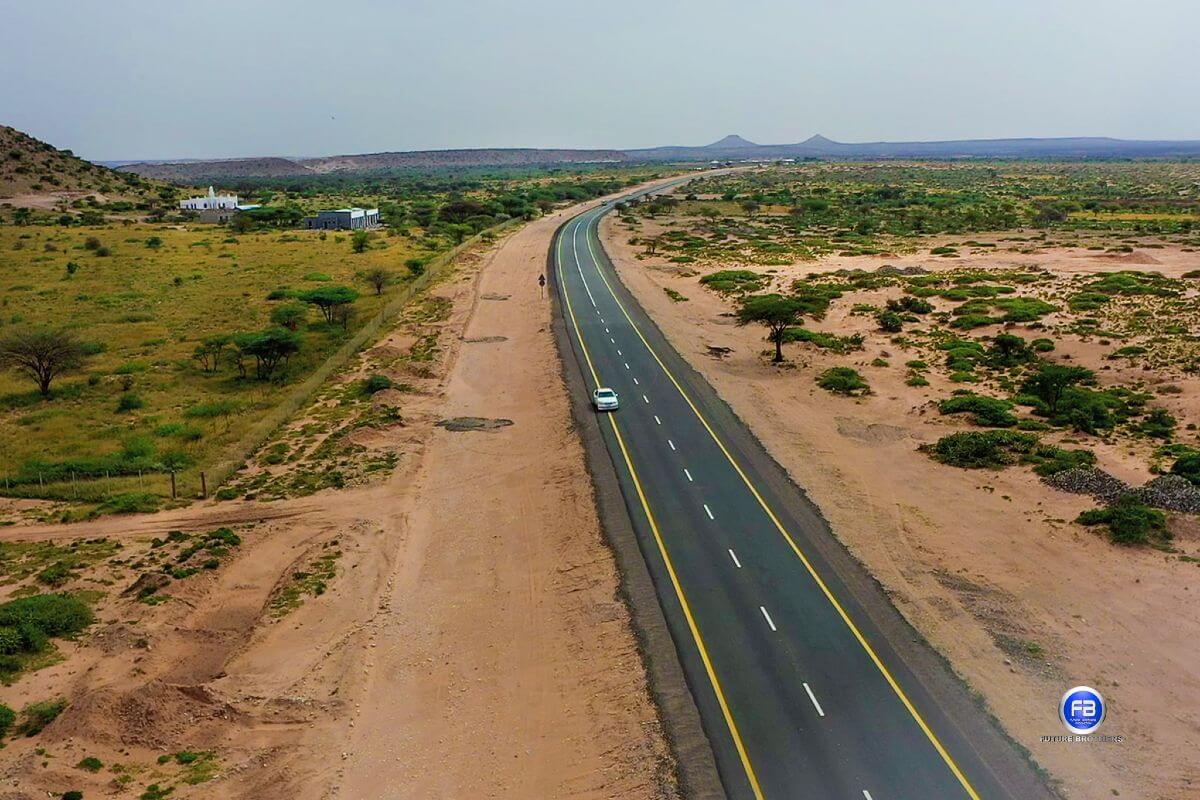
On June 24, 2025, news broke of a landmark $3 billion railway deal between the United Arab Emirates (UAE), Somaliland, and Ethiopia, a project designed to connect Berbera Port to Ethiopia’s landlocked heartland.
Heralded as an economic breakthrough, the agreement aims to transform regional trade routes, boost growth, and deepen geopolitical alliances. Yet, it also risks inflaming long-standing tensions around sovereignty, recognition, and regional military dynamics.
As the Horn of Africa stands at a strategic crossroads, the Berbera Corridor raises a vital question: will this infrastructure megaproject unite the region through mutual benefit,or fracture it further under competing interests?
Ethiopia’s Strategic Imperative Sea Access or Bust
Since Eritrea’s independence in 1993, Ethiopia has lacked direct access to the sea, rendering it dependent on Djibouti for over 95% of its international trade. This monopoly comes at a high cost, both economic and strategic.
Prime Minister Abiy Ahmed has repeatedly called sea access an “existential issue,” underscoring Addis Ababa’s pursuit of port diversification. While the Chinese-built Addis-Djibouti Railway has improved logistics, challenges persist,high tariffs, power shortages, and limited capacity constrain its promise.
The Berbera Corridor could significantly ease this pressure. Even diverting 15% of Ethiopia’s cargo away from Djibouti could reduce transit costs, lower inflation, and boost export competitiveness in key sectors like coffee and floriculture.
But the corridor is about more than goods and rails. It aligns with Ethiopia’s “Two Waters” strategy—seeking leverage over both the Nile and the Red Sea, positioning itself as a resilient and influential power in the region.
Somaliland’s Calculated Leap Toward Recognition
For Somaliland, a self-declared republic that has maintained de facto independence since 1991-Berbera is more than a port; it is the centerpiece of a long-term state-building project.
Over the past decade, Berbera has undergone substantial upgrades under a 30-year concession with Dubai’s DP World. Ethiopia owns a 19% stake, and the port now handles increasingly diversified traffic. Expansion plans aim to push annual capacity to 2 million TEUs, with ripple effects across logistics, job creation, and foreign investment.
Crucially, the railway agreement includes a clause committing to an “in-depth assessment” of Ethiopia’s recognition of Somaliland. For Hargeisa, that’s more than symbolism, it’s momentum. Every infrastructure milestone strengthens its case for legitimacy on the world stage, even as formal recognition remains elusive.
UAE Maritime Ambition Meets African Diplomacy
The UAE’s involvement is neither new nor neutral. Since losing strategic assets in Djibouti to China, Abu Dhabi has doubled down on its Red Sea ambitions.
Through port deals, military bases, and development aid, it has built a layered presence from Assab to Berbera. The Berbera Corridor reinforces this trajectory, solidifying UAE alignment with Ethiopia and Somaliland, while countering Turkish and Qatari influence in Mogadishu.
The investment also serves security objectives. Situated near the Bab el-Mandeb Strait a maritime chokepoint through which 12% of global trade passes the corridor underpins effort to combat piracy, project naval power, and safeguard trade routes increasingly threatened by instability in Yemen and the broader Gulf region.
Economic Boon or Regional Disruption?
For Ethiopia:The railway opens up options. Moving even a fraction of its trade to Berbera could cut transport costs, stimulate industrial parks, and improve access to global markets.
For Somaliland: It could spur employment, reduce youth migration, and create an industrial backbone helping move the economy beyond livestock exports.
For Djibouti: The corridor is a direct threat. A significant loss of Ethiopian cargo could dent its GDP, forcing it to diversify its economy or lower port tariffs to remain competitive. Already reliant on rent income and foreign military bases, Djibouti may turn to China or other partners to hedge against marginalization.
But the corridor’s success isn’t guaranteed. Cost overruns, weak financing, and regional instability could delay or derail implementation. And behind every economic gain lurk deep-seated political risks.
Security Risks and Diplomatic Fallout
The corridor isn’t just economic, it’s deeply political.
A controversial provision grants Ethiopia a 19–20 km stretch of Somaliland’s coastline for a naval base. For Addis Ababa, this is a strategic breakthrough, reviving dormant maritime ambitions. Russia is reportedly offering support to develop this naval capability.
But Somalia, which views Somaliland as an internal region, has reacted with fury. Mogadishu declared the agreement illegal, recalled its ambassador from Ethiopia, and threatened to expel Ethiopian troops stationed in Somalia. The fallout could jeopardize joint counterterrorism efforts against al-Shabaab and weaken regional security coordination.
Moreover, Ethiopia’s naval push could spur an arms race. Egypt, Eritrea, and Gulf powers may respond with heightened naval deployments, raising the risk of maritime standoffs.
The Bigger Picture Infrastructure as a Double-Edged Sword
Infrastructure in the Horn of Africa is rarely neutral. It shapes borders, sovereignty claims, and power balances.
The Berbera Corridor offers hope: enhanced connectivity, diversified trade, and the seeds of regional economic integration under frameworks like AfCFTA. But it also represents a high-stakes gamble, playing out in one of the most volatile regions on the planet.
Its future depends not only on bricks, rails, and port cranes but on diplomacy, shared security frameworks, and a collective commitment to regional stability.
Conclusion Promise and Peril at the Crossroads
A railway project may seem straightforward but in the Horn of Africa, it is anything but.
The Berbera Corridor has the potential to redefine trade patterns, elevate Somaliland’s profile, and give Ethiopia long-sought strategic depth. It also threatens to unravel fragile political ties, escalate security risks, and harden divisions.
In the coming years, its success or failure may serve as a litmus test for whether the region can move beyond zero-sum rivalries and build an architecture of mutual benefit in a contested space.
Because in the Horn of Africa, no track is ever just a track, it’s a pathway to power.