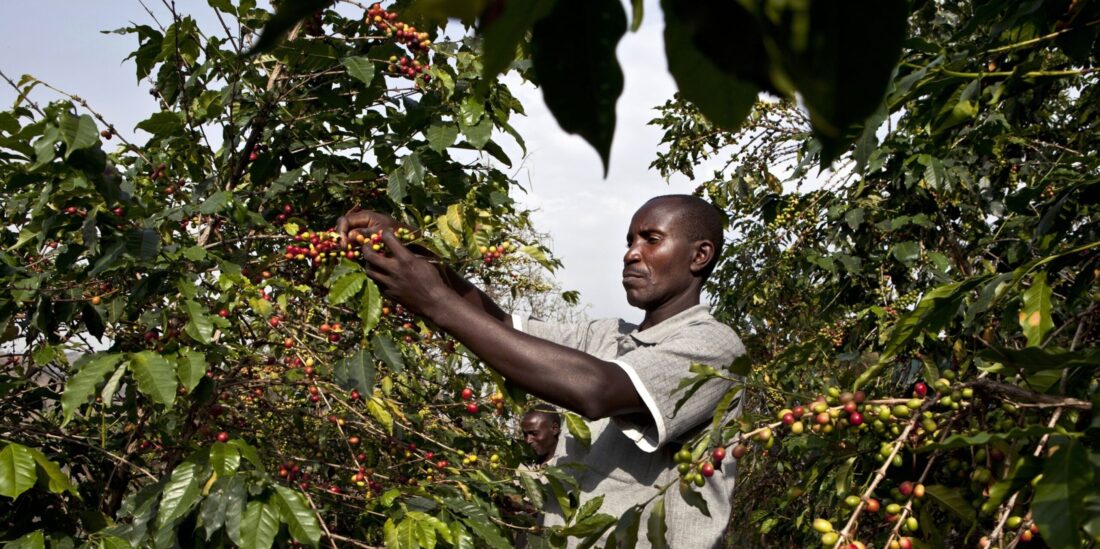
In the heart of East Africa, where misty highlands meet bustling export terminals, a quiet shift is unfolding. Uganda, once overshadowed by its neighbor’s coffee dominance, has edged ahead. It’s not just about beans and bags,it’s about national identity, economic resilience, and the evolving map of African soft power.
For decades, Ethiopia stood tall as the continent’s uncontested coffee titan. With heirloom varieties and a global reputation for flavor complexity, it wasn’t just Africa’s largest coffee exporter it was coffee’s spiritual home.
But the latest data tells a different story.
Uganda has now surpassed Ethiopia in annual coffee exports, marking a significant pivot in Africa’s agricultural and economic landscape. As Kampala celebrates its new status and Addis Ababa recalibrates its strategy, this development reveals more than a shift in commodity rankings,it exposes a quiet rivalry between two of East Africa’s most ambitious nations.
Today, we trace how Uganda managed this ascent, why Ethiopia’s volumes have stumbled, and what this means for the broader geopolitical dance between these two coffee-growing giants.
THE RISE OF UGANDA STRATEGY, STABILITY, AND STAMINA
Uganda’s surge is no accident. It stems from over a decade of targeted investment in agronomy, farmer training, and post-harvest handling. Supported by public-private partnerships, Kampala restructured its coffee sector with a laser focus on quality and volume. Robusta, its mainstay, received a productivity overhaul, while Arabica regions in the west and east expanded their output through improved seedlings and irrigation schemes.
The Uganda Coffee Development Authority (UCDA) played a central role,offering extension services, stabilizing farmgate prices, and opening access to global buyers. The result? A sustained increase in both yield and reliability, giving exporters the predictability that buyers crave.
Unlike Ethiopia’s heavily fragmented market where smallholders dominate, and state controls still complicate trade Uganda streamlined its export pathways. It minimized bottlenecks, incentivized bulk shipments, and kept its currency stable enough to remain globally competitive.
Meanwhile, its political stability in key producing regions provided fertile ground for long-term agricultural planning a stark contrast to parts of northern and western Ethiopia, where conflict and displacement have disrupted coffee flows.
ETHIOPIA’S COFFEE CONUNDRUM
Ethiopia’s coffee story remains iconic but recently, it has also become more uncertain. The birthplace of Arabica is facing hurdles that go beyond climate.
Years of political tension, intermittent violence, and overlapping institutional reforms have strained its coffee value chain. Exporters complain of red tape. Farmers face rising input costs. And while
the government has promoted quality branding through initiatives like “Coffee from Ethiopia” it has not translated into export dominance.
A parallel liberalization effort in the economy has brought both hope and hardship. The National Bank’s forex reforms, while intended to modernize trade, have complicated transactions for some exporters. A foreign exchange shortage adds further pressure, making it harder for stakeholders to import key materials from fertilizers to processing equipment.
Critically, logistics remain Ethiopia’s Achilles heel. Landlocked and reliant on the congested Djibouti corridor, the country pays more to move its beans. In contrast, Uganda’s access to Mombasa and its recent inland port upgrades have slashed turnaround times for outbound cargo.
BEYOND BEANS A GEOPOLITICAL UNDERTONE
This coffee competition is more than economic. It hints at a broader regional undercurrent one where soft power is brewed not just through diplomacy, but through dominance in key sectors.
For Ethiopia, coffee has always been part of its international image. It’s not merely an export; it’s a symbol of heritage. Losing the top spot dents not just numbers but national pride.
For Uganda, overtaking Ethiopia is a milestone. It’s a sign that its quieter model of incremental reform and regional stability can yield global results. With other sectors like tourism, horticulture, and gold exports also on the rise, Uganda is signaling that its moment on the continental stage is no longer in the making. It’s already here.
There’s also competition on the trade diplomacy front. Ethiopia, by hosting the African Union and aligning with BRICS like forums, seeks to shape policy from the center. Uganda, by contrast, is becoming a go-to agricultural model for donor-funded initiatives, South-South partnerships, and climate-smart adaptation pilots.
And as both countries deepen ties with global partners China, Turkey, the Gulf states the ability to deliver reliable exports becomes not just economic leverage, but diplomatic currency.
LOOKING AHEAD IS THIS PERMANENT?
Uganda’s lead in coffee exports is real but whether it becomes a long-term shift or a temporary spike remains to be seen.
Ethiopia is not standing still. It is working to digitize its supply chains, expand specialty markets, and rebuild logistics through diversified port access including talks with Somaliland. If these succeed, its high value Arabica could reassert itself.
But Kampala’s momentum is not easily dismissed. It has institutional clarity, productive farms, and a consistent export model. Unless Addis Ababa delivers quick and deep structural fixes, the balance could continue to tip Uganda’s way.
So has Uganda truly overtaken Ethiopia?
Yes, for now. And perhaps not just in numbers. It has also demonstrated that pragmatic governance, focused investment, and agricultural professionalism can rewrite long-held narratives.
But in East Africa, rivalries are rarely final. Just like the ebb and flow of harvest seasons, dominance can be seasonal. And as climate, conflict, and reform converge, the battle for Africa’s coffee crown is likely far from over.