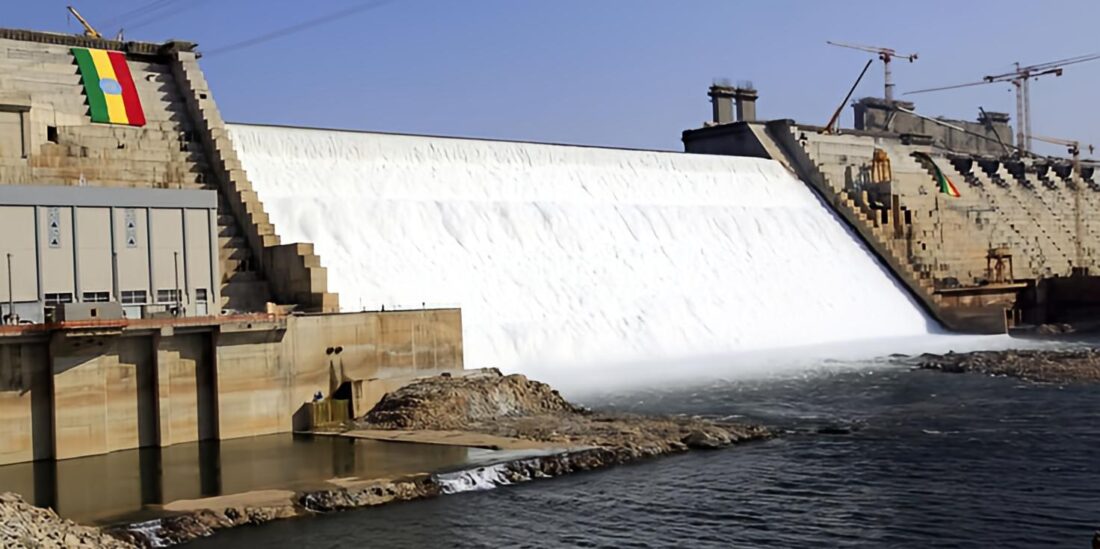
In the heart of the Nile Basin, a $4.8 billion dam has emerged not merely as a source of hydropower, but as the epicenter of a growing geopolitical crisis. To Ethiopia, the Grand Ethiopian Renaissance Dam (GERD) is a symbol of national revival and economic independence. To Egypt and Sudan, it is a potential threat to survival. As the waters rise behind the dam, so too do regional tensions, heightened by a surprising twist: former U.S. President Donald Trump’s re-entry into the diplomatic arena. His July 2025 claim of American involvement in funding the GERD has reignited global attention, injecting volatility into an already delicate standoff.
On July 5, 2025, Ethiopia declared the completion of the fifth filling of the GERD reservoir. At home, it was a celebrated milestone, hailed as a testament to sovereignty and self-reliance. Just ten days later, Trump made waves with his declaration that the United States had financed the dam and expressed a willingness to broker a deal. Ethiopian officials quickly denied any foreign funding, reaffirming that the project was built entirely with domestic resources, an assertion central to the country’s narrative of resilience and independence. For over a decade, the GERD has stirred fierce debate across diplomatic, environmental, and security circles, pitting Ethiopia’s developmental aspirations against Egypt and Sudan’s fears of water insecurity. With Trump’s unpredictable re-engagement, the question now is whether this long-standing impasse will finally find a resolution, or spiral further.
For Ethiopia, the GERD is more than an infrastructure project. It is a national mission that embodies the promise of transformation. Since construction began in 2011, the dam has represented a bold leap toward energy independence, capable of producing 6,450 megawatts of electricity, enough to double the nation’s current power capacity and electrify millions of households. Prime Minister Abiy Ahmed has framed the project as an inalienable right, built through public sacrifice and without foreign loans. This narrative has only hardened in the face of Trump’s recent remarks, which Ethiopian officials interpreted as a challenge to their country’s sovereignty and a potential attempt to reframe the global understanding of GERD’s origin story.
Strategically, the dam grants Ethiopia significant control over the Blue Nile, the source of approximately 85 percent of the Nile River’s flow. This has altered the regional power balance,
historically tilted in Egypt’s favor due to colonial-era treaties that effectively excluded upstream countries. Although Ethiopia maintains that the GERD’s purpose is peaceful, offering flood mitigation, energy exports, and regional cooperation, the project has been perceived by some neighbors as a broader assertion of power. It signals Addis Ababa’s growing confidence in regional affairs and its determination to chart its own development path, regardless of external pressures.
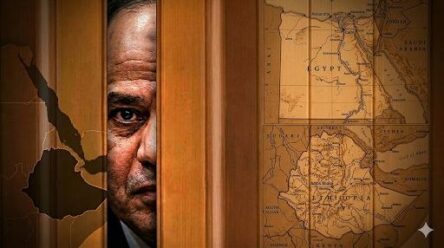
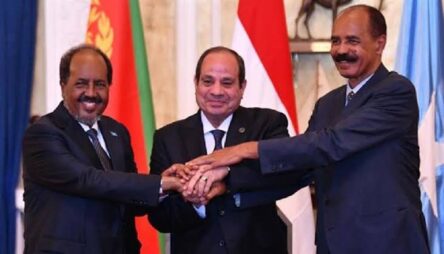
Egypt’s reaction to the GERD has been consistent and stark: it views the project as an existential threat. With 97 percent of its freshwater supply dependent on the Nile, any disruption to its flow is treated as a national security issue. President Abdel Fattah el-Sisi has repeatedly warned that Egypt will defend its water rights by any means necessary, leaving open the possibility of military action. Egypt welcomed Trump’s involvement, seeing in his statements a potential lever to intensify international pressure on Ethiopia. El-Sisi publicly praised Trump’s “recognition” of the Nile’s strategic importance, signaling Cairo’s eagerness to internationalize the dispute and bolster its negotiating position.
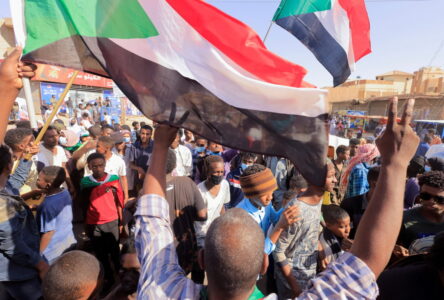
Sudan’s stance is more complex. While the dam could bring some benefits, such as regulation of seasonal flooding and potential access to cheaper electricity, Khartoum has expressed concerns about water flow management and safety risks, especially related to sediment buildup and lack of real-time data sharing during early fillings. Sudan has not been as vocal as Egypt in response to Trump’s overture, but it remains wary of Ethiopia’s unilateral actions. For both Egypt and Sudan, the key demand remains unchanged: a legally binding agreement that governs the dam’s filling and operation schedule. They accuse Ethiopia of stonewalling negotiations and violating the spirit of regional cooperation.
International efforts to mediate the dispute have been uneven. The African Union has led negotiations since 2020, with limited success. Egypt and Sudan have lobbied for broader involvement from global institutions such as the United Nations and the European Union. A U.S.-led mediation attempt in 2021 collapsed amid accusations of bias, especially after the Trump administration reportedly favored Egypt’s position. With Trump’s return to the debate in July 2025, history threatens to repeat itself. His claim of American financial involvement not only startled Ethiopian officials, but also added fuel to the debate over sovereignty and foreign influence. While
Egypt embraced the renewed attention, Ethiopia responded with caution, reiterating its preference for African-led solutions and warning against the dangers of internationalizing an African dispute.
Trump’s potential role in this complex puzzle remains unclear. Known for bold proclamations and unpredictable diplomacy, he could catalyze a breakthrough or deepen existing divides. His administration’s strategy has yet to be defined, but any re-engagement risks sidelining the African Union’s efforts and unsettling delicate regional balances. China and Russia, which have economic interests in Ethiopia and Sudan, may also respond to a revived U.S. role, potentially triggering a larger geopolitical contest over the Nile Basin.
As of mid-2025, the GERD is partially operational, with two turbines generating power and more expected online soon. Ethiopia continues to mark each phase as a step toward energy self-sufficiency, but downstream concerns remain unresolved. Egypt has held military exercises near Sudan’s border, while Sudan has strengthened defenses around its stretch of the Nile. The possibility of direct confrontation, once considered unlikely, is increasingly mentioned in policy circles. Water security, often a silent undercurrent in global conflict, now stands at the forefront.
The fifth filling, conducted with partial coordination to reduce downstream impact, shows Ethiopia’s attempt at balancing assertiveness with restraint. Yet key questions remain: Can Ethiopia maintains this balance while advancing its energy goals? Will Egypt and Sudan, empowered by Trump’s support, move beyond rhetoric? And how will climate change, through prolonged droughts or erratic floods, reshape these calculations? Trump’s re-emergence adds uncertainty. If he succeeds in forging a fair deal, it could reset diplomatic dynamics. If not, mistrust could deepen, making future compromise even harder to achieve.
Ultimately, the GERD is more than a dam. It is a test of power, sovereignty, and regional cooperation. For Ethiopia, it represents a generational leap forward, an African-funded, African-managed megaproject in a region often defined by dependency. For Egypt and Sudan, it raises fears of scarcity, instability, and diminished influence. Trump’s involvement may either inflame or alleviate these tensions, depending on whether he chooses diplomacy or provocation. What is certain is that the stakes are high, the actors are resolute, and the waters of the Nile, so vital, so contested, continue to shape the destiny of nations.