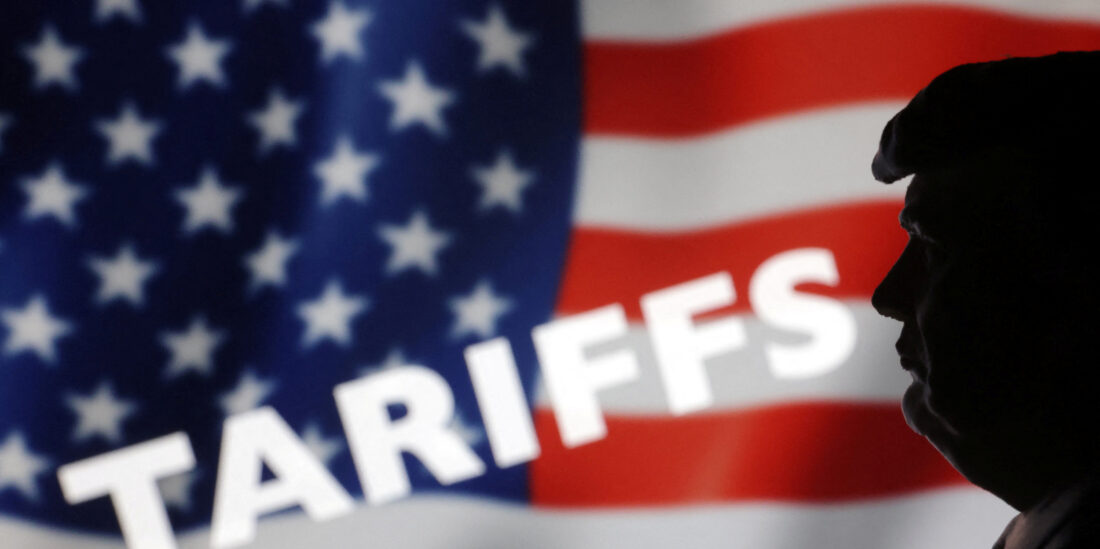
In a surprise twist to global trade diplomacy, the United States has imposed a 10 percent tariff on Ethiopian goods. While the word “tariff” often sparks anxiety in economic circles, this particular move, introduced under President Donald Trump’s administration, is being viewed in Addis Ababa as more of an opening than a setback.
Unlike the steep penalties levied on other countries—Canada, Thailand, Cambodia, and even traditional allies like New Zealand—Ethiopia’s tariff sits at the very bottom of the scale. It’s the lowest rate applied in Washington’s sweeping overhaul of trade relations. Ethiopia, a relatively modest exporter to the U.S., has seized the moment as an opportunity rather than a penalty.
Prime Minister Abiy Ahmed, speaking earlier this year during a diplomatic stop in Vietnam, framed the shift not as a loss but as a potential windfall. According to him, the new tariffs on countries with higher trade volumes and surpluses could force multinational firms to reassess where they operate and manufacture. Ethiopia, in his view, could become an attractive alternative for companies trying to bypass these new trade hurdles. The country has cheap labor, access to key shipping routes, and a government eager to boost foreign direct investment. In the context of a global realignment, Ethiopia’s neutrality and low exposure to trade tensions might actually work in its favor.
The broader context, however, is far more disruptive. The executive order signed by Trump aims to shrink the U.S. trade deficit and rewrite decades of trade policy. While Ethiopia enjoys a relatively light touch, other nations have been hit hard. Canadian exports now face a 35 percent tariff, a sharp escalation in already tense U.S.-Canada relations. Southeast Asian countries like Thailand and Cambodia were caught off guard, unable to strike deals in time to avoid a 19 percent rate. Even New Zealand, widely seen as a stable trade partner, now faces a 15 percent penalty and has indicated it will challenge the measure through formal review processes.
Some countries, such as Mexico, have been given grace periods to renegotiate, but the clock is
ticking. These moves have rattled financial markets and trade ministries across the globe, adding new uncertainty to an already fragile economic landscape. Analysts warn that the cascading effect of such tariffs could push countries toward retaliatory measures and complicate diplomatic relations at a time when cooperation is in short supply.
Yet Ethiopia stands out, not for its vulnerability, but for the potential upside. Its lower tariff rate could attract investors searching for a politically stable, low-cost manufacturing base untouched by the full force of U.S. trade aggression. This isn’t guaranteed, of course. Ethiopia still faces serious challenges: bureaucratic red tape, infrastructure gaps, and occasional political unrest. But in a world where companies are looking to diversify supply chains and hedge against unpredictable tariffs, even a small opening can lead to outsized gains.
Whether Ethiopia can seize the moment remains to be seen. Much will depend on how quickly it can signal to investors that it’s ready for serious business. Infrastructure must improve, industrial parks need streamlined regulations, and logistics must keep pace with global standards. The government’s enthusiasm needs to be matched by practical steps to create a stable and attractive environment for investment.
What is clear is that this latest round of tariffs has reshuffled the global deck. Countries once considered safe bets are now facing punitive duties. Amid this disruption, Ethiopia has managed to carve out a sliver of opportunity. It’s a rare moment where a developing country finds itself positioned not as collateral damage, but as a potential beneficiary.
As the rest of the world scrambles to adjust, Ethiopia may be wise to move quickly, before the winds shift again.