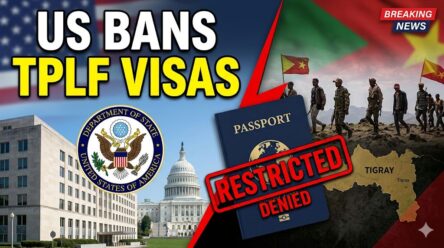
The Pretoria peace framework has come under increasing strain due to Incomplete disarmament, renewed TPLF military mobilization, internal power struggles, the reinstatement of the pre-war regional government, recruitment, conscription and contacts with Eritrea have further intensified tensions.
The renewed confrontation between Ethiopia’s federal government and the Tigray People’s Liberation Front, or TPLF, is affecting military positions, transport links and civilian life across northern Ethiopia Flights to Mekelle have reportedly been disrupted amid the escalating security situation created by the Tplf forces which shows another indication that the renewed fighting is no longer confined to isolated military positions.
Fighting, troop movements and drone strikes have been reported in multiple areas, with some accounts describing the confrontation as developing across as many as 11 fronts. The exact number and definition of these fronts, however, remains disputed Against this backdrop, Alamata has emerged as one of the key flashpoints On September 12, 2019 E.C., beginning at approximately 3:30 a.m., a series of drone strikes targeted locations identified by local sources as TPLF military centers in and around Alamata town.
According to those local accounts, the operation involved 17 separate strikes that were carefully planned and accurately executed against military positions. The same sources said no civilians were injured in the strikes These details, including casualty figures, remain local-source claims and have not been independently verified Alamata’s strategic importance helps explain why the area has become a military priority.
The town sits along Ethiopian Highway 2, an important southern route connecting Tigray with central Ethiopia. It is also located in the contested Raya area, where territorial and administrative claims between Tigray and Amhara remain unresolved Control of Alamata therefore matters for logistics, troop movement and access between northern and central Ethiopia.
The latest strikes come amid a broader deterioration in relations between Addis Ababa and the TPLF following the November 2022 Pretoria Cessation of Hostilities Agreement The agreement ended the major phase of the 2020–2022 Tigray war and established a framework for disarmament, restoration of federal authority and the resolution of disputed territories.
Since 2026, however, tensions have increased sharply.
TPLF-aligned forces have reportedly re-established positions in parts of Tigray, while the federal government and the AU mediators have accused the TPLF of mobilization and recruitment There are also competing allegations concerning external alliances. Ethiopian authorities have accused TPLF-linked forces of cooperation with Eritrea, while Eritrea has rejected such accusations.
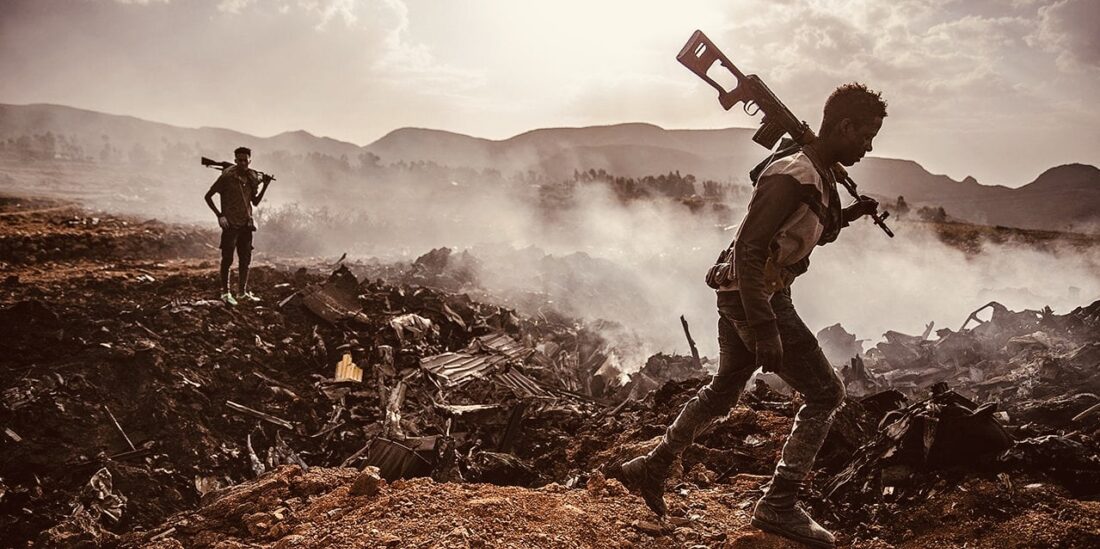
More recently, the TPLF has joined other armed Ethiopian groups in a new alliance, according to international reporting, connecting the Tigray confrontation to broader political and military tensions in Ethiopia The September 12 operation reportedly caused extensive damage to military infrastructure At Eyasu Berhe School, which local sources said was being used to store weapons and ammunition, a fire reportedly continued after the strikes, with ammunition exploding inside the facility.
At Meles Memorial School, vehicles and artillery pieces were reportedly heavily damaged or destroyed At Nesir Station, a vehicle carrying military personnel was also reportedly severely damaged Local sources further reported substantial casualties among armed personnel More than 200 wounded soldiers were reportedly treated at Alamata Hospital, with some receiving treatment on the hospital veranda because of limited space.
According to the same accounts, one bus and two ambulances were used to transfer wounded personnel toward Mekoni.
The sources also claimed that 55 deceased armed personnel were buried in Alamata Merwa Health Center was reportedly overwhelmed with wounded personnel, while its regular health professionals were allegedly expelled Again, these casualty and damage figures are reports from local sources and have not been independently verified.
The strategic significance of Alamata extends beyond the immediate military operation The town sits at the intersection of territory, transportation and competing political claims. Control of the area can influence movement between Tigray and central Ethiopia while affecting the wider military balance in the Raya region That is why developments in Alamata cannot be viewed simply as another isolated drone operation.
They are part of a broader confrontation that has developed since the Pretoria agreement, as disagreements over disarmament, territorial administration, political authority and military mobilization have remained unresolved.
The disruption of flights to Mekelle adds another dimension. When air connectivity is affected, the consequences extend beyond military forces. Business travel, humanitarian operations, government activity and civilian movement can all be affected.
At the same time, reports of drone strikes around Mekelle and elsewhere demonstrate how the renewed confrontation is spreading geographically The critical question now is whether these confrontations remain localized or develop into a much broader conflict The 2020–2022 war demonstrated how quickly fighting in northern Ethiopia can spread across regional boundaries.
The current situation involves a different political and military environment, but the combination of troop mobilization, territorial disputes, armed alliances and drone warfare has again created a highly unstable security environment. Alamata therefore represents more than a single battlefield. The main question remains:
Is Ethiopia facing another conflict, or is the country moving toward a much wider multi-front war?