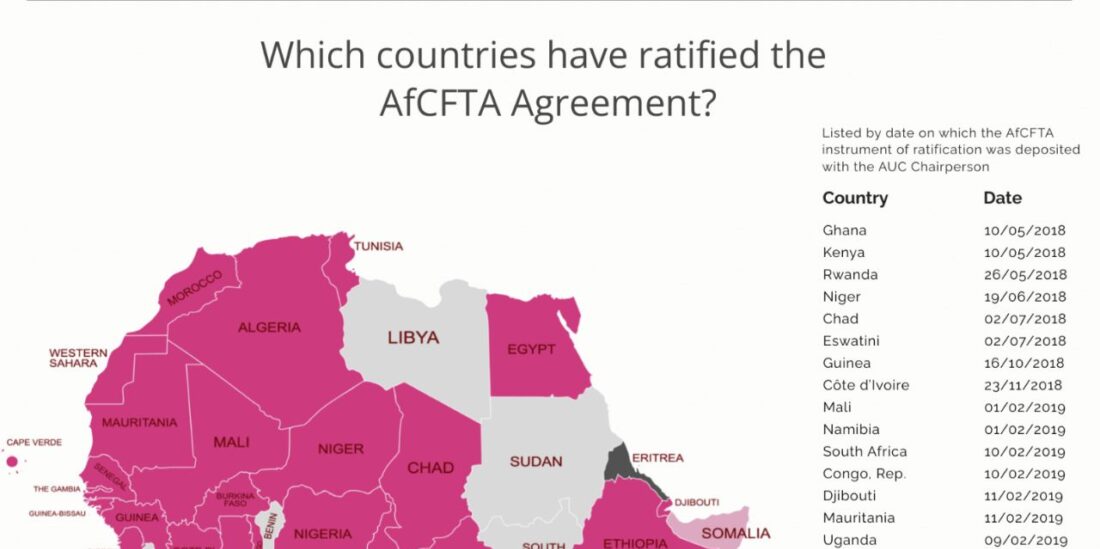
Ethiopia has entered the African Continental Free Trade Area (AfCFTA) with high expectations, but its approach to implementing the agreement raises serious concerns. In drafting its regulations, the country has excluded a number of goods and services that could have provided it with clear advantages. This selective omission risks weakening Ethiopia’s potential to benefit fully from the largest free trade zone in the world.
The AfCFTA was designed to unlock Africa’s economic potential by reducing tariffs, easing barriers to trade, and creating a unified market of more than a billion people. For Ethiopia, a nation with one of the fastest growing populations and an economy in need of diversification, the agreement should have been an opportunity to integrate deeply into regional value chains. Instead, by omitting certain advantageous goods and services, Ethiopia is restricting itself from seizing competitive niches that could have brought long term benefits.
Agricultural products and light manufacturing are areas where Ethiopia has comparative advantages. The country produces coffee, livestock, and leather products that have established markets across Africa. Yet its implementation regulation has narrowed the scope for these sectors, limiting their preferential access under AfCFTA rules. Services such as logistics, tourism, and digital trade also remain underdeveloped in the regulatory framework, even though these sectors could enhance Ethiopia’s role as a continental hub. The decision reflects a cautious stance that prioritizes protecting domestic industries over expanding exports, but in doing so Ethiopia risks locking itself out of promising opportunities.
Part of the hesitation stems from structural weaknesses in the Ethiopian economy. Limited industrial capacity, infrastructure challenges, and a fragile balance of payments have made policymakers wary of opening the market too quickly. They fear that local businesses could be overwhelmed by imports from more industrialized African states. While such concerns are valid, the exclusion of goods and services where Ethiopia could be competitive undermines the spirit of the AfCFTA and could leave the country in a disadvantaged position when the continental market
becomes fully operational.
The irony is that Ethiopia has been a vocal supporter of regional integration and has positioned itself as a champion of the AfCFTA at the African Union. Its reluctance to make bold commitments at home sends mixed signals to partners and may weaken its credibility in continental trade negotiations. To secure long term benefits, Ethiopia must strike a balance between protecting vulnerable industries and promoting sectors that can thrive in a competitive environment. Adjusting its implementation regulation to include more advantageous goods and services would not only boost exports but also attract investment and create jobs.
Ethiopia’s future in the AfCFTA depends on its willingness to take calculated risks. Shielding industries indefinitely will not solve structural challenges, but leveraging the country’s strengths within the continental market could accelerate economic transformation. Unless the current omissions are reconsidered, Ethiopia may find itself sidelined in the very trade pact it helped to build.