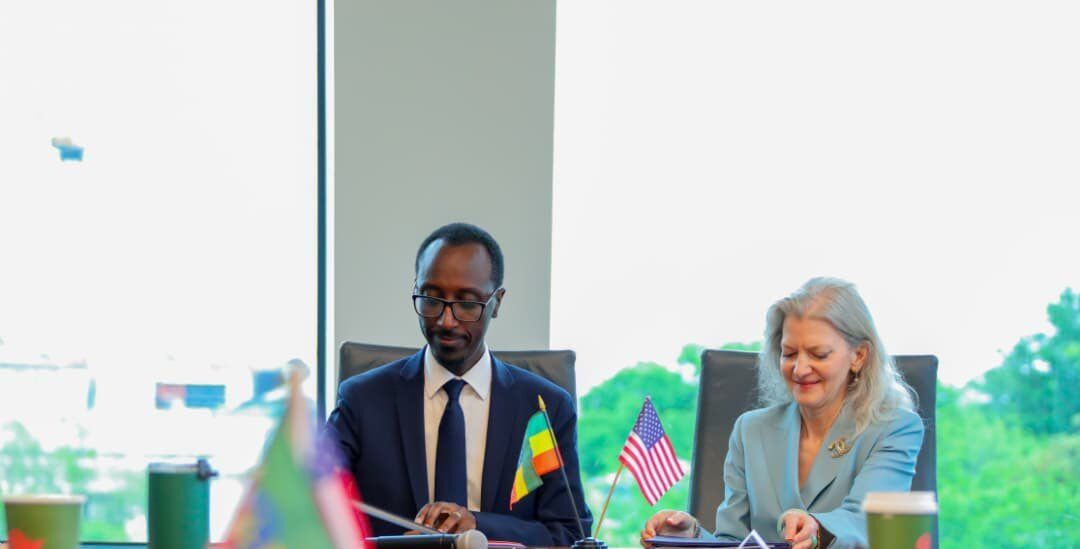
The signing of the Bilateral Structured Dialogue (BSD) Framework between Ethiopia and the United States on May 11, 2026, in Washington, D.C., marks a significant diplomatic shift. This development signals a softer and more pragmatic U.S. stance on Ethiopia’s longstanding quest for secure Red Sea access. U.S. officials have increasingly acknowledged Ethiopia’s “existential” need for reliable maritime access. AFRICOM commanders previously stated that secure Red Sea access would enable Ethiopia to contribute more effectively to regional peacekeeping and counterterrorism, particularly against groups like Al-Shabaab.
Ambassador Ervin Massinga has publicly supported Ethiopia’s efforts through peaceful and diplomatic contexts.” This language reflects a notable evolution, While Washington continues to emphasize peaceful and diplomatic solutions, the new framework and surrounding engagements indicate growing American recognition of Ethiopia’s strategic needs in a volatile region.
The BSD Framework, signed by Ethiopian Foreign Minister Gedion Timothewos and U.S. Under Secretary Allison Hooker, organizes cooperation under three pillars: economic prosperity and trade, defense and security, and regional peace and stability. Red Sea maritime security features prominently within the regional stability pillar. Amid disruptions in the Strait of Hormuz and persistent threats in the Bab el-Mandeb Strait, the U.S. views Ethiopia, Africa’s second-most populous nation and a historical security contributor as a vital anchor for stability in the Horn of Africa.
Several converging factors explain this softer stance. The ongoing Red Sea volatility, exacerbated by Houthi activities and spillover from the U.S.-Iran-Israel tensions, has elevated the importance of the western Red Sea coastline. With Hormuz traffic severely disrupted, alternative African routes and partners gain strategic value. Ethiopia’s size, military capacity, and location make it an attractive partner for securing supply chains and countering external influences from China, Russia, and Iran. The BSD comes alongside Ethiopia’s charm offensive, including Gedion Timothewos’s engagements at the Hudson Institute and with senior Trump administration figures like Secretary Marco Rubio. These interactions highlight Ethiopia’s economic reforms, investment potential in critical minerals, and role in de-escalating conflicts in Sudan and the broader Horn. For the transactional U.S. approach under the current administration, Ethiopia offers clear returns in trade, security cooperation, and regional influence.
A softer U.S. stance offers Ethiopia tangible advantages. Institutionalized dialogue through the
BSD could unlock greater investment, technology transfer, and security assistance. It provides a forum to advance Red Sea priorities diplomatically, potentially with American facilitation involving Eritrea, Djibouti, or even Egypt where Nile-GERD linkages have been discussed. For the U.S., a stable, economically vibrant Ethiopia serves as a counterweight in great-power competition and helps diversify energy and trade routes.
Challenges remain. Deep historical mistrust between Ethiopia and Eritrea and competing regional interests (Egypt’s Nile concerns, Gulf states’ influence) could complicate progress. Success depends on implementation of the BSD working groups, Ethiopia’s continued reforms, and avoidance of escalation.
Nevertheless, the trajectory is clear: Washington is moving toward pragmatic engagement that treats Ethiopia’s maritime aspirations as legitimate economic and strategic imperatives rather than peripheral issues. In a world of disrupted global shipping lanes, empowering a capable regional power like Ethiopia through peaceful means aligns with U.S. interests in freedom of navigation and supply chain resilience.
The BSD Framework represents more than bureaucratic structuring , it signals a reset. As Red Sea dynamics evolve, Ethiopia stands to benefit from a more understanding and supportive U.S. partner. This could open pathways to durable access that strengthens Ethiopia’s economy and contributes to broader Horn stability, provided all sides prioritize diplomacy over confrontation. The coming months of follow-up talks will determine how far this softer stance translates into concrete outcomes.