Eritrea stands as one of the world’s most isolated and repressive states, a small Horn of Africa nation whose primary export for over two decades has been its own people. Since gaining independence from Ethiopia in 1993, the country under President Isaias Afwerki has devolved into a garrison state where indefinite military and national service, systemic repression, and economic stagnation drive mass emigration.
While not literally producing “nothing,” Eritrea’s modest outputs pale against the human exodus it generates.
The engine of this flight is indefinite national service. Legally capped at 18 months six months of military training followed by service. it has been extended without limit since 1998. Men and women, officially aged 18-40 (with reports of underage recruitment and older round-ups), face years or decades of poorly paid labor under harsh military discipline. Pay is nominal “pocket money,” often around $30 per month. Conscripts perform military duties, civil service, or forced labor in state projects and enterprises. Reports document torture, sexual violence, arbitrary punishment, and restrictions on family life or further education.
The UN Commission of Inquiry and human rights organizations have characterized aspects of this system as crimes against humanity, including enslavement through forced labor. Students complete final high school years at militarized camps like Sawa. Evasion or desertion brings imprisonment, often for the individual and family members. This pervasive control robs generations of normal careers, marriages, and futures, turning much of the working-age population into state-directed labor.
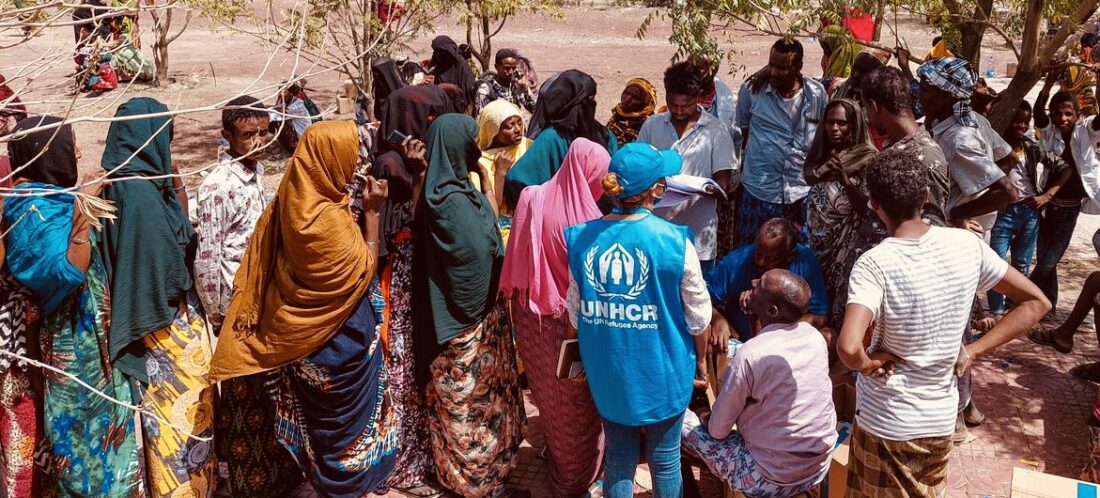
The results are stark. As of 2024, over 683,000 Eritreans were registered as refugees or asylum seekers worldwide roughly 20% of the country’s population, estimated at 6.4 million depending on sources. In 2023 alone, approximately 71,600 applied for asylum, equating to nearly 2% of the resident population in a single year. In 2024, another 61,000 fled and sought asylum. Major host include Ethiopia and growing communities in Europe, Uganda, and Egypt. Many undertake perilous journeys through the Sahara, Libya, and Mediterranean, facing trafficking and exploitation. Up to one-third of Eritrean-born individuals may now live abroad.
Remittances from the diaspora sustain families inside Eritrea and reportedly prop up the regime via a coercive 2% “diaspora tax.” Eritrea itself hosts almost no refugees and shows limited cooperation with UNHCR. New arrivals often face barriers to formal status in neighboring countries amid regional conflicts.