

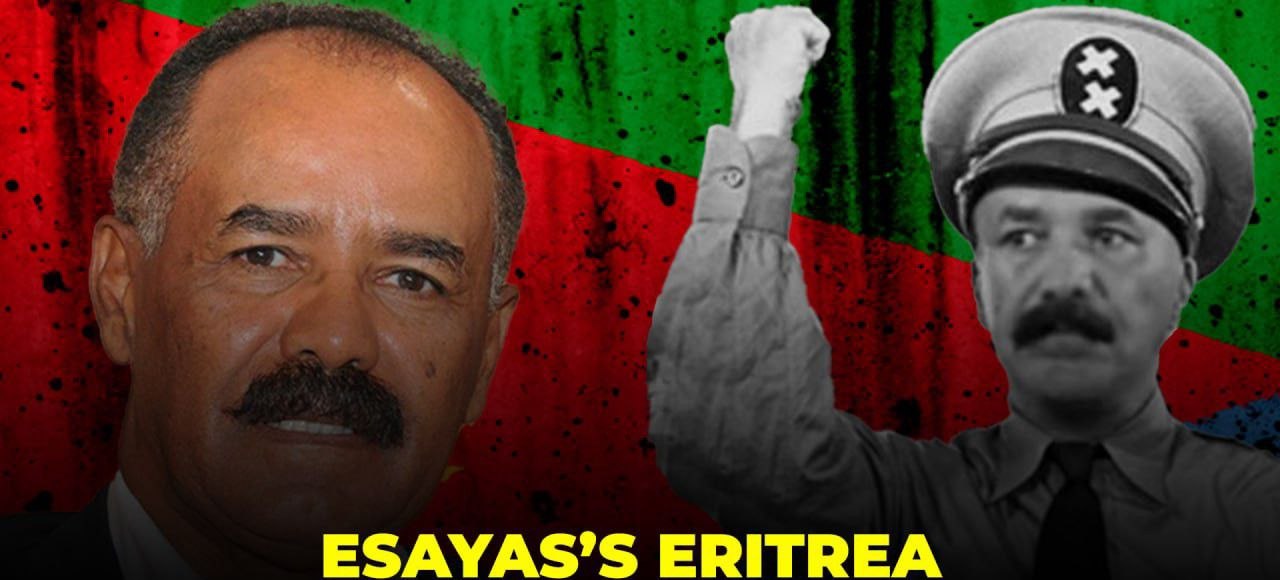
Thirty-three years after independence in 1993, Eritrea under President Isaias Afwerki stands as a tragic example of unfulfilled promise. What started as a jubilant post-liberation nation has slid into one of the world’s most repressive and economically stagnant states. Official statistics, UN reports, and global indices reveal a clear downward trajectory: political freedoms crushed, economic potential squandered, human development stalled at the bottom, and a generation fleeing indefinite national service. The numbers expose a journey from bad to worse.
Politically, Eritrea has never held a single competitive national election. The 1997 constitution remains frozen on paper. Freedom House consistently scores the country 3 out of 100 with near-zero points for political rights and civil liberties. No opposition parties exist, the judiciary lacks independence, and dissent is met with arbitrary arrest or enforced disappearance. Reporters Without Borders has ranked Eritrea last (180th out of 180) in the World Press Freedom Index for years, including in 2025, with an abysmal score reflecting total state control over information. The 2001 purge of reformers jailing journalists and politicians sealed the authoritarian turn. Three decades later, the regime’s grip has only intensified, leaving citizens with no voice or recourse.
Economically, progress has been minimal and opaque. Post-independence GDP per capita began around $250–$300 in the early 1990s. It peaked near $689 in 2011 according to World Bank data, but reliable figures have since dried up due to government restrictions. Recent estimates place nominal GDP per capita between $566 and $750 in the early 2020s, with projections hovering around $700–$800. Adjusted for population growth (now roughly 3.5–3.7 million) and inflation, real per-person gains are negligible. Extreme poverty remains entrenched, with multidimensional poverty affecting large portions of the population. The economy is dominated by state and military-controlled enterprises, mining revenues benefit elites, and isolation from international finance has prevented broader development. While some neighbors embraced reforms and surged ahead, Eritrea’s command-style system has delivered chronic underemployment, shortages, and stagnation.
Human development metrics underscore the arrested progress. The UNDP Human Development Index (HDI) stood at 0.503 in 2023, ranking Eritrea 178th out of 193 countries firmly in the “low” category. This marks only a slow crawl from around 0.466 in 2005, with average annual improvement under 0.6%. Basic literacy and school enrollment saw initial post-independence gains, but these have plateaued. Indefinite national service disrupts education, pulling students into military or forced labor roles before they can complete schooling. Health infrastructure remains weak, with limited spending and persistent challenges in maternal care and nutrition. While modest improvements occurred from the baseline of conflict, they lag far behind regional peers and fail to match the regime’s early rhetoric of transformation.
The most damning indicator is the mass exodus driven by indefinite national service. Introduced as 18 months after independence, it was extended indefinitely after the 1998–2000 border war and functions as open-ended forced labor for many. Young Eritreans, often conscripted in their teens, face years or decades of service with minimal pay, harsh conditions, and punishment for attempting to leave. Human rights organizations document how this system devastates families, education, and economic life. The result is one of the world’s largest per-capita refugee flows. UNHCR and related data show hundreds of thousands of Eritrean refugees and asylum seekers globally with cumulative figures climbing dramatically since the early 2000s. In recent years, tens of thousands have fled annually, representing a significant share of the population. Sudan, Ethiopia, and routes to Europe host major communities. Effectively, one in five or more Eritreans now lives abroad, as citizens vote against the system with their feet.
The pattern across three decades is unmistakable. Early recovery hopes after independence faded after 2001. Political crackdowns eliminated space for reform, indefinite conscription drained the workforce, economic isolation choked growth, and information blackouts concealed the full human toll. Marginal gains in life expectancy or basic literacy from the 1990s war baseline exist, yet they appear insignificant against faster regional advances and the regime’s broken promises. Eritrea’s HDI ranking has lingered near the global bottom for years. Refugee outflows continue unabated. Freedom and press indices remain at rock bottom.
More than thirty years under Isaias Afwerki have turned national pride into widespread despair. These statistics represent shattered dreams, depopulated communities, and a country whose most visible export has become its own youth. Without genuine change, ending indefinite service, opening political space, and liberalizing the economy, the data will keep confirming what many Eritreans experience daily: the long journey continues from bad to worse, with little sign of reversal.