In the war-torn mountains of Puntland, a new chapter of counterterrorism is being written, not by a distant global coalition but through a partnership between American military power and local forces. The collaboration has sparked the question of whether this focused engagement, free from broader geopolitical ambitions, can finally dismantle the stubborn redoubts of ISIS in the Horn of Africa. Recent U.S. military strikes suggest a strategy of quiet, targeted pressure, a contrast to sprawling conflicts elsewhere, and one that may offer a more effective path to peace in a region long scarred by endless war.
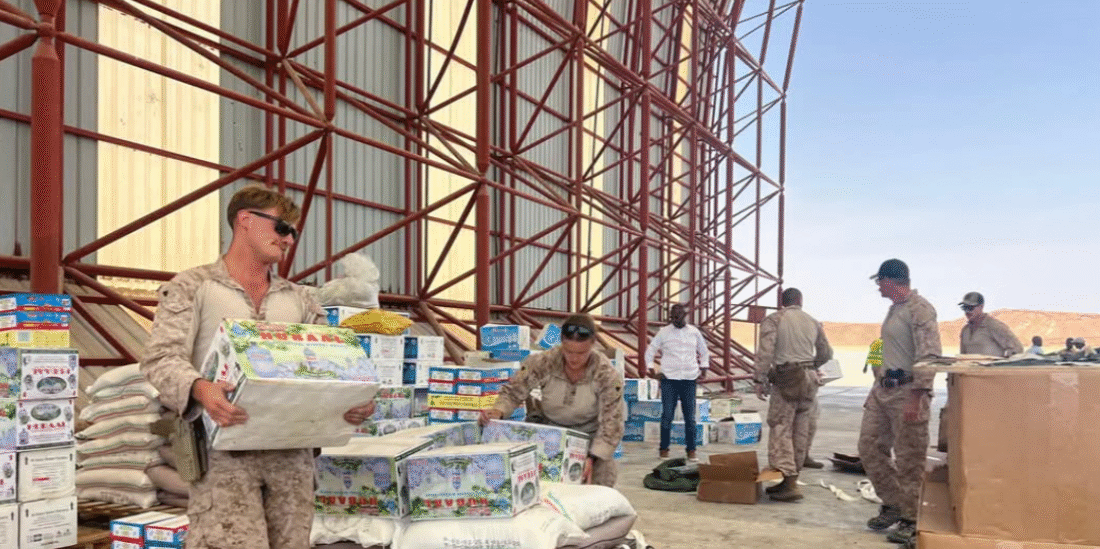
The U.S. Africa Command announced the completion of a two-week operation in Puntland, Somalia, marking a significant moment in the fight against ISIS. Coordinated with the Puntland Counter-Terrorism Forces, the campaign targeted senior ISIS commanders in the remote Al-Miskad mountains. Since taking office, President Donald Trump has increased U.S. military engagement in Somalia, prioritizing precision strikes and direct support for local partners. This operation reflects a strategy built on lethal, focused actions rather than large-scale troop deployments, with the goal of degrading terrorist capabilities at their source.
The cooperation between U.S. forces and Puntland’s military represents an evolution of American counterterrorism policy in the Horn of Africa. While U.S. strikes in Somalia are not new, the current model relies heavily on coordination with local units. Puntland’s forces, already leading their own multi-phase offensive known as Operation Hilaac since late 2024, provide essential ground intelligence and local expertise. This partnership allows the U.S. to deliver precise airstrikes against leadership and logistical hubs while Puntland forces drive militants out from the ground. The underlying idea is that sustainable security can only be built from within.
The recent operation focused on the Al-Miskad, also known as the Golis mountains, a rugged stronghold that has long provided ISIS with a safe haven. The terrain, with its caves and valleys, offers natural protection to militants, making it one of the most difficult areas to penetrate. By striking these sanctuaries and eliminating senior commanders, the U.S. seeks to weaken the organization’s leadership, disrupt its command structures, and sever its financial and logistical channels. This type of strategic targeting, endorsed by President Trump in February 2025 after a similar successful strike, is now central to U.S. counterterrorism efforts in Somalia.
Under the Trump administration, U.S. military operations in Somalia have expanded in both scope and frequency compared to previous years. This escalation is part of a broader “America First” counterterrorism doctrine that prioritizes eliminating threats before they reach American soil. The policy marks a shift back to a more aggressive, action-driven approach, often pushing aside traditional diplomatic or development efforts in favor of direct military engagement.
Although the joint operation has dealt a major blow to ISIS-Somalia, its long-term impact is still uncertain. Airstrikes may degrade enemy forces and weaken their networks, but achieving lasting
peace requires more than military power. The real challenge will be whether Puntland’s forces can maintain control over liberated areas, prevent ISIS from regrouping, and address the root causes that allow extremist groups to thrive. The operation also underscores the dependency of local forces on U.S. support, raising questions about the sustainability of such security gains in a fragmented and volatile region.
The Puntland campaign illustrates a larger strategic shift in U.S. counterterrorism policy. It shows a willingness to engage directly and forcefully alongside trusted local partners. For the Horn of Africa, this kind of targeted collaboration may become the new normal. What remains uncertain is whether focused military pressure will be enough to lay the foundation for lasting stability, or whether it will merely push a persistent threat to relocate and reemerge elsewhere.