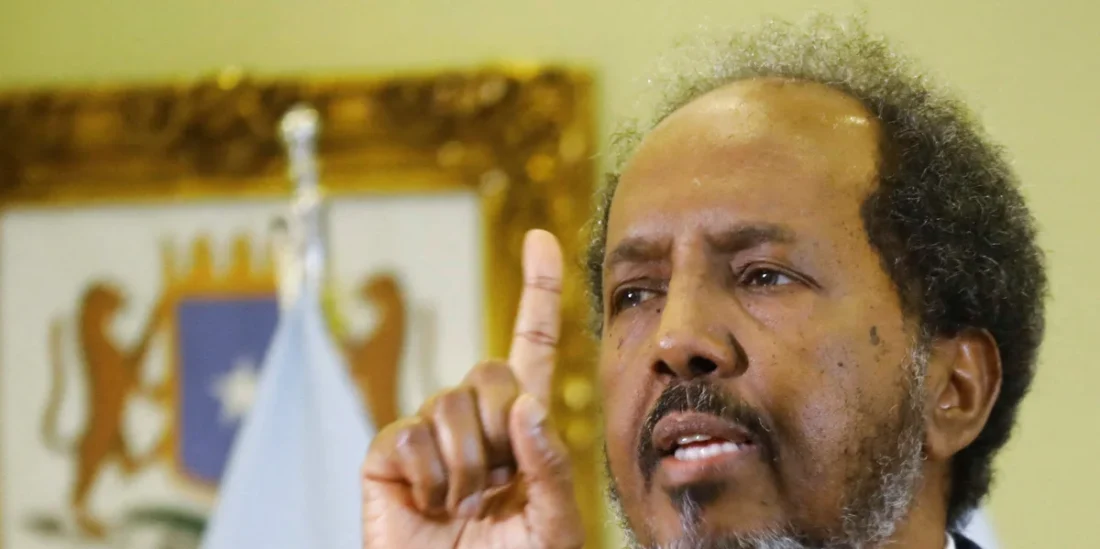
Somalia has taken a significant step toward political reform after President Hassan Sheikh Mohamoud and four major opposition leaders signed a landmark agreement on August 25, 2025, establishing the framework for the country’s upcoming elections.
The deal comes nearly a year after Parliament adopted a new electoral law in October 2024, which introduced universal suffrage for the 2026 elections. For the first time in decades, Somalia is set to move away from the long-standing clan-based system of indirect voting, in which elders and community representatives select lawmakers, toward a more direct democratic process.
President Mohamoud hailed the agreement as a breakthrough, declaring, “The doors to state reconstruction are now open.” His comments followed two months of tense negotiations, marked by deep mistrust and sharp differences among Somalia’s political actors.
Key Provisions of the Agreement
Under the new framework, the President will continue to be elected by Parliament. However, Members of Parliament themselves will be chosen through a universal suffrage process, allowing ordinary Somali citizens to cast their votes directly for the first time since the country collapsed into civil war in 1991.
Another important element is the recognition of political parties that secure at least 10 percent of parliamentary seats, granting them formal status and influence within Somalia’s political system. This provision is intended to reduce the dominance of clan-based coalitions and encourage the growth of issue-based political parties.
All signatories to the agreement also committed to working toward a full transition to a “one person, one vote” system. While the 2026 elections will mark the beginning of this process, leaders acknowledged that further reforms will be required to solidify democratic institutions and ensure inclusivity.
Tensions and Divisions Remain
Despite the consensus reached, the agreement has laid bare divisions within the opposition. Some leaders fear that universal suffrage could destabilize Somalia’s fragile political environment, given persistent insecurity and uneven access to voter registration.
Former President Sherif Sheikh Ahmed has emerged as a vocal critic, arguing that Somalia’s security conditions are not yet conducive to implementing sweeping reforms. He and others caution that the government may struggle to conduct elections fairly and safely in areas still affected by the threat of Al-Shabaab and other armed groups.
Analysts note that while the agreement is a political victory for President Mohamoud, sustaining it will be a formidable challenge. The Somali leader must now balance the demands of opposition figures, regional state leaders, and civil society groups, while ensuring that technical preparations for the 2026 vote move forward on schedule.
The signing of the agreement represents a milestone in Somalia’s decades-long struggle to rebuild its
political system. Advocates of reform believe universal suffrage is essential for strengthening legitimacy, broadening citizen participation, and reducing the clan rivalries that have fueled political instability for years.
However, the practical challenges ahead are immense. Somalia must establish a credible voter registration system, train election workers, and ensure that polling stations are accessible across the country. Equally important will be building trust among citizens who have long viewed political processes as exclusionary or dominated by elites.
The coming months will be decisive as Somalia prepares for the 2026 elections. If implemented successfully, the agreement could mark a turning point in the country’s democratic journey. If mishandled, it risks deepening political divisions and undermining fragile security gains.
For now, the deal between President Mohamoud and his rivals signals cautious optimism. It reflects both the aspirations of many Somalis for a more democratic future and the ongoing difficulties of building consensus in a country still grappling with conflict, poverty, and external interference.