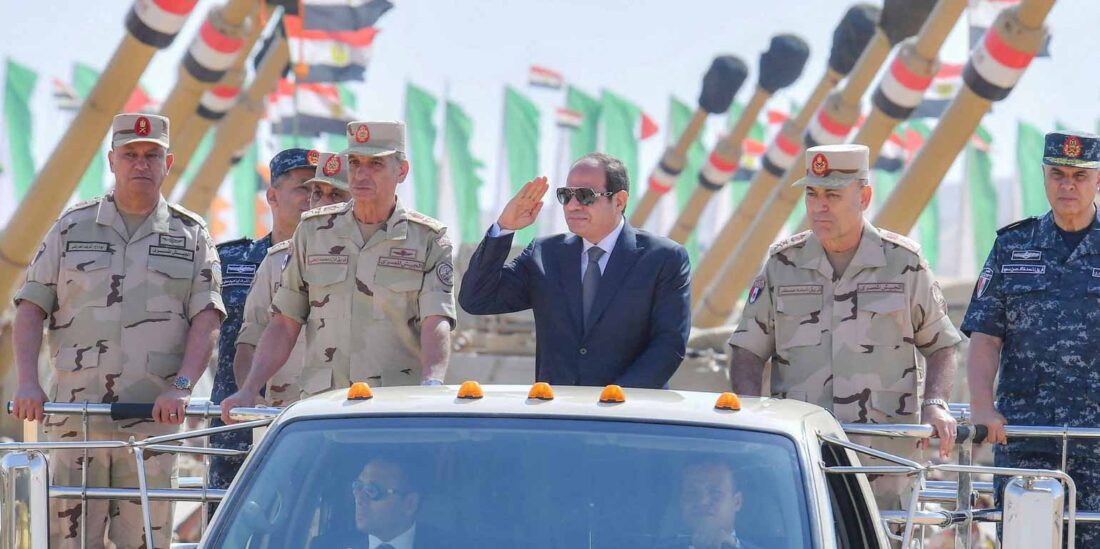
Egypt is preparing to send troops to Somalia by the end of 2025, joining the African Union Support and Stabilisation Mission in Somalia (AUSSOM). Its forces will replace departing Burundian contingents, assisting the Somali government in countering armed groups and supporting long-term stability. While Somalia welcomes the deployment as a sign of Cairo’s commitment, Ethiopia has voiced deep reservations. Ambassador Sulaiman Dedefo questioned Egypt’s track record in international peacekeeping, citing Libya, Sudan, and Gaza as examples where Cairo has offered little constructive engagement.
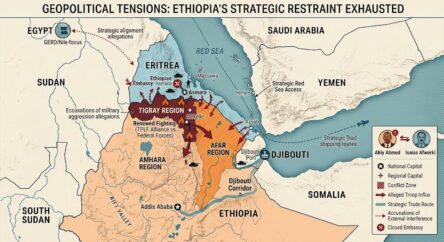
For the Horn of Africa, the implications extend well beyond Somalia. The Egypt–Ethiopia dispute over the Grand Renaissance Dam shapes every calculation. Troop movements, peacekeeping operations, and regional influence are intertwined with water security and long-standing tensions, making what should be a stabilisation effort also a test of geopolitical endurance.
The Horn of Africa has long been a theatre of overlapping rivalries. Ethiopia has historically been the dominant regional peacekeeping force, while Egypt increasingly seeks to expand its influence through Somalia and the African Union. AUSSOM, the successor to ATMIS, is intended to consolidate local security, but troop contributions now reflect strategic calculations as much as operational needs. Somalia welcomes Egyptian troops to strengthen its own military and counter Al-Shabaab and ISIS, while Ethiopia remains vigilant, warning that any interference with its peacekeeping operations will elicit a response. The Horn’s fragile security environment means even deployments presented as neutral carry political weight.
Egypt’s deployment is not simply a stabilisation effort. It is a signal designed to raise Cairo’s visibility, strengthen alliances with Somalia, and position itself to safeguard interests connected to the Nile. Ethiopia views this differently, arguing that Egypt brings little practical value to Somalia’s peace and that the mission could complicate Ethiopia’s own operations. Ethiopian forces on the ground have provided medical assistance near conflict zones, deliberately avoiding entanglement with Somali federal and Jubaland clashes. Egypt, in contrast, presents itself as a partner to Somali forces while implicitly challenging Ethiopia’s regional primacy. In the Horn, peacekeeping and competition are inseparable.
Underlying these maneuvers is the GERD dispute, a defining issue between Ethiopia and Egypt. Ethiopia sees Egypt’s objections to the dam as part of a broader strategy to obstruct regional cooperation and constrain Addis Ababa’s development ambitions. Troop deployments, peace operations, and diplomatic maneuvers cannot be separated from these strategic grievances. For Somalia, the African Union’s approval of Egypt’s contribution demonstrates an intent to maintain multilateral support and strengthen local institutions. Yet in practice, every deployment is scrutinized through the lens of which state gains influence and which risks having its operations undermined.
AUSSOM presents both opportunity and risk. Egyptian troops bring resources, training, and legitimacy, while Ethiopia contributes operational experience and local knowledge. If these forces can be coordinated effectively, they may reduce conflict and foster cooperation. Yet the balance is precarious. A single misstep could transform a stabilisation mission into a flashpoint, deepening mistrust between Cairo and Addis Ababa and complicating Somali politics. For now, Ethiopia emphasizes neutrality, and Somalia remains focused on its security challenges, but the Horn’s history is a reminder that regional ambitions rarely remain quiet.
As Egypt prepares to deploy and Ethiopia watches closely, the Horn of Africa stands at a crossroads. The African Union mission may either become a genuine stabilisation effort or a subtle battleground for influence between two powerful neighbors. In a region where rivers, borders, and battalions are so deeply intertwined, the outcome will shape security, alliances, and prospects for peace for years to come.