Sudan’s civil war between the Sudanese Armed Forces (SAF) and the Rapid Support Forces (RSF) has entered its third year with devastating consequences. It has become the largest humanitarian crisis in the world, with tens of thousands killed in battle and many more dying from hunger and disease. The conflict continues to reshape Sudan’s political and military landscape while pushing millions of civilians to the brink of survival.
On the battlefield, the SAF has consolidated control over the capital Khartoum and secured the central and eastern regions, including Port Sudan, which now functions as its wartime capital. The RSF dominates Darfur and much of the Kordofan region, where it has intensified its campaign. The city of el-Fasher, the last SAF stronghold in Darfur, remains under siege. Satellite images show the RSF building sand berms to encircle the city, cutting it off from all sides. The fall of el-Fasher would hand the RSF control of a territory in western Sudan roughly the size of France. With the support of Abdelaziz al-Hilu’s SPLM-N, the RSF has also expanded its reach in Kordofan, threatening the SAF-held city of el-Obeid, which is key to defending central Sudan.
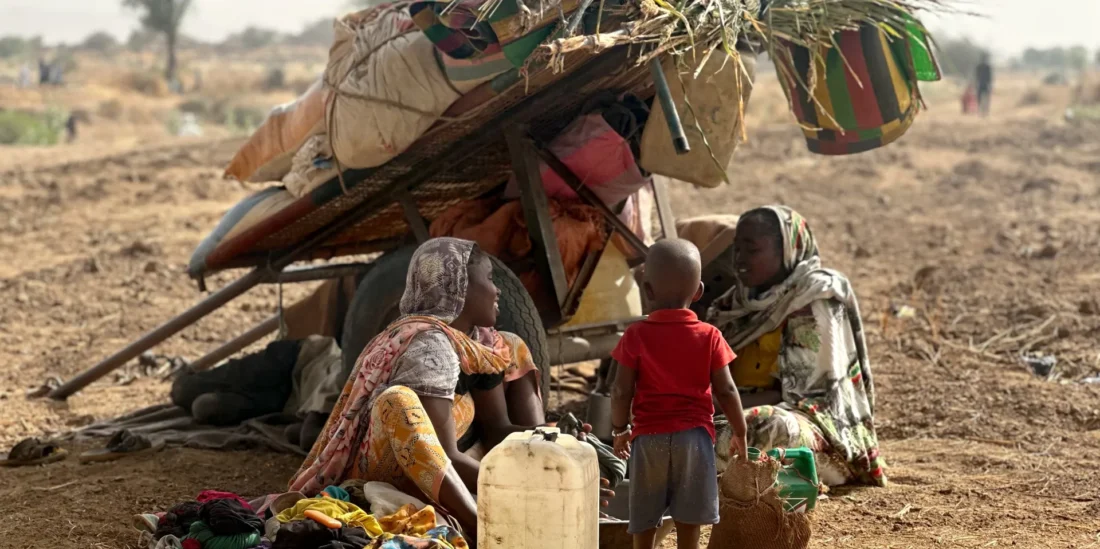
The humanitarian crisis is spiraling. UNICEF has described el-Fasher as an epicentre of child suffering, with hundreds of thousands trapped inside the besieged city. Food has become so scarce that families rely on grinding animal fodder into paste for sustenance, and even this is running out. Malnutrition rates have soared beyond emergency thresholds, with children the most affected. A cholera outbreak has added to the misery, killing hundreds and infecting thousands across Darfur. Aid convoys are scarce, often blocked by fighting or targeted by drone strikes. In North Darfur, a United Nations food convoy was recently hit, the second such attack in three months. Accusations fly between both warring sides, each blaming the other for targeting humanitarian supplies. In South Kordofan, hunger is also severe due to RSF sieges on Dilling and Kadugli.
Political developments mirror the battlefield chaos. RSF leader Mohamed Hamdan “Hemedti” Dagalo declared himself president of a parallel “Peace Government” in Nyala, South Darfur, on August 31. The SAF responded with drone strikes on the same day. Meanwhile, reports emerged of a secret meeting in Switzerland between SAF commander Abdel Fattah al-Burhan and a United States adviser. Though Washington has not confirmed the talks, analysts suggest they focused on exploring ways to end the conflict. Shortly afterward, al-Burhan dismissed several senior officers, some linked to Sudan’s long-ruling Islamist movement, which observers see as a concession to external pressure.
Sudan’s war shows no sign of abating. The SAF holds the east, the RSF dominates the west, and civilians are caught between hunger, disease, and violence. Diplomatic efforts remain uncertain, while each side entrenches itself further on the battlefield. The crisis has become a grim reminder
of how quickly a state can unravel when war, famine, and political rivalry collide.