

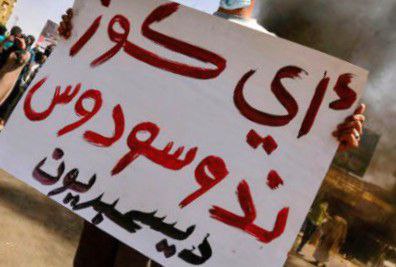
Sudan’s war is often described as a simple power struggle between two generals fighting for control of the state. But Washington’s latest move suggests the conflict may be about something deeper.
With the United States designating the Sudanese branch of the Muslim Brotherhood as a Specially Designated Global Terrorist organization, Sudan’s war is no longer framed only as a military confrontation. It is increasingly becoming part of a wider regional campaign against political Islam. And in Sudan’s fragmented battlefield, such labels rarely remain symbolic. They shape alliances, influence diplomatic narratives, and redefine the struggle for international legitimacy.
On March 9, 2026, the United States Department of State announced the designation of the Sudanese Muslim Brotherhood as a terrorist organization. The decision comes in the middle of Sudan’s brutal war between the Sudanese Armed Forces, led by General Abdel Fattah al-Burhan, and the Rapid Support Forces commanded by Mohamed Hamdan Dagalo. Washington argues that the move targets extremist networks that threaten Sudan’s democratic transition. Yet Sudan’s political landscape is far more complicated. In wartime environments, ideological designations rarely operate in isolation. They often reshape the political battlefield just as much as the military one.
Political Islam has long played a central role in Sudan’s modern political history. Islamist networks rose to prominence during the rule of former president Omar al-Bashir, whose government maintained deep ties with Islamist movements.
During Bashir’s three decades in power, Islamist actors became deeply embedded within the state. Political figures, military structures, and intelligence networks all developed links with ideological organizations aligned with political Islam.
Even after Bashir was overthrown in 2019, these networks did not disappear. Instead, they adapted to the new political environment, maintaining influence within sections of Sudan’s state institutions.
This history makes the U.S. designation particularly significant. Washington is not simply targeting a political movement. It is confronting an ideological infrastructure that has been intertwined with Sudan’s governance system for decades.
But Sudan’s conflict is not fought only on the battlefield. It is also fought in the arena of international legitimacy.
Both sides in the war are actively trying to shape how the conflict is perceived abroad. The Rapid Support Forces have repeatedly accused the Sudanese Armed Forces of cooperating with Islamist elements connected to the Muslim Brotherhood.
The SAF strongly rejects these accusations and portrays itself as the defender of Sudan’s state institutions.
However, the U.S. designation could strengthen the RSF’s narrative. By formally labeling the Muslim Brotherhood as a terrorist organization, Washington risks reinforcing claims that Islamist networks remain influential within Sudan’s military establishment.
And in modern conflicts, narrative dominance can sometimes be as important as military victories.
The designation also reflects broader regional politics. Across the Middle East, several governments have long viewed the Muslim Brotherhood as a threat to political stability.
Countries such as Egypt, Saudi Arabia, and the United Arab Emirates have spent years attempting to weaken Brotherhood-aligned movements across the region.
Yet this regional campaign also contains significant contradictions. While these states oppose the Brotherhood domestically, their foreign policies sometimes involve cooperation with military actors or political groups whose alliances shift depending on strategic interests.
Sudan’s war therefore sits at the intersection of ideological rivalry and geopolitical competition.
The key question now is whether the U.S. designation will alter the trajectory of Sudan’s conflict.
It could increase diplomatic pressure on networks associated with political Islam. It may also provide the Rapid Support Forces with a narrative advantage in the battle for international legitimacy.
At the same time, labeling actors as extremist can complicate peace negotiations. Once ideological labels enter a conflict, political compromise often becomes far more difficult.
Sudan’s war is already reshaping the political landscape of the Horn of Africa. By designating the Muslim Brotherhood, Washington intends to weaken extremist networks and support regional stability.
Yet in Sudan’s volatile political environment, such decisions rarely produce simple outcomes.
Instead, they interact with wartime narratives, regional rivalries, and the strategic calculations of competing actors.
And the result may not simply be the marginalization of political Islam. It may instead deepen the ideological dimensions of a conflict already defined by power, legitimacy, and survival.