

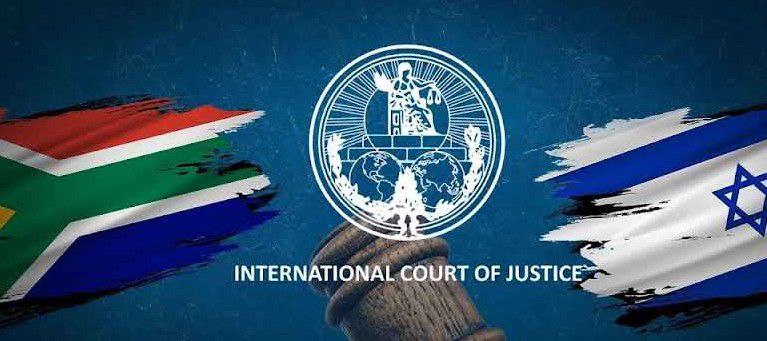
The legal battle over Gaza has entered a new phase. On March 12, 2026, the United States formally intervened in the genocide case brought by South Africa against Israel at the International Court of Justice in The Hague. Washington’s message was direct: the genocide allegations are “false” and risk distorting international law. The move marks one of the most significant diplomatic interventions in the case so far and highlights how a legal dispute has become a global geopolitical fault line.
The case formally known as “Application of the Convention on the Prevention and Punishment of the Crime of Genocide in the Gaza Strip (South Africa v. Israel)” began on December 29, 2023.
South Africa argues that Israel’s military campaign in Gaza Strip launched after the October 7, 2023 attacks by Hamas amounts to genocide under the 1948 Genocide Convention.
Israel’s military response, according to South Africa, created what it calls a “pattern of genocidal conduct.” Pretoria points to several allegations: Large-scale bombing in densely populated areas Mass displacement of civilians Severe restrictions on humanitarian aid Conditions that could lead to the destruction of Gaza’s population Israel rejects the accusation completely.
Israeli officials argue the war is legitimate self-defense against Hamas, which they say operates inside civilian areas and uses human shields. Israel also maintains it issues evacuation warnings and takes measures to reduce civilian casualties.
What the World Court Has Already Said
The International Court of Justice has not ruled on whether genocide occurred. But it has issued several binding provisional measures. In January 2024, the court ordered Israel to: Prevent acts that could fall under genocide Allow humanitarian aid into Gaza Preserve evidence related to alleged crimes Additional orders in March and May 2024 expanded those requirements, including protections for civilians in the southern Gaza city of Rafah.
Israel has reported compliance efforts, though critics say humanitarian access has remained inconsistent. A fragile ceasefire brokered largely by the United States in late 2025 reduced large-scale fighting but tensions and sporadic clashes continue.
Washington’s Legal Argument
The United States intervened under Article 63 of the ICJ Statute, which allows countries to weigh in on the interpretation of international treaties in this case, the Genocide Convention.
Washington’s filing focuses on a key legal principle: Genocide requires proof of “specific intent.” In other words, prosecutors must show that a state intended to destroy a protected group — not merely that civilians died in large numbers. According to the U.S. submission: Civilian casualties, even widespread ones, do not automatically prove genocidal intent, especially during intense urban warfare.
American lawyers warn that lowering this threshold could broaden the definition of genocide too far, turning the convention into a political weapon in ordinary conflicts. U.S. officials also framed the case as part of a broader political campaign against Israel.
Some American diplomats argue that a ruling against Israel could undermine decades of legal precedent and damage the credibility of the world’s top court.
A Surge of Countries Joining the Case
The United States is far from the only country intervening. More than 20 states have now submitted declarations under Article 63 an unprecedented number for an ICJ case.
Countries like Hungary and Fiji support a narrow interpretation of genocide, similar to Washington’s position. Others argue the opposite. Namibia says denying humanitarian aid could itself create genocidal conditions. Meanwhile, countries such as Ireland, Spain, and Colombia have largely aligned with South Africa’s arguments. Even traditionally cautious European states like Netherlands and Iceland have urged the court to closely examine whether starvation or aid restrictions could indicate genocidal intent.
The scale of global participation shows just how deeply the Gaza war has fractured international politics. A Legal Battle That Could Shape the Future The final ruling from the International Court of Justice is not expected until 2028 at the earliest. Before that, Israel must submit its full counter-arguments, followed by years of written submissions and oral hearings. But the stakes extend far beyond the war in Gaza.
The court’s interpretation of genocide could influence future conflicts, humanitarian law, and the limits of military self-defense.Supporters of the U.S. position argue that protecting the strict meaning of genocide is essential to preserving the legacy of the post-World War II legal order that created both Israel and the Genocide Convention.
Critics counter that shielding powerful allies risks undermining accountability for civilian suffering. Either way, the courtroom in The Hague is now the stage for one of the most consequential legal battles of the 21st century.
And the outcome may redefine how the world understands war, justice, and genocide itself.