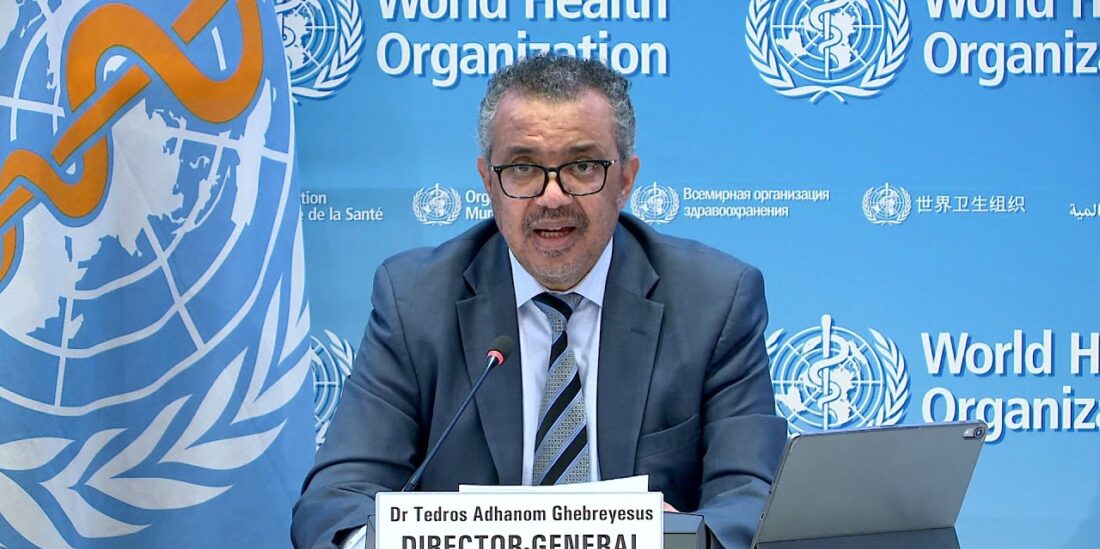
A dispute has emerged between the South African government and the Director-General of the World Health Organization, Dr. Tedros Adhanom Ghebreyesus, over recent violence targeting foreign nationals in South Africa.
The controversy began after Dr. Tedros publicly described the incidents as a renewed wave of xenophobic attacks. In a statement, he said that violence against African migrants was once again escalating in South Africa and warned that lives were being lost while thousands of families were being forced to flee their homes.
Dr. Tedros cited reports that at least five Ethiopians and five Mozambicans had been killed. He argued that such attacks were deeply troubling, especially given South Africa’s history. He described the violence as a betrayal of the values that guided the country’s struggle against apartheid and the solidarity shown by African nations during that period.
He reminded audiences that many African countries, including Ethiopia, supported South Africa’s liberation movement. Ethiopia, he noted, helped figures such as Nelson Mandela by providing travel documents and political support, while other African states contributed in different ways to the anti-apartheid struggle.
According to Dr. Tedros, the targeting of African migrants contradicts that legacy. He called for the protection of migrants, respect for human dignity, and solutions based on the rule of law rather than mob violence.
However, South Africa’s government strongly rejected his characterization of the events.
Officials argued that the deaths mentioned by Dr. Tedros were not the result of xenophobic attacks. Instead, they said the killings of Ethiopian nationals were linked to organized criminal activity, while investigations into the deaths of Mozambican citizens were still ongoing.
South Africa’s Department of International Relations and Cooperation accused Dr. Tedros of reaching conclusions before investigations had been completed. Officials said he had relied on incomplete information and had contributed to a misleading international narrative about the situation inside the country.
While expressing sympathy for the victims and their families, the government insisted that there was no evidence proving the incidents were driven by anti-foreigner hatred. Authorities also stated that they were willing to provide the WHO with what they described as accurate and verified information regarding the events.
The disagreement comes at a time when tensions surrounding immigration have become increasingly visible in South Africa.
In recent weeks, demonstrations have taken place in several parts of the country, with protesters demanding stronger action against undocumented migrants. Reports of attacks and intimidation targeting foreign nationals have also circulated widely, fueling concerns among migrant communities.
At the same time, the South African government has maintained that it is addressing immigration issues through legal channels and has repeatedly warned citizens against taking the law into their own hands.
The growing insecurity has already prompted concern beyond South Africa’s borders. Countries such as Ghana and Nigeria have begun assisting citizens who wish to leave South Africa due to fears about their safety.
At the heart of the dispute is a fundamental question: are the recent killings part of a broader pattern of xenophobic violence, or are they isolated criminal incidents unrelated to anti-foreigner sentiment?
For Dr. Tedros, the attacks reflect a troubling resurgence of hostility toward migrants and a challenge to the ideals of African solidarity For the South African government, the issue is one of criminality rather than xenophobia, and officials argue that labeling the incidents before investigations are complete risks damaging the country’s reputation and distorting the facts.
As investigations continue, the debate highlights the sensitive intersection of migration, security, public perception, and South Africa’s role as one of the continent’s leading destinations for African migrants.