

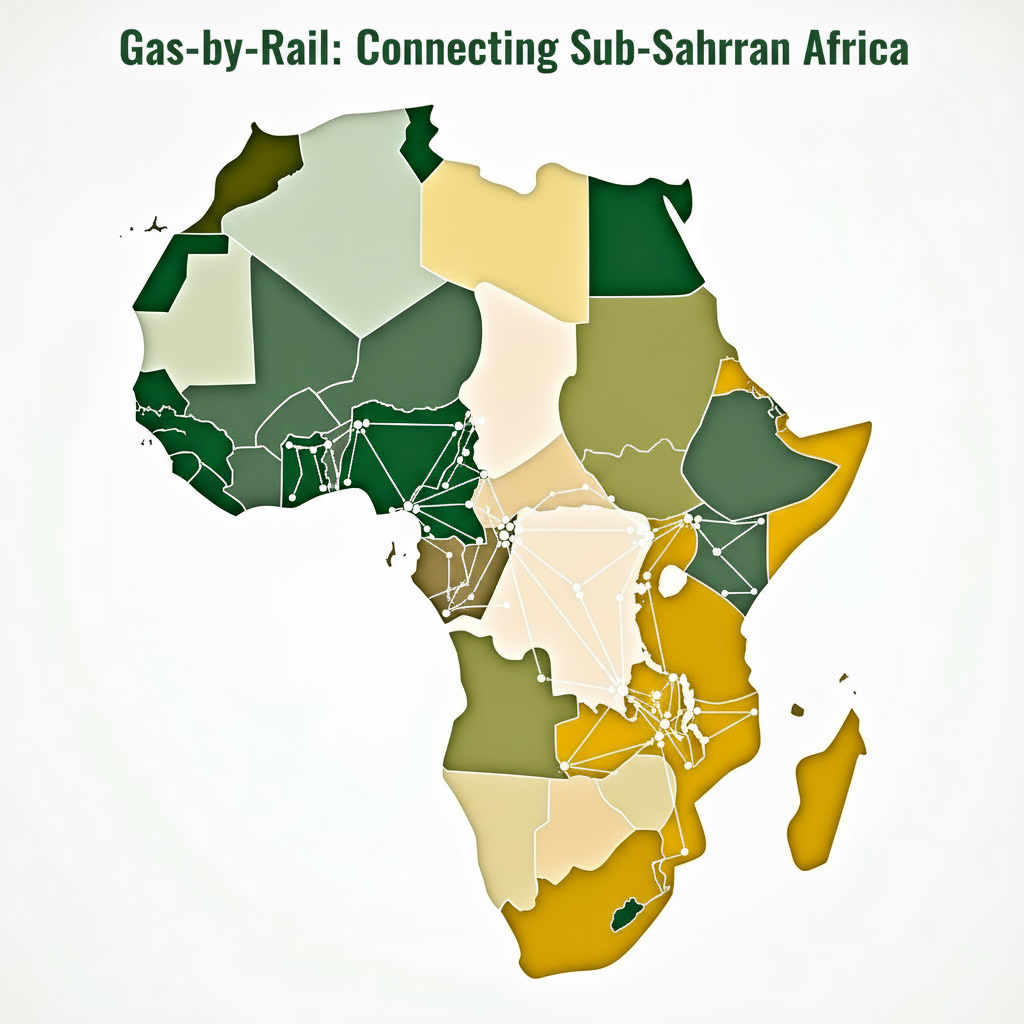
Earlier this week, Ethiopia and Nigeria were linked to a bold idea: a 73,500-kilometre, $29 trillion, “gas-by-rail” network connecting about 40 Sub-Saharan countries. Ethiopia would host part of the system; Nigeria would be a major supplier. Promoters call it a “virtual pipeline”: instead of sending gas through pipes underground, you package it, load it on trains, and deliver it to cities and factories across the continent.
Addis Ababa is preparing a Host Country Collaborative Agreement with Insight Dynamic Resources to launch the Gas-by-Rail Economic Corridor Initiative. Nigeria is presented as a strategic partner and supply node. Announcements so far are big on vision: connect 40 countries, standardize how gas moves, and hold a leaders’ summit in 2026 but short on the detailed maps, budgets, and construction schedules that turn ideas into track and trains.
In short: the politics say “go,” the engineering still has to catch up.
Think of this as a delivery service. Gas is compressed or chilled at a few big hubs, put into safe containers, and moved by freight trains along agreed routes. At the destination, it’s turned back into usable fuel for power plants, factories, hospitals and households. Some promoters also talk about future add-ons like using the same rail backbone for hydrogen or high-efficiency turbines.
Those are exciting, but they also raise the bar: newer technology costs more money and needs more skills. Ethiopia is already trying to rebuild the rail capacity that a project like this would rely on. It signed a modernization framework with an Italian partner, broke ground on what officials call East Africa’s largest railway training center at Bishoftu. It also signed cooperation with South Korea’s rail operator to improve links toward Lamu Port. If “gas-by-rail” moves forward, it will lean on exactly these building blocks: standards, trained people, and cross-border connections.
At its best, the new gas-by-rail plan tackles three stubborn problems at once. First, energy access: helping families and small businesses shift away from wood and charcoal to cleaner fuels. Second, jobs and industry: giving inland towns steady power so workshops, agro-processing and factories can run. Third, regional trade: adding a rail backbone that complements roads and existing corridors like Ethio-Djibouti or LAPSSET. But scale matters. A network touching 40 countries is not a one-parliament project; it is a multi-decade effort. Even well-known African railways have needed extra time and money once land, financing and security met reality. Expect years of pilots and phased stretches before anyone can talk about continent-wide coverage.On money, no detailed financing plan has been published.
The $29 trillion figure should be seen as a rough, long-term estimate from backers, not a cheque in the bank. Realistically, funding would be stitched together: governments paying for key trunk lines, private partners investing where cargo demand is strong, and long-term supply contracts at energy hubs to make repayments possible. The main risks are easy to explain, too. Big rail-and-energy projects can struggle to raise affordable financing; different countries use different rail standards; some routes cross insecure areas; elections and politics can cause delay; and corruption can drain projects that look good on paper.
There are lessons close to home. Kenya’s standard-gauge railway and Nigeria’s standard-gauge upgrades delivered new track and trains, but both faced cost overruns and periods of low cargo volumes. The Ethio-Djibouti line is moving freight today, but only after years of fixes to power supply, operations and pricing. The takeaway is simple: don’t just build tracks, train the people, fund maintenance, and run reliable timetables. That is exactly what Ethiopia’s Bishoftu academy and standards work aim to do, and it will matter more than speeches.
Ethiopia and Nigeria have planted a bold flag. Today, it’s a political framework and a stack of MOUs. But if partners move from slogans to specifications, from ceremonies to schedules, this “gas-by-rail” could narrow Africa’s energy and logistics gaps and create jobs where they’re most needed. If not, it risks becoming another big idea that ran ahead of time and money.