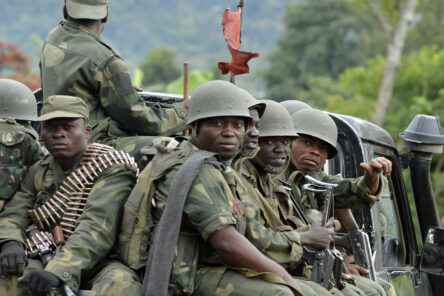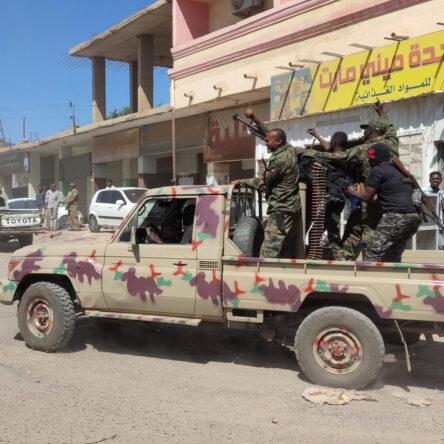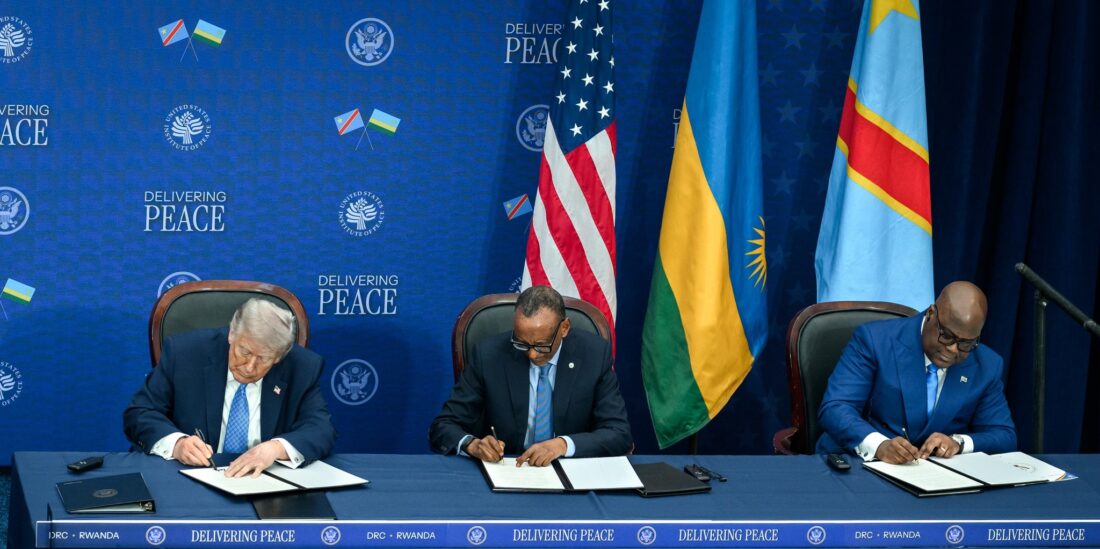
Rwanda and Congo signed a U.S.-brokered accord in Washington last week, promising de-escalation in the east and a path to economic cooperation. President Donald Trump called it a historic break with decades of war. But within hours, shells were falling again around the front lines in North Kivu. The hopeful image in D.C. and the reality in Goma set the tone: peace on paper, gunfire on the ground.
The DRC may be the richest country on earth in the ground copper, cobalt, gold, tin yet its people remain among the poorest. Exploitation, corruption, and a war economy have kept wealth from turning into welfare. The latest phase of fighting dates back to late 2021, when the M23 rebel group resurged and seized territory near Goma, displacing hundreds of thousands. Kinshasa accuses Rwanda of backing M23; Kigali denies it and points to the threat from the FDLR militia on Congolese soil. The new Washington package tries to cool that front while tying peace to cleaner, traceable mineral trade.
What was actually signed is a mix of security and economics.
The “Washington Accords” set out sequenced steps on withdrawals and demobilization while the U.S. unveiled a new Strategic Partnership with Kinshasa that links investment to governance and supply-chain standards. In plain terms, the pitch is peace with a minerals backbone: fewer guns, more rules, more predictable copper and cobalt for global supply chains.
Here is where the business angle quietly moves center stage.
In the hours around the ceremony, U.S. development and finance arms highlighted supply-chain security, while reporting pointed to efforts to channel state-company sales toward U.S. buyers and attract Western capital to Congo’s “critical minerals.” Those messages do not negate the search for peace; but they do show what Washington most wants. But here is another fact about the Washington Accords. Neither M23 nor the FDLR signed anything. Commanders on all sides still have patrons, revenue streams and reasons to test lines. The morning after the summit, fresh clashes were reported and agencies flagged new displacement. This is why verifiable benchmarks who pulls back, where, when, and under independent monitoring matter more than podium lines. Without consequences for violations, the war economy simply adapts to the new language.
It also matters how the “minerals for peace” idea is implemented. The State Department’s new partnership with Kinshasa is unusually explicit about governance and diversification useful if it leads to published contracts, community consent and audits before bulldozers move. Civil society and analysts are already warning that if standards are weak, new routes and deals could look like the old ones with different logos. In short: if people near the mines don’t see safer roads, fair compensation and steady work, the conflict premium will persist.
Two clocks are ticking.
On the ground, clashes keep uprooting families; internationally, the race to secure cobalt and copper for batteries and grids is reshaping diplomacy. China still dominates parts of Congo’s mining and processing; the U.S. and EU are pushing alternatives from new offtake deals to the Lobito rail corridor. The Washington deal tries to align those incentives.
But past U.S. behaviorin the Congois a guide and a caution.
From the assassination of Patrice Lumumba to Cold War backing for Mobutu; later sanctions and human-rights conditionality; the 2010s “conflict minerals” rules; and now a “peace plus minerals” model. Reminding as all that Western principles can bend when access is at stake. The new Strategic Partnership, however, is unusually plain about supply-chain security and diversification. It claims to learn from the past: pair standards with investment and lock both to measurable security gains. That is a better design on paper. It will be judged at the pit head and along the roads, not in Washington.
The Washington deal has the potential to be more than a ceremony: a small but real step toward quieter nights and lawful commerce for the people of Congo. If it doesn’t, the war economy will simply change flags. For now, the takeaway is simple. Peace was promised in Washington; proof will be measured in in the Congo when contracts, corridors and checkpoints are designed for the people and when the quiet after a deal finally lasts longer than the applause.