

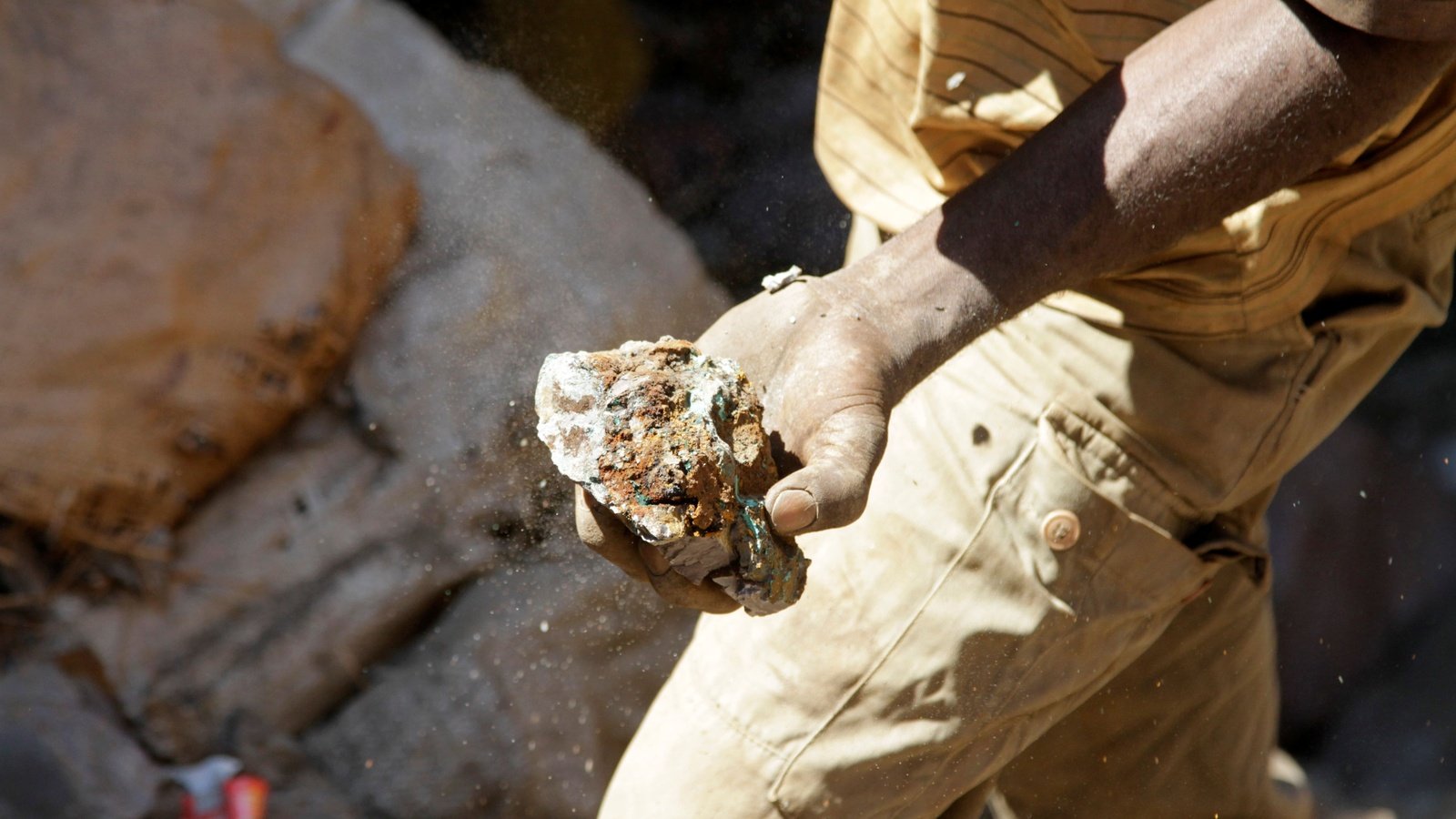
First, rebels backed by foreign powers destabilize a mineral-rich nation. Then comes a “minerals-for-security” deal, a global power offers protection in exchange for access. Soon after, a ceasefire is announced, praised as peace… while billion-dollar mining contracts quietly change hands.
It sounds like an old colonial playbook but it’s unfolding right now in the Democratic Republic of Congo (DRC). And it might shape the next century of Africa’s politics and economy.
Last week, the Congolese government and M23 rebels signed a new ceasefire agreement, celebrated around the world as a step toward peace. In the same week, Washington and Kinshasa advanced a “minerals-for-security” partnership, a deal that could give U.S.-backed companies easier access to Congo’s huge reserves of cobalt, copper, and lithium.
Officially, it’s about peace and partnership. But the timeline tells another story: War creates crisis. Crisis invites intervention. Intervention unlocks resources. It’s an old pattern now rewritten for the age of green energy.
War Over the Mines In early 2025, the M23 rebellion, believed to be supported by Rwanda (a close U.S. ally), captured several key towns in North Kivu including areas sitting on billion-dollar mining routes.
According to U.N. reports, the war has displaced nearly seven million people and killed thousands. Rebel groups were reportedly collecting up to $800,000 a month in taxes from mines producing cobalt and coltan two minerals essential for smartphones and electric cars.
As demand for green technology grows, so does the fight for control of these resources. When the government loses control, the door opens for “stabilization missions” where foreign powers arrive to “help” but often gain influence over what lies underground.
The U.S. Steps In Earlier this year, the United States confirmed talks with the Congolese government about a Critical Minerals for Security Partnership. Simply put, America offers military and intelligence support in return for exclusive mining access for U.S. companies.
One major winner is KoBold Metals, a U.S. firm backed by Bill Gates and Jeff Bezos, which now controls large parts of the Manono lithium belt a billion-dollar project spanning more than 1,600 square kilometers.
The deal helps Washington challenge China’s dominance in cobalt processing and secures a U.S. foothold in Africa’s new energy economy.
Another deal aims to route Congolese cobalt through U.S.-approved “traceability” systems. Officially, it’s about transparency. In practice, it gives Washington leverage ensuring supply chains stay secure while U.S. influence quietly expands on the ground.
The Peace That Followed After months of Qatar-led mediation, Kinshasa and the M23 signed a ceasefire deal in Doha last week. It was praised as a major diplomatic success.
But behind the celebrations, something else happened: The U.S. joined the Expanded Joint Verification Mechanism, the group monitoring the ceasefire as an official observer.
That means Washington now has a formal seat inside Congo’s peace process and, indirectly, inside the management of its minerals.
Days later, Congo’s mining authority announced new cobalt export quotas. Most of the allocations went to Glencore and CMOC, while aligning the system with U.S.-backed “traceability” programs all in the name of market stability. The timing was not accidental.
Segment 4: A Familiar Story This isn’t the first time Congo’s riches have drawn foreign hands. From King Leopold’s rubber empire to Cold War coups to today’s corporate deals — every era has had new players chasing the same goal.
The human cost has been devastating: Over 10 million lives lost under colonial rule, and another 12 million in modern conflicts. Yet, the world rarely pays attention. For many outsiders, Congo is not a country — it’s a resource corridor, where human suffering fades behind the glow of global supply chains.
The Bigger Picture Congo is not alone. From Niger’s uranium to Sudan’s gold to Somalia’s gas, foreign powers are experimenting with a new model: Minerals for security. Stability for access.
In Congo, it’s the U.S. In Somalia, it’s Turkey. Elsewhere, it’s China, Russia, and the EU.
These deals promise quick cash, training, and global legitimacy to African governments. But they come at a cost the quiet loss of sovereignty, and control over the wealth buried beneath their soil.
Outro So, is this partnership a path to progress — or just colonialism with better branding? Is “minerals for security” the price of peace, or the cost of independence?
Let us know your thoughts in the comments.