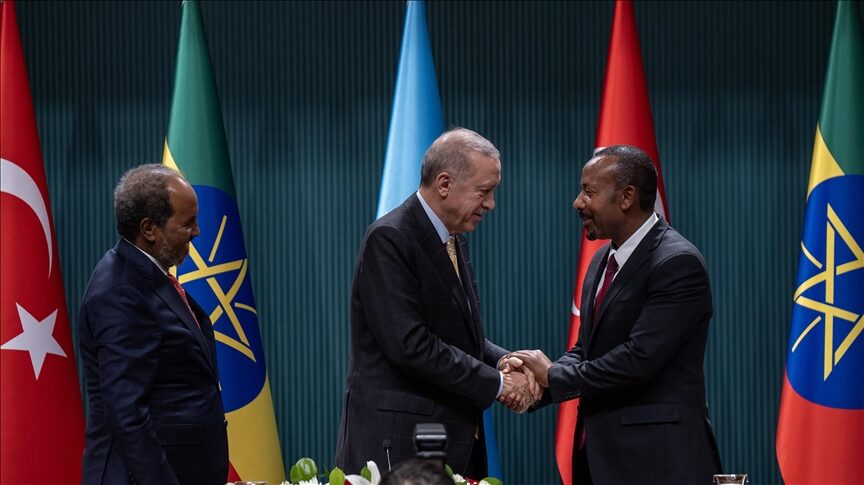
Somali President Hassan Sheikh Mohamud was in Addis Ababa last week, for a one-day working visit and lunch with Prime Minister Abiy Ahmed. The readout was brief trade, security, “shared priorities,” and regional stability but the symbolism was not. After nearly two years of swings between confrontation and forced diplomacy, Ethiopia and Somalia are again trying to place their relationship on rails. To understand we have to rewind to where the rupture started.
On January 1, 2024, Ethiopia signed a memorandum of understanding with Somaliland Somalia’s breakaway region seeking a path to sea access. Reports at the time described the arrangement as involving a leased stretch of coastline and a naval facility, in exchange for a possible Ethiopian recognition of Somaliland’s independence. Somalia’s federal government rejected the deal as a violation of sovereignty, and the dispute quickly became regional news because Ethiopia is not just a neighbor it is also a major security actor inside Somalia.
As tensions rose, Somalia sent Ethiopia’s ambassador home for consultation and closed Ethiopian consulates. Regional governments, including Kenya and Djibouti, looked for a way out, before the argument about ports turned into an argument about borders.
The solution eventually came from Türkiye.
In December 2024, Türkiye hosted Abiy and Hassan Sheikh in Ankara and announced a “historic” compromise framework. The language around it was deliberate: Ethiopia’s access to the sea would be pursued through commercial arrangements “under Somali sovereignty,” and technical talks would follow on a set timetable. It was not a final settlement but it created a process that both sides could claim as a win: sovereignty affirmed for Somalia, sea-access pathway kept alive for Ethiopia.
That process then moved into implementation.
In 2025, Ethiopia and Somalia restored full diplomatic ties and issued joint messages about security cooperation and infrastructure linkages. Abiy also made a high-profile visit to Mogadishu in February 2025, again framing the reset as regional stabilization rather than a transactional port bargain. In this context, the December 19, 2025 meeting is less about new announcements and more about maintaining momentum. The continuing discussions held over the past year suggests both sides want their normalization to look routine.But normalization is not happening in a vacuum. It is happening in a crowded theater Türkiye’s role is the obvious one. Ankara is not only a mediator; it is also deeply embedded in Somalia’s security and political economy.
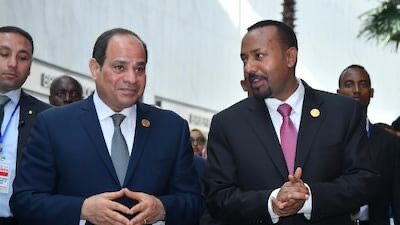
Turkey operates its largest overseas military base in Mogadishu, trains Somali forces, and has formalized maritime security support to Somalia to help protect its waters against piracy and other threats Ankara has also deepened its energy footprint through agreements with Somalia covering offshore oil and gas cooperation. These connections give Türkiye leverage and also give Somalia a powerful partner as it tries to rebuild state capacity. Then there is Egypt whose incentives are more complicated, but whose recent actions have been clearer. During the 2024 Ethiopia-Somalia dispute, Egypt expanded security ties with Mogadishu, including arms deliveries reported, in a period when Cairo and Addis Ababa were already locked in a long dispute over the Nile and the GERD.
For Ethiopia, that looked like strategic pressure.
For Somalia, it looked like external backing at a moment of confrontation over sovereignty.
Either way, it raised the stakes around a dispute that was originally framed as “just” a port deal.
There is also Eritrea.
Ethiopia’s renewed push for reliable access to the sea has also been reported as a driver of tension with Eritrea. Eritrea’s rhetoric, mobilization of troops, and its recent withdrawal from IGAD is part of the same regional atmosphere: war of words, escalating actions leading to more room for outside actors to exploit fault lines.
This is why the Ethiopia–Somalia thaw is good news to the people of the Horn.
If Addis Ababa and Mogadishu keep talking, it narrows the space for escalation-by-proxy where third parties push their own agendas against the interest of the people.
If they don’t, Somalia’s sovereignty debate and Ethiopia’s sea-access needs can harden again into a security issue fueled by foreign interests. And security debates in the Horn rarely stay contained. For now, what happened in Addis Ababa this week might seem modest: Just a meeting, a reaffirmation, another step in a diplomatic process. But in a region where misunderstandings can become military facts quickly, modest steps done consistently can be the difference between a dispute that stays political and one that becomes something else.