Egypt says it has never issued threats Ethiopia says it has never harmed Egypt. So why does the louder voice Sound like the victim?
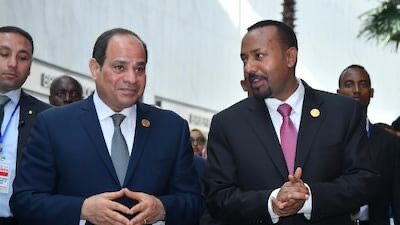
This week, President Abdel Fattah el-Sisi said Egypt seeks no escalation with Ethiopia. He said Egypt only wants its water rights protected. And that Egypt has never threatened anyone.But there’s another side to this story. One that often gets lost. Because while Egypt speaks in warnings,Ethiopia has acted in restraint. This video isn’t about choosing sides. It’s about measuring actions against words. And when you do that, Ethiopia’s case looks far more reasonable than it’s often portrayed.
THE CORE FACT: WHAT ETHIOPIA HAS ACTUALLY DONE
Let’s start with the most important fact. Despite years of tension, Despite military rhetoric, Despite repeated warnings
👉 Ethiopia has not reduced Egypt’s share of Nile water.
Not during the first filling,Not during the second,Not during the third or fourth.
Independent assessments, including UN briefings and downstream monitoring, show no measurable harm to Egypt’s annual water flow. That’s not opinion That’s data Ethiopia didn’t fill the dam secretly It notified downstream countries It adjusted filling during drought years And it coordinated flow releases This is what restraint looks like.
DEVELOPMENT IS NOT AGGRESSION
The GERD is not a weapon It doesn’t consume water It stores and releases it Ethiopia isn’t diverting the Nile. It’s regulating it And here’s the key point:
👉 International law allows this.
Under the UN Convention on Non-Navigational Uses of International Watercourses, upstream countries have the right to equitable and reasonable use.That means: • Development is legal Electricity generation is legal Growth is legal
As long as there is no significant harm. And after more than a decade no significant harm has occurred. So when Egypt demands a binding agreement, Ethiopia isn’t rejecting cooperation. It’s rejecting a deal that would freeze its future. Presenter stops Direct eye contact Here’s the contradiction. Egypt says it has never issued threats.Yet it repeatedly speaks of:
• Red lines ,All options,Self-defence, Instability Ethiopia, meanwhile, has done the opposite. No threats,No troop movements,No military posturing. Just construction. Just electricity. Just water flowing downstream.
So who is escalating?
The country speaking in warnings or the country letting the water pass? Ethiopia recognizes Egypt’s dependence on the Nile It has never denied it.What Ethiopia rejects is the idea that one country owns a river forever. Fairness matters. Egypt consumes over 55 billion cubic meters annually. Ethiopia, for decades, used almost none.
GERD doesn’t take Egypt’s water. It finally gives Ethiopians light. Fairness is not harm. Equity is not aggression. And that’s why many African states quietly support Ethiopia’s position, even if they don’t say it publicly. For the first time, millions of Ethiopian homes have electricity. Children can study at night. Hospitals can operate reliably. Factories can open. None of that required Egypt to lose a single drop. That’s not conflict. That’s coexistence. So when Egypt says
“We have never issued threats,” that may be true in form. But when Ethiopia says “We have never harmed Egypt,” that is true in fact. This dispute doesn’t need louder warnings. It needs acknowledgment of reality. Ethiopia built a dam. Not a weapon. It chose patience over provocation. And restraint over rhetoric. If African development is to mean anything, it cannot depend on permission forever.