Israel’s recognition of Somaliland was already a geopolitical rupture. But the foreign minister’s visit to Hargeisa was the escalation that gave it weight, proof that recognition is not a headline, but a relationship being put into motion This escalation has forced everyone with interests in Somalia to reassess their plans No stakeholder felt that shift more sharply than Egypt.
Cairo rejected both the visit and the recognition as a violation of Somalia’s territorial integrity But the urgency is also strategic: Somalia has become part of Egypt’s Horn posture, and a new external footprint in Somaliland complicates the balance Cairo has been trying to build across the Red Sea.
Somaliland has functioned like a state for more than three decades elections, institutions, and security forces—yet it remained outside formal international recognition That ambiguity was the stabilizer: it allowed outside actors to engage Somaliland cautiously without formally challenging Somalia’s sovereignty Israel’s recognition broke that ambiguity.
The ministerial visit then hardened the break, triggering a chain of reactions from Mogadishu’s condemnation to African Union calls to reverse the decision, and a wider regional scramble to interpret what recognition could lead to next: diplomatic missions, security cooperation, intelligence access, or even military presence.
For Egypt, this is not a distant legal argument. It lands directly in Cairo’s Red Sea and Horn calculations where Somalia is an active line of leverage and influence Somalia’s response was categorical, as expected The visit and recognition are violations of sovereignty and territorial integrity The African Union’s Peace and Security Council also pushed for reversal, underscoring how recognition risks setting a precedent across a continent sensitive to border disputes.
Egypt echoed that sovereignty framing publicly rejecting the visit and stressing Somalia’s territorial unity But what matters is why Cairo reacted with such speed: because recognition plus presence changes the operating environment It shifts Somaliland from “unresolved status” into “emerging strategic partner” for another powerful external actor Egypt’s Somalia policy has matured into an influence architecture where Egypt can project power in a region where it is already competing most notably with Ethiopia.
Egypt has been building that Somalia file for years In 2024, Egypt and Somalia signed a military cooperation protocol which saw Egyptian troops deployed and military aid delivered to Somalia Then in October of the same year, Egypt, Eritrea, and Somalia publicly agreed to boost security cooperation in a trilateral format—explicitly linking Somali security capacity and border protection to a wider regional alignment.
Egypt’s Horn posture is not built through Somalia alone It also runs through the Red Sea littorals especially Eritrea, whose geography sits astride a corridor that connects directly to Suez-era thinking Egypt’s growing alignment with Eritrea has been interpreted as a strategic hedge in Red Sea politics.
Recent reports claim Egyptian involvement in Assab’s port development Whether every detail is accurate or not, the underlying strategic logic is consistent: Cairo wants to keep options open and influence visible In that context, Israel’s move into Somaliland is disruptive; it adds a new actor with a security motive that could intersect with Red Sea militarization.
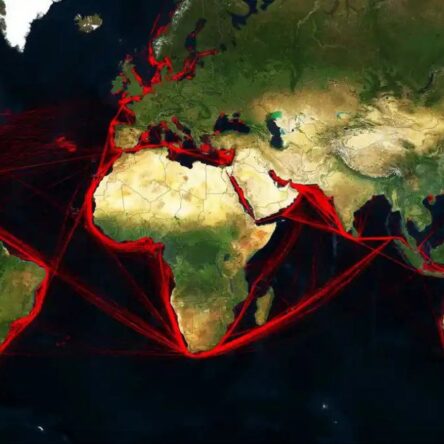
Israel has a clear strategic incentive to reduce uncertainty in the Red Sea corridor especially with the Houthi campaign demonstrating how quickly shipping can become a bargaining tool.
Somaliland’s location is the obvious attraction: it sits near major sea lanes, facing Yemen across the Gulf of Aden That geography invites security logic maritime domain awareness, early warning, and strategic proximity to threats emanating from Yemen and Iran Even if Somaliland publicly denies basing intentions, recognition and a high-level visit inevitably raise the question:
What future security relationship is being enabled by this diplomatic opening?
Israel’s recognition may be framed as a bilateral decision, but its effects are already multilateral.
For Egypt, it is a new variable in its Horn plans: one that touches Red Sea security, alliance-building across the African shore, and most importantly Egypt’s broader competition for influence in the region.
Once recognition turns into presence, the diplomatic math of who gets to shape the corridor changes The introduction of a new player comes with its own security logic, its own partnerships, and its own routes into the Horn’s decision-making space.
And that is the pressure point for Cairo: a sustained Israeli footprint in Somaliland risks diluting Egypt’s Somalia-centered leverage shifting the balance of access, attention, and alignment away from Egypt’s preferred map of the Horn.