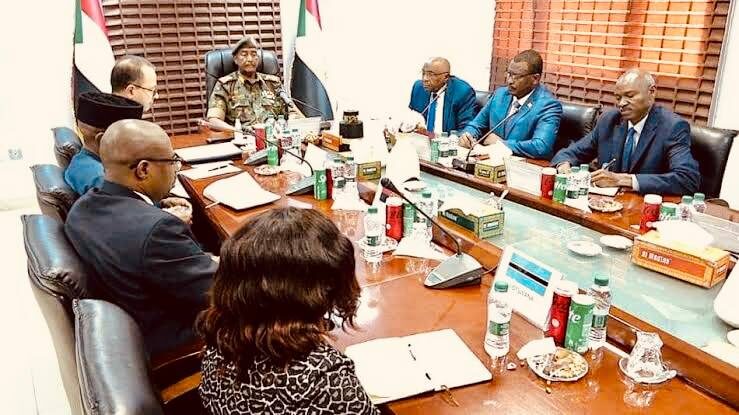
In today’s edition of AnalyticaToday, we examine the key takeaways from the Third International Sudan Conference held in Berlin on April 15-16, 2026. This gathering of global leaders, donors, and regional actors focused on the devastating civil war in Sudan that has raged since April 2023 between the Sudanese Armed Forces and the Rapid Support Forces. The conflict has killed tens of thousands, displaced millions, triggered famine warnings, and created one of the world’s largest humanitarian crises. At the heart of the conference was a clear and urgent message from African Union Commission Chairperson Mahmoud Ali Youssouf: an immediate ceasefire is the most pressing priority. Speaking directly to delegates, Youssouf stressed that continued fighting is not only prolonging immense civilian suffering but actively blocking life-saving aid. He warned that without a halt to hostilities, no amount of humanitarian assistance can reverse the deepening catastrophe. This call aligns with the AU’s long-standing emphasis on African-led solutions and underscores the need for better coordination among international mediators to avoid fragmented efforts that could stall progress.
A standout element of the conference was Ethiopia’s intervention, delivered by State Minister of Foreign Affairs Hadera Abera. Ethiopia did not frame its engagement solely in humanitarian terms. Instead, it explicitly positioned stability in Sudan as a core national interest. The two countries share a long border, deep economic links, and vibrant people-to-people ties. Abera explained that ongoing instability in Sudan directly threatens Ethiopia’s security through potential refugee surges, disrupted cross-border trade, and heightened regional risks. In short, peace in Sudan is not charity for a neighbor; it is essential to Ethiopia’s own development and stability. Ethiopia also reminded the audience of its credentials as a regional peace actor. As host of the African Union headquarters in Addis Ababa, Ethiopia has consistently championed dialogue, cooperation, and African-owned conflict resolution. The country is one of Africa’s largest refugee hosts and continues to shelter Sudanese civilians fleeing the fighting. Abera highlighted efforts to expand access to education, healthcare, and economic opportunities for refugees, allowing them to live with dignity and contribute
locally. At the same time, he candidly addressed the strain this places on Ethiopian host communities and resources, calling for stronger international support and equitable burden-sharing. Helping both refugees and the communities that receive them, he argued, is equally vital.
The conference produced tangible commitments: participating nations pledged nearly 1.8 billion euros for humanitarian relief, targeting food, healthcare, and shelter in Sudan and neighboring states. Yet leaders, including Ethiopia’s delegation, repeatedly cautioned that money alone is insufficient. Without a ceasefire and a credible, Sudanese-led political process that includes civilian voices, the crisis will only worsen.
From a broader analytical perspective, this Berlin meeting reveals two important dynamics. First, it shows the growing recognition that Sudan’s war is not isolated; its fallout ripples across the Horn of Africa, affecting security, migration, and economies. Second, it demonstrates how regional powers like Ethiopia are asserting their stakes more openly while still anchoring their positions in pan-African solidarity. Ethiopia’s message blends self-interest with a principled commitment to African unity an approach that strengthens its diplomatic credibility. Challenges remain significant. The warring parties were not seated at the table, mediation efforts are fragmented, and media attention on Sudan has waned despite the scale of suffering. The AU’s push for unified, coordinated action and Ethiopia’s call for sustained engagement offer a constructive path forward.
In summary, the Third International Sudan Conference delivered a dual message: an immediate ceasefire is non-negotiable, and regional stability demands genuine partnership. For Ethiopia, and for Africa as a whole, peace in Sudan is both a moral imperative and a strategic necessity. The pledges and statements in Berlin are encouraging, but the true test will be whether words translate into coordinated pressure for a lasting truce and inclusive political dialogue.
This analysis draws directly from the official proceedings and statements released by the African Union and Ethiopia’s Ministry of Foreign Affairs. The situation
remains fluid, and AnalyticaToday will continue to monitor developments closely. Thank you for joining us. Stay informed, stay engaged.