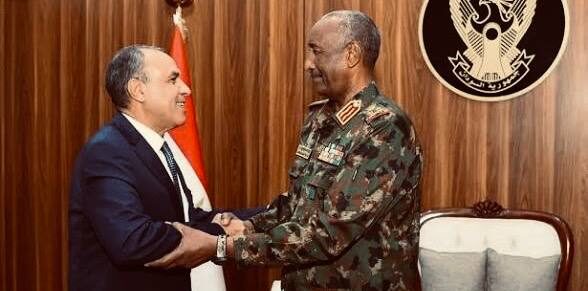
In the complex theater of Sudan’s civil war, few actors embody contradictions as starkly as Egypt. Cairo chairs and hosts major peace initiatives while simultaneously providing direct military support to the Sudanese Armed Forces (SAF) against the Rapid Support Forces (RSF). This duality raises fundamental questions about the nature of international diplomacy in proxy-influenced conflicts. Is genuine mediation possible when every major stakeholder arrives with its own arsenal?
Egypt has positioned itself at the forefront of peace efforts. In January 2026, Egyptian Foreign Minister Badr Abdelatty chaired the fifth meeting of the Consultative Mechanism to Enhance Coordination of Peace Efforts in Sudan. The gathering in Cairo, involving the UN and international partners, called for an urgent humanitarian ceasefire as the war approached its three-year mark. Egypt has hosted Sudanese civil and political forces for dialogue and pushes a UN-endorsed roadmap emphasizing Sudan’s unity, territorial integrity, and state institutions explicit “red lines” for Cairo.
Egypt participates in the Quad (with the US, Saudi Arabia, and UAE), coordinates with Washington, and engages in broader talks. US officials continue to invite Egypt to the table, even as mediation efforts in Washington and elsewhere proceed. Egyptian President Abdel Fattah el-Sisi and officials repeatedly stress that Sudan’s collapse or fragmentation threatens regional stability, the Horn of Africa, and the Red Sea.
Parallel to these diplomatic initiatives, Egypt maintains deep military involvement with the SAF. Reports from The New York Times, Reuters, and others document Egyptian operations of advanced Turkish-made Akinci drones from the East Oweinat airstrip in Egypt’s Western Desert. This remote base, part of a vast agricultural project, lies approximately 37–65 km (23–40 miles) from the Sudanese border. Satellite imagery, flight records, and official sources indicate strikes on RSF targets deep inside Sudan have occurred for months.
Beyond drones, cooperation includes a joint operations room with the SAF in North Kordofan (and reportedly el-Obeid). This facilitates intelligence sharing, logistics, targeting, early-warning systems, and battlefield coordination. Egyptian
officers have conducted field visits, and support extends to weapons, training, and aircraft maintenance. This escalated following visits by SAF leader Abdel Fattah al-Burhan to Cairo.
The human cost underscores the depth of involvement. In March 2026, Brigadier General Ahmed Samir Abdel-Wahab Noor Al-Din and three other Egyptian personnel were killed. While Egypt described it as a border security incident, reports link their deaths to operations near Kosti in coordination with SAF forces, including drone-related activities. RSF drone strikes in the area were cited in some accounts.
Egypt’s motivations are rooted in strategic interests: preventing RSF advances that could destabilize its southern border, disrupt Nile waters, or empower rivals (with UAE accused by some of backing the RSF, though denied). Longstanding ties to Sudan’s military and fears of fragmentation drive Cairo’s “all-in” approach to backing the SAF.
Washington is fully aware of this dual role. Egypt’s military actions are documented in open-source intelligence and policy circles. Yet the US continues Quad coordination and invites Cairo to talks. This reflects pragmatic realpolitik: Egypt is indispensable for any viable process due to its influence, geography, and leverage with the SAF. Similar dynamics exist with other actors — regional powers pursue favorites while publicly championing ceasefires.
The original assertion captures a harsh truth: “Cairo hosts the peace summit. Cairo coordinates the battlefield. Cairo sits at both tables simultaneously.” Every major player with a seat at the table Egypt (SAF), accused UAE links (RSF), and others brings external weapons and agendas to the war. Humanitarian tolls mount: millions displaced, widespread atrocities, famine risks. Peace talks buy time, shape narratives, legitimize stakeholders, and pressure opponents while battlefield realities, reinforced by external support, often dictate outcomes.
This is not unique to Sudan; it mirrors many modern conflicts where mediation runs parallel to proxy support. Labeling it a neutral “process” serves diplomatic propriety, but ground truths reveal great-power and regional competition. Egypt is neither disinterested mediator nor rogue actor it is a rational state pursuing core interests through all available tools.
For Sudan’s civilians, the distinction matters less than results. Until external patrons align incentives toward genuine de-escalation rather than victory for their proxies, talks risk serving as sophisticated cover for continued war. Egypt’s dual track exemplifies the challenge: effective diplomacy requires confronting these contradictions head-on, not papering over them