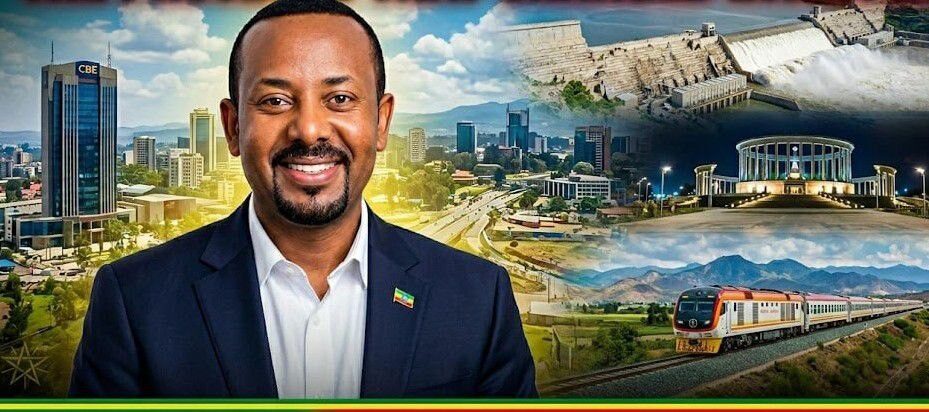
One of the most unique and remarkable characteristics of the Ethiopian government is its ability to complete projects, regardless of their scale, within or even ahead of the planned timeframe. Since Prime Minister Abiy Ahmed assumed office in 2018, Ethiopia has embarked on an ambitious journey of infrastructure development, economic transformation, and urban renewal. Over the last seven years, the country has witnessed the initiation and successful completion of numerous mega-projects that are reshaping its landscape, boosting energy capacity, enhancing connectivity, and improving the quality of life for millions of citizens.
The crown jewel of these achievements is the Grand Ethiopian Renaissance Dam (GERD). Construction began in 2011, but significant acceleration and completion occurred under Abiy’s leadership. By mid-2025, the dam was declared fully complete, with its official inauguration taking place in September 2025. This massive hydroelectric project on the Blue Nile, with a capacity of around 6,450 MW, stands as Africa’s largest dam. It symbolizes national unity, engineering prowess, and Ethiopia’s determination to harness its resources for development. Prime Minister Abiy has described it as a “shared opportunity” for the region, emphasizing its potential for clean energy generation and regional cooperation while addressing historical aspirations for utilizing the Abbay River.
Energy projects have been a priority. Progress on the Koysha Hydroelectric Dam has been remarkable, reaching heights of 128 meters and over 70% completion by late 2025, positioning it as Ethiopia’s second-largest power producer after GERD upon full operation (expected around 2,160 MW). Other initiatives include the inauguration of wind power projects like Aysha-II and Assela Wind Farm, alongside solar factories in Hawassa contributing significantly to renewable energy goals. These efforts aim to alleviate energy shortages and support industrialization.
Urban transformation in Addis Ababa and other cities stands out through the Corridor Development Project (also known as Beautifying Sheger or Smart City initiatives). Launched around 2022-2023 and expanded nationwide, this initiative has delivered widened roads, pedestrian walkways, bicycle lanes, green spaces, parks, and improved lighting across multiple corridors. Key segments, such as those from Sar Bet to German Square, International Convention Center to Goro-VIP Airport, and various routes in cities like Dire Dawa, Hawassa, Jimma, and Bahir Dar, have been completed or advanced rapidly. These projects go beyond aesthetics: they reduce travel times, stimulate real estate, create commercial opportunities, and foster community spaces.
Notable urban landmarks include the inauguration of Arada Park, a 40-hectare multi-purpose green space transformed from neglected areas, featuring recreational facilities and integrated housing. The Addis Ababa Riverside Project (along the riverbanks) has been highlighted by the Prime Minister as particularly heartwarming, turning previously underutilized or polluted areas into vibrant public spaces with promenades, cafes, and environmental improvements. Sports parks and other recreational facilities have also been delivered, promoting healthier urban living.
Housing and industrial initiatives have seen substantial momentum. Thousands of residential units have been delivered through corridor-linked developments, addressing urban housing needs. Industrial parks and manufacturing projects, including solar panel production facilities, have boosted capacity utilization and job creation. In regional areas, projects like the Megech Irrigation Development (with successful river diversion) advance food security and agricultural productivity.
Looking forward from completed foundations, new mega-initiatives were announced around the GERD inauguration in September 2025. These include a $10 billion-plus Bishoftu International Airport (groundbreaking in early 2026, aiming to be Africa’s largest with capacity for 60-110 million passengers), a nuclear power program, large-scale oil refinery and gas facilities in Gode, and a major fertilizer plant in partnership with Dangote Group (targeted for accelerated completion). Plans also encompass expanded housing (1.5 million units) and logistics enhancements.
Ethiopia’s track record demonstrates efficient execution even amid challenges. Projects often meet or beat timelines through strong government oversight, public-private partnerships, and national mobilization. The GERD’s completion despite geopolitical complexities exemplifies this resilience. Corridor projects in multiple cities have shown rapid phases of delivery, with tangible results in mobility, environment, and economy.
Critics raise concerns about displacement, financing sustainability, and equitable benefits, but supporters point to visible transformations: increased energy access, modernized cities, job opportunities, and a renewed national confidence. These projects position Ethiopia as an emerging hub in East Africa, attracting investment and fostering self-reliance.
In conclusion, under Prime Minister Abiy Ahmed’s leadership, Ethiopia has proven its capacity for visionary planning and decisive implementation. From the monumental GERD to urban corridors and emerging energy hubs, the last seven years reflect a commitment to building a prosperous future. As new projects like Bishoftu Airport and industrial giants advance, this delivery-focused approach continues to define the nation’s development narrative, inspiring further progress toward inclusive growth and regional leadership.