When a head of state refers to territories inside neighboring countries as part of a nation yet to be reunited, the statement rarely exists in isolation. It draws from historical narratives, constitutional principles, national symbols, and political memory.
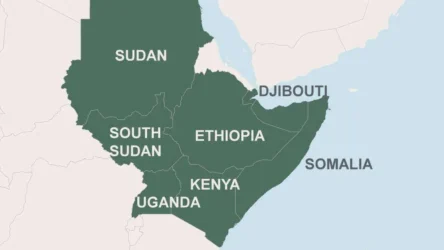
Recent remarks by Somali President Hassan Sheikh Mohamud regarding Somali-inhabited territories in Ethiopia, Kenya, and Djibouti have reignited a longstanding question across the Horn of Africa: has Somalia truly moved beyond the Greater Somalia project, or does irredentism remain embedded within the country’s political identity?
At a time when the Horn of Africa faces terrorism, economic fragility, climate pressures, and regional instability, Somali President Hassan Sheikh Mohamud’s recent references to Somali territories beyond Somalia’s borders have generated significant regional concern.
The controversy is not merely about a speech. It is about whether such remarks reflect an enduring political worldview that continues to shape Somali nationalism To understand the significance of the statement, one must look beyond contemporary politics and examine the foundations upon which the Somali state itself was constructed.
The idea of Greater Somalia predates the modern Federal Government of Somalia. It emerged during the anti-colonial period when Somali nationalists sought to unite all Somali-inhabited territories under a single political entity At independence in 1960, Somali nationalism was not limited to the territory of the newly established Somali Republic. It also encompassed the Somali Region of Ethiopia, the Northern Frontier District of Kenya, Djibouti, and the former British and Italian Somali territories.
This vision was not merely rhetorical. It became an official national objective pursued through diplomacy, propaganda, and in some cases armed confrontation the result was decades of tension with neighboring countries, including the Shifta conflict in Kenya during the 1960s and repeated confrontations between Ethiopia and Somalia culminating in the Ogaden War of 1977-78.
The historical record therefore demonstrates that territorial revisionism was not a marginal current within Somali politics. It was one of the foundational pillars of the post-independence state National flags are often designed to communicate political aspirations Somalia’s five-pointed white star has traditionally symbolized five Somali territories: former British Somaliland, former Italian Somaliland, the Somali Region of Ethiopia, Djibouti, and Kenya’s Northern Frontier District.
While some Somali officials today describe the star primarily as a symbol of ethnic and cultural unity, its historical meaning remains well documented.
The significance of this symbolism is that it embeds a territorial imagination extending beyond Somalia’s internationally recognized borders Unlike purely cultural symbols, the star emerged within a political movement whose stated objective was territorial unification.
Consequently, when contemporary leaders reference neighboring territories as unfinished components of a broader Somali nation, they are invoking a historical narrative already embedded within one of the country’s most recognizable national symbols.
The issue extends beyond symbolism.
The Somali constitutional framework contains provisions emphasizing the unity and solidarity of Somali people wherever they may reside.
Supporters argue that these provisions reflect cultural and ethnic bonds rather than territorial claims.
However, neighboring states often interpret such language differently when combined with recurring political rhetoric concerning territories beyond Somalia’s borders.
The concern is not merely what constitutional language says in isolation, but how it interacts with historical state policy, national symbolism, and public statements by political leaders.
In international relations, perceptions matter almost as much as intentions when constitutional concepts, historical narratives, and presidential rhetoric point in the same direction, neighboring states inevitably question whether old territorial ambitions have truly disappeared Many observers dismiss such statements as symbolic nationalism aimed at domestic audiences.
Yet symbolism itself can have geopolitical consequences.
The Horn of Africa remains one of the most security-sensitive regions in Africa. Trust between states is often fragile, and regional cooperation depends heavily on confidence-building measures.
References to territories within Ethiopia, Kenya, or Djibouti as parts of a broader Somali nation risk undermining that confidence For Ethiopia, such remarks are particularly sensitive because they touch upon a region that is internationally recognized as an integral component of the Ethiopian state.
For Kenya, they revive memories of the Shifta insurgency and decades of concern over cross-border irredentist narratives.
For Djibouti, they raise questions about the permanence of existing borders despite the country’s internationally recognized sovereignty the remarks therefore resonate far beyond domestic Somali politics Modern Africa is largely governed by a foundational principle inherited from the Organization of African Unity and maintained by the African Union: the sanctity of inherited colonial borders.
The principle was adopted not because colonial borders were perfect, but because reopening territorial claims across the continent would generate endless conflict.
Virtually every African state contains ethnic, linguistic, or cultural communities extending across borders If historical, ethnic, or cultural claims became the basis for territorial revision, numerous interstate disputes would emerge simultaneously.
This is why most African governments view irredentist rhetoric with particular caution The issue is not only Somalia. It is the precedent such claims create for the continent as a whole Somalia today faces far more urgent challenges than territorial questions.
The fight against Al-Shabaab, state-building, economic recovery, constitutional completion, and federal cohesion remain central priorities.
These objectives require constructive relations with neighboring countries rather than the revival of historical territorial narratives For that reason, many regional analysts view recent remarks not simply as a historical reference but as an unnecessary reintroduction of a political discourse that the Horn of Africa can ill afford.
The debate surrounding Hassan Sheikh Mohamud’s statement is ultimately about more than words.
It is about the relationship between history and contemporary policy The Greater Somalia project may no longer exist as an actionable state strategy, but elements of its narrative continue to survive within political discourse, national symbolism, and collective memory.
Whether these elements remain symbolic or evolve into a more consequential political agenda will shape how neighboring states interpret Somalia’s intentions in the years ahead And in a region where trust is often as important as power, those perceptions matter.