

For decades, Egypt maintained a simple, unyielding geopolitical doctrine in East Africa: keep Ethiopia landlocked, economically constrained, and internally preoccupied. Cairo viewed any upstream development along the Nile or any assertion of Ethiopian regional prominence as a direct threat to its historic hegemony. To enforce this status quo, Egypt relied heavily on its traditional playbook, building anti-Ethiopia containment coalitions among neighboring states, leveraging the Arab League to frame regional disputes as Pan-Arab causes, and exploiting internal fault lines within Ethiopia.
Today, however, that playbook is failing. Nowhere is Cairo’s strategic anxiety more evident than in the frequent diplomatic exchanges between Cairo and Asmara, highlighted by repetitive visits to Egypt by Eritrean President Isaias Afwerki and Foreign Minister Osman Saleh.
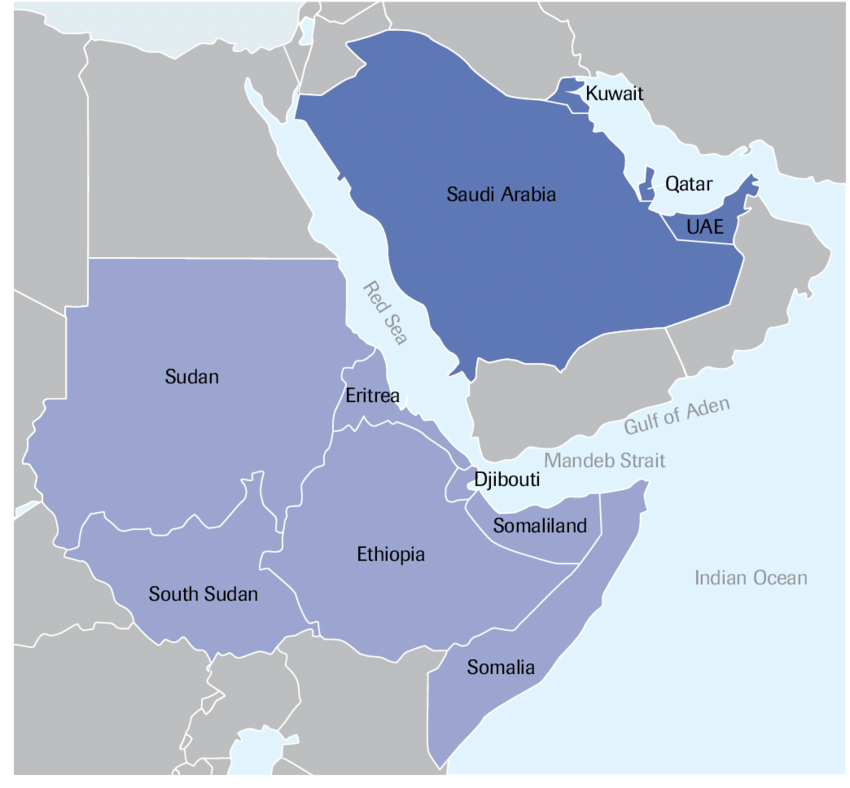
At the heart of the recent Cairo-Asmara alignments is Ethiopia’s strategic drive to secure direct, sovereign access to the Red Sea. As Africa’s second-most populous nation and one of the largest landlocked economies in the world Ethiopia’s push for a maritime gateway is an economic and national security imperative. Recognizing a sea-connected Ethiopia would solidify its status as the regional powerhouse of the Horn of Africa. Recent speeches from both Eritrean Foreign Minister Osman Saleh and Egyptian officials reveal a coordinated diplomatic campaign:
In regional and international forums, Minister Osman Saleh has repeatedly dismissed Ethiopia’s pursuit of maritime access as “misguided ambitions” and “violations of sovereignty,” aligning precisely with Cairo’s rhetorical strategy.
Egypt’s Foreign Ministry has echoed these sentiments, attempting to frame Ethiopia’s pursuit of Red Sea access and its broader regional economic integration efforts as a destabilizing force across the Horn of Africa.
By backing Eritrea, Egypt aims to maintain a maritime blockade on Ethiopia’s sovereign growth, attempting to lock Addis Ababa out of the vital shipping lanes of the Red Sea and Gulf of Aden.
Why the Old Playbook is Failing
While Cairo’s intent remains unchanged, the geopolitical realities of East Africa have shifted permanently. Egypt’s traditional levers of influence no longer yield the results they once did. For years, Egypt attempted to mobilize international pressure and regional pacts to veto the construction and filling of the GERD. Yet, despite diplomatic resistance and threats, Ethiopia completed the dam, establishing energy dominance and reshaping hydro-politics in the Nile Basin. By demonstrating that upstream sovereign development cannot be vetoed by legacy agreements, Ethiopia shattered the core pillar of Egypt’s regional policy.
Power in the Arab and East African region has shifted eastward and southward. Cairo’s economic leverage has eroded amid domestic financial struggles, leaving Gulf financial powerhouses like Saudi Arabia and the UAE to drive regional diplomacy. Meanwhile, Ethiopia’s demographic weight, economic scale, and central security role make it an indispensable anchor in East Africa that global powers cannot ignore or isolate.
Relying on Eritrea to contain Ethiopia is a fragile and short-sighted strategy. The tactical alignment between Cairo and Asmara is built largely on shared opposition to Addis Ababa rather than a sustainable economic vision for the Horn of Africa. While Ethiopia proposes trade, infrastructure connectivity, and shared prosperity across the region, the Cairo-Asmara alignment offers only containment and status-quo stagnation.
Ethiopia’s positioning on Red Sea access is grounded in a simple principle: long-term security and economic prosperity in East Africa require equitable access to maritime trade routes. Egypt’s attempt to resurrect its old playbook using proxy alignments and diplomatic pressure to keep Ethiopia strategically encircled is a reaction to a past that no longer exists. Addis Ababa has proven resilient against external isolation, securing vital trade corridors and expanding its regional partnerships.
Cairo and its allies must recognize that a stable, prosperous, and connected Ethiopia is not a threat to regional order, but its necessary foundation. Continued reliance on outdated containment policies will not stop Ethiopia’s momentum; it will only alienate those who choose containment over cooperation.