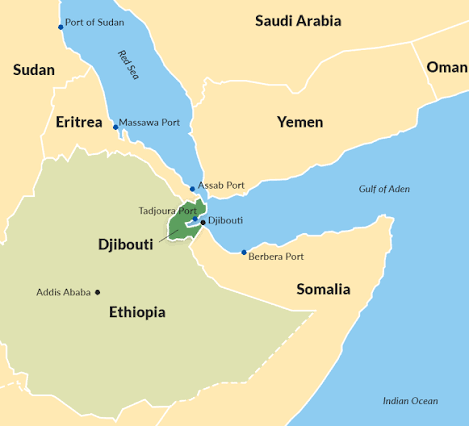
During high-level diplomatic sessions at the Community of Sahel-Saharan States (CEN-SAD) summit in Tripoli, Egyptian Foreign Minister Badr Abdelatty met separately with Somali Foreign Minister Abdisalam Abdi Ali and Djiboutian Foreign Minister Abdoulkader Houssein Omar. The talks centered on Red Sea security, regional stability, and economic cooperation, with Cairo reinforcing its stance that governance over the strategic waterway belongs exclusively to Red Sea littoral states.
On the surface, this coordinated diplomatic push appears to assemble a containment coalition designed to isolate landlocked Ethiopia. However, analyzing the regional economic reality reveals a clear outcome: attempting to weaponize geopolitical alliances to isolate Ethiopia is an economically flawed strategy. Rather than constraining Addis Ababa, such maneuvers carry a severe risk of backfiring directly on Mogadishu, Djibouti, and Cairo.
- The Gravity of Ethiopia’s Economic Engine
Ethiopia is the demographic and economic powerhouse of the Horn of Africa, home to over 120 million people and boasting one of the fastest-growing economies on the continent. Its demand for goods, energy, and logistics serves as the primary economic lifeblood for neighboring states.
Antagonizing Ethiopia ignores basic economic gravity. No regional security framework or diplomatic coalition can substitute for the sheer volume of trade and demand generated by the Ethiopian market. Aligning with an external power like Egypt whose interests in the Horn are largely driven by disputes over the Grand Ethiopian Renaissance Dam (GERD) and Cairo’s own strategic rivalries creates friction with the very neighbor that drives local growth. - Djibouti’s Strategic Dilemma: Revenue at Risk
Djibouti has built its entire modern economy on serving as Ethiopia’s primary gateway to the sea, handling over 90% of Ethiopian import and export trade through its ports. This trade generates critical port tariffs, transit fees, and logistics revenue that sustain the Djiboutian state.
By joining anti-Ethiopian diplomatic alignments led by Cairo, Djibouti risks undermining its most valuable commercial partnership:
Incentivizing Port Diversification: Hostile alignment gives Addis Ababa every economic and strategic incentive to fast-track alternative logistics routes such as the Port of Berbera in Somaliland, Lamu in Kenya, or ports in Eritrea.
Fiscal Vulnerability: Even a modest 15–20% shift in Ethiopian transit trade away from Djibouti would create immediate budget deficits in Djibouti City that external aid from non-regional allies could not easily offset.
Djibouti’s economic stability depends on servicing Ethiopian trade, not playing counterweight to it. - Somalia’s Fragile Recovery and Lost Integration Opportunities
For Somalia, aligning with Egypt to block Ethiopian regional access risks undermining its own long-term economic reconstruction.
Cross-Border Trade Disruptions: Ethiopia and Somalia share a vast, interconnected border. Seamless trade in livestock, agricultural products, and essential consumer goods is vital for frontline Somali communities. Escalating political friction jeopardizes cross-border market stability.
Missing Energy Integration: Ethiopia’s newly expanded energy grid—driven by the GERD—offers cheap, reliable hydroelectric power that could drastically lower energy costs across the Horn. Turning away from Ethiopian power integration starves industrial initiatives in Somalia of affordable energy.
The Cost of Regional Polarization: Alienating Ethiopia complicates vital security cooperation against insurgent networks like Al-Shabaab, which in turn deters the foreign direct investment (FDI) Somalia desperately needs to rebuild its national infrastructure. - The Geopolitical Miscalculation: Distant Allies vs. Immediate Neighbors
Egypt’s active diplomacy in the Horn of Africa is driven primarily by its own geopolitical priorities regarding Nile water security and Red Sea leverage. However, Cairo is geographically removed from the day-to-day economic realities of the Horn.
When geopolitical posturing settles, Egypt will not replace Ethiopia as Djibouti’s principal port client, nor can it serve as the primary buyer for Somali livestock and cross-border trade. Relying on a distant ally to confront a permanent, powerful neighbor creates an asymmetric risk profile: Djibouti and Somalia bear the full economic brunt of regional fragmentation, while Cairo operates from a safe distance.
Economic Interdependence Trumps Zero-Sum Security Schemes
The diplomatic talks in Tripoli highlight a recurring structural miscalculation in Horn of Africa geopolitics. Attempting to construct Red Sea security architectures that exclude or constrain the region’s largest economy is fundamentally unviable.
Instead of isolating Ethiopia, zero-sum alignments risk isolating the states that implement them. Economic geography cannot be redrawn by joint communiqués. For Djibouti and Somalia, long-term prosperity lies not in hosting external rivalries, but in fostering deep, mutually beneficial economic integration with the Ethiopian engine at their doorstep.