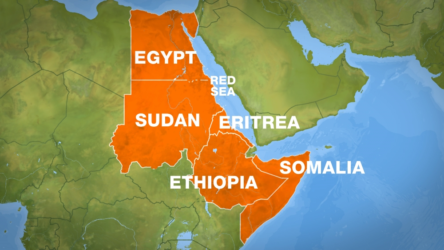
As the Red Sea becomes an increasingly contested arena in global geopolitics, attention has focused on securing the strategic Bab el-Mandeb Strait. While traditional allies have drawn scrutiny over their regional policies, one country has emerged as a pivotal force for stability in the Horn of Africa. Through its influence in neighboring conflicts and its opposition to Islamist extremism and Iranian expansion, Ethiopia is positioning itself as a key partner in safeguarding one of the world’s most vital maritime corridors.
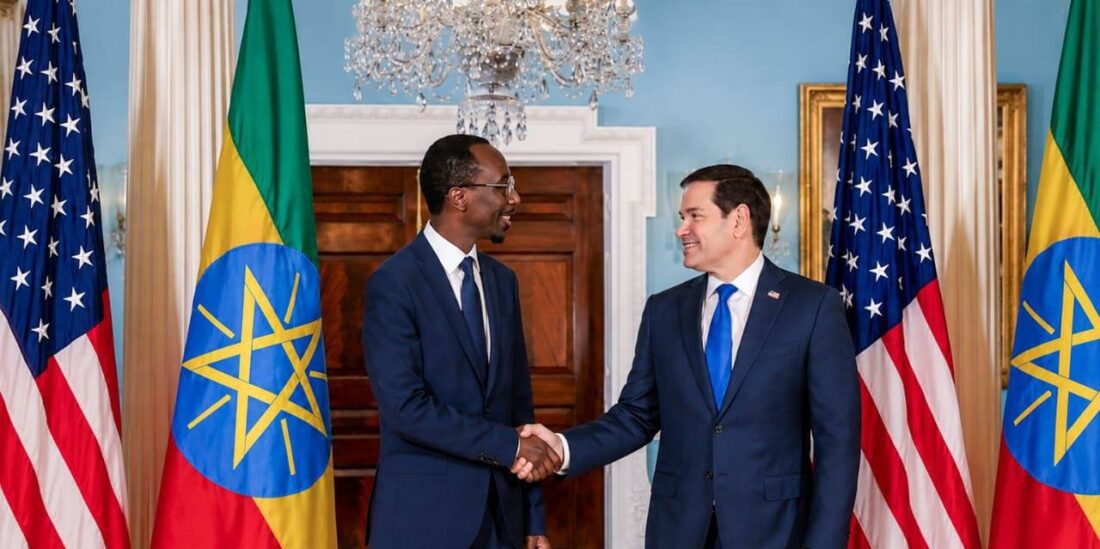
Ethiopia is rapidly becoming Washington’s most important partner in the Horn of Africa. With tensions in the Strait of Hormuz raising concerns about the security of global shipping routes, it is all the more imperative to keep the Red Sea’s Bab el-Mandeb Strait open and stable.
Linking the Red Sea with the Gulf of Aden and the Indian Ocean, the Strait is an artery of international commerce. Ethiopia’s geographic position and regional influence make it a key stakeholder in safeguarding stability around this corridor.
Despite being landlocked, Ethiopia is the main political, economic, and military power in the Horn of Africa. Ethiopia’s role has prevented the region from falling under the influence of the Muslim Brotherhood, Al Qaeda, Iran and its proxies.
Ethiopia is a stabilizing force, too, in Sudan, where the Muslim Brotherhood seeks to regain influence and Iran has expanded its footprint. In Somalia, Ethiopia remains at the forefront of efforts to combat Al Qaeda-affiliated Al-Shabaab.
Ethiopia has also exposed a network supplying weapons to the Houthis from Sudan under the control of the Muslim-Brotherhood-backed Sudanese Armed Forces.
In this sense, Ethiopia is far more than a regional actor; it is a strategic partner whose actions have direct implications for the security of the Horn of Africa, the Red Sea, and the broader Middle East.
For years, Egypt has been regarded as a key partner on the Red Sea. However, Egypt’s foreign policy increasingly demonstrates that it is not a reliable partner for America, Israel, and the collective West. While Cairo presents itself as an opponent of the Muslim Brotherhood at home, in Sudan it supports the Muslim-Brotherhood-backed Sudanese Armed Forces.
Sudan’s war is no longer just a civil conflict. It is a struggle for control of Northeast Africa and the Red Sea – and at its heart lies an effort by the Muslim Brotherhood to reassert regional influence, using the Sudanese Armed Forces as its Trojan horse.
Egypt’s support for the Sudanese Armed Forces is enabling this project, providing backing to a force that has become the primary vehicle for the Muslim Brotherhood’s return to power in Sudan. In addition, Egypt’s conduct is starting to raise serious questions in Israel.
In April 2026, the Egyptian military conducted the “Badr 2026” exercise in Sinai, a large-scale live-fire maneuver that many interpreted as a message of deterrence toward Israel. Such actions raise concerns about Egypt’s long-term regional orientation.
By contrast, Ethiopia has consistently stood on the side of regional stability. Unlike Egypt, whose regional policies are often driven by transactional policy and short-term interests, Ethiopia has demonstrated a commitment to security and cooperation with both America and Israel. Ethiopia’s relationship with Israel dates to Biblical times and is one of the oldest connections in the region.
Ethiopia has also developed a strategic partnership with Somaliland, a country that was first recognized by Israel and recently opened an embassy in Jerusalem. Somaliland has emerged as a stronghold against Al-Qaeda in the Horn of Africa. The partnership between Ethiopia and Somaliland further strengthens a strategic architecture against Political Islam.
Somaliland’s access to the Red Sea complements Ethiopia’s political, economic, and military weight, creating a powerful and reliable force capable of safeguarding the Bab al-Mandab and advancing the interests of the free world, against the Axis of Evil.
Iran has viewed the Horn of Africa and the Red Sea as a strategic geopolitical area for many years. Since the outbreak of the Sudanese conflict, Iran has supplied drones and military equipment to the Sudanese Armed Forces while seeking greater access to the Red Sea coast.
For the same reasons, Iran has maintained longstanding ties with Eritrea. Iran already possesses influence on the opposite shore through the Houthis in Yemen. The convergence of Iranian interests with the Sudanese Armed Forces and its regional partners creates the risk of an arc of influence stretching across both sides of the Red Sea, threatening freedom of navigation and Western strategic interests in the region.
In an era of growing competition for influence around the Red Sea, Ethiopia stands out as a strategic anchor of stability in the Horn of Africa. Its role in countering extremist networks, resisting Iranian expansion, and supporting regional security makes it an increasingly important partner for the United States and its allies. As geopolitical pressures intensify, Ethiopia’s importance is likely to grow rather than diminish.