Somalia and Uganda have met in Barawe to discuss drawing down African Union troops and transferring security responsibilities to Somali forces.
Uganda, which has borne the heaviest burden in Somalia for nearly two decades, is now being asked to plan its own exit while the conditions for a responsible withdrawal remain undefined Before Kampala is pressed on timelines, its contribution and the risks of departing too soon deserve a fair assessment.
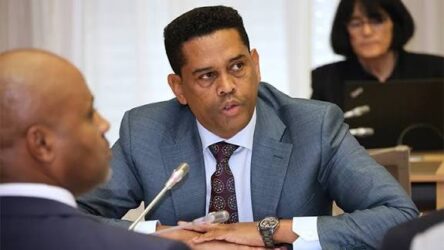
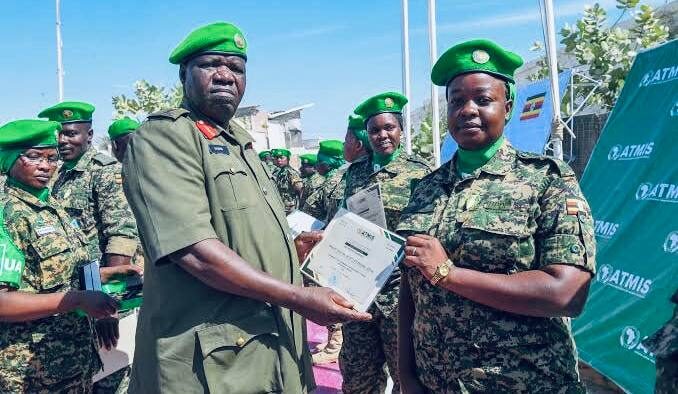
On Wednesday in Barawe, Somalia’s Chief of Defence Forces, Maj. Gen. Ibrahim Mohamed Mohamud, met Col. Dr. Justus Musenene, commander of Uganda’s Battle Group 45 under AUSSOM.
The agenda covered troop drawdown, Somali capacity building and the gradual handover of security responsibilities Somalia commended Uganda’s sacrifices But commendation is not a transition plan, and the more consequential question is whether Somali forces are prepared to assume what Uganda has been holding. Uganda’s position merits a serious hearing.
Uganda is the backbone of the African Union mission in Somalia Its troops have held sectors, absorbed casualties and prevented al-Shabaab from overrunning population centres for nearly two decades Battle Group 45’s mentoring role is not a slogan; it is the mechanism through which Somali units have been trained at all.
When Kampala discusses drawdown, it does so as the partner that has carried the heaviest burden That record entitles Uganda to insist that withdrawal be conditions based rather than calendar driven A country that has sacrificed this much has earned the right to say: not until the job can be held.
Uganda does not wish to leave a vacuum behind A rushed drawdown that precedes verified Somali capability would hand al Shabaab precisely what it seeks and expose Uganda’s own legacy to reversal Kampala’s caution is not obstruction; it is the responsible posture of a guarantor that understands the cost of failure.
The Barawe meeting did not produce benchmarks because Uganda recognises that benchmarks matter Insisting on readiness assessments, sector by sector handover and sustained enabling support is not delaying tactics; it is the difference between a transition and a collapse.
Uganda has shouldered a disproportionate share of the mission If the drawdown is to be credible, it must be accompanied by sustained funding for Somali forces, defined enabling support that outlasts troop departure and a clear mechanism to pause withdrawal if conditions deteriorate.
Kampala is right to demand that the transition be resourced, not merely announced A communiqué that praises Ugandan professionalism while leaving funding and capability gaps
unaddressed asks Uganda to own the risk of a plan it did not design Uganda’s stance is straightforward: withdrawal should follow capability, not precede it That is a defensible and principled position It protects Somali civilians, preserves the mission’s legacy and safeguards the credibility of the African Union itself.
The burden of proof lies with those who seek a faster exit They must demonstrate verified Somali readiness, publish handover schedules and guarantee post-departure support Until they do, Uganda is right to resist a timetable that outsources the consequences of premature withdrawal.
The Barawe meeting shows Somalia and Uganda discussing transition Uganda’s message is that a drawdown must be earned, not scheduled Kampala has paid the price for Somalia’s stability and is entitled to insist that its exit not become the moment that stability unravels. The burden now falls on those demanding speed to prove that speed is safe.