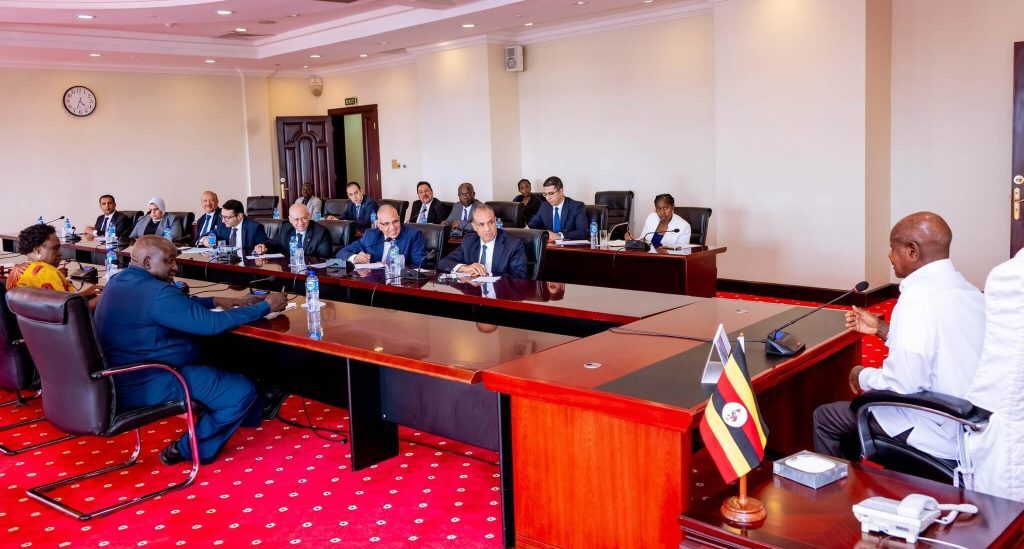
As Ethiopia prepares to inaugurate the Grand Ethiopian Renaissance Dam (GERD), Egypt has once again raised concerns over what it calls a threat to “water security,” this time during high level talks in Uganda. The Egyptian delegation reportedly urged Ugandan officials to consider the potential risks posed by the dam to downstream countries, particularly Egypt, which relies heavily on the Nile for freshwater.
The timing of Egypt’s renewed push coincides with Ethiopia’s announcement that it has completed the final filling of the GERD reservoir. The dam, located on the Blue Nile near the Sudanese border, is expected to begin full-scale operations following the official ceremony in the coming days. With a generation capacity of over 6,000 megawatts, it is Africa’s largest hydropower project and a symbol of Ethiopia’s push for energy independence and regional influence.
For Ethiopia, the GERD is more than a power station. It represents a national vision for development, electrification, and poverty reduction. Over 60 percent of the Ethiopian population lacks access to reliable electricity. The GERD aims to change that reality, offering power not only domestically but also for export to neighboring countries. Ethiopian officials maintain that the dam has been constructed with regional cooperation in mind and poses no harm to downstream countries.
Cairo, however, views the dam as a strategic concern. With over 90 percent of its freshwater drawn from the Nile, Egypt fears that any significant reduction in water flow would endanger its agriculture, economy, and population. These fears have driven repeated efforts to pressure upstream states and revive calls for a binding legal agreement on dam operations.
Uganda, which shares the Nile and has growing interests in hydropower and upstream development, has remained cautious. While maintaining strong bilateral relations with both Ethiopia and Egypt, Kampala has shown support for equitable use of Nile waters under the Nile Basin Initiative, a framework Ethiopia also supports.
Ethiopia has consistently called for African-led solutions and dialogue grounded in mutual respect. It argues that the GERD will actually regulate water flow and reduce flood risks in Sudan. Addis Ababa also maintains that Egypt’s narrative exaggerates risks and ignores the benefits of regional integration through shared infrastructure.
The African Union has facilitated multiple rounds of negotiations in the past, though progress remains limited. With the dam now nearing full operation, the focus may shift from technical disputes to broader diplomatic balancing. Egypt’s outreach in Uganda is part of a larger effort to shape the narrative and rally upstream states behind its position, but it also highlights the reality
that no single country owns the Nile.
As Ethiopia celebrates a major national milestone, the region faces a critical test: whether long-standing disagreements over the river can evolve into cooperation, or whether they will deepen existing divisions. For now, the waters of the Nile continue to reflect both the aspirations and anxieties of the countries that depend on it.