

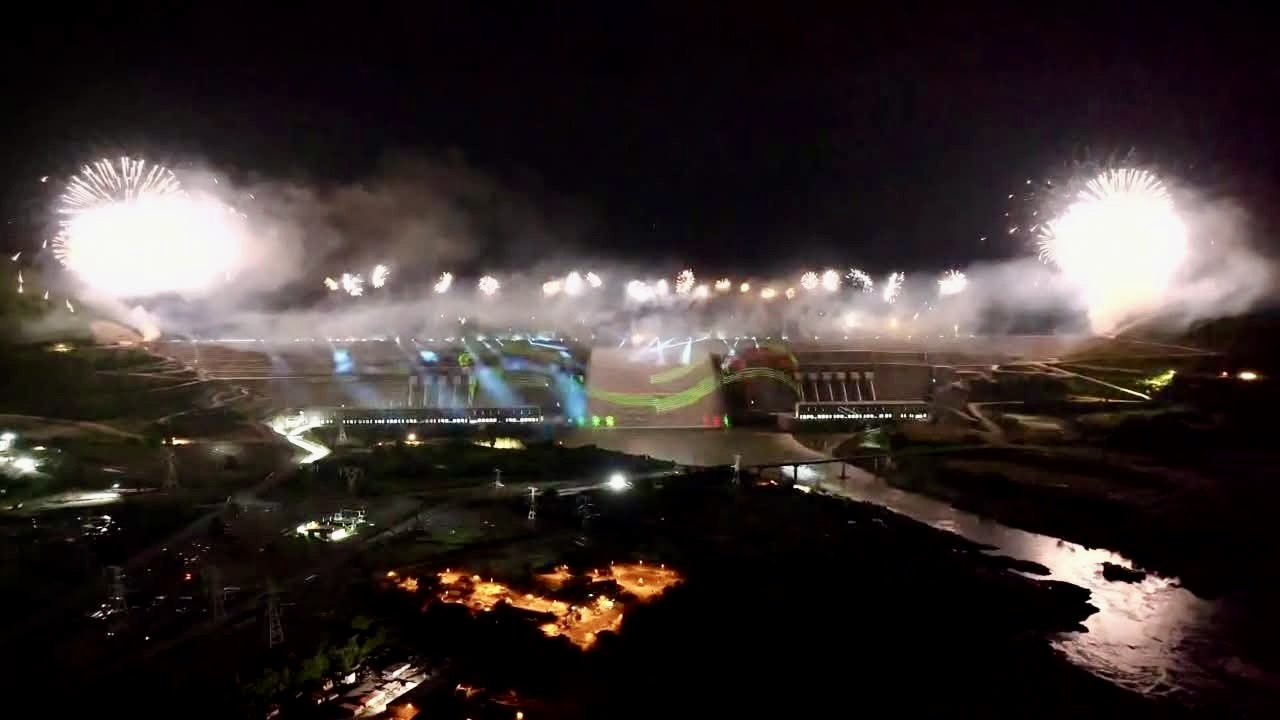
A River, a Nation, a Reckoning
There are rivers that water fields, rivers that carry trade, and rivers that sustain myths. The Nile does all three, and for millennia its waters have nourished Egypt while leaving Ethiopia in paradoxical darkness. Ethiopia contributes more than eighty percent of the Nile’s volume through the Blue Nile, yet remained a country where electricity blackouts were routine and where the light of modernity seemed perpetually postponed. The Grand Ethiopian Renaissance Dam, inaugurated today, is an attempt to correct that imbalance. It is not simply a dam. It is sovereignty made visible, ambition made concrete, and resentment against history channeled into steel and turbines.
To dam the Nile is to repudiate centuries of political entitlement. It is to say, with finality, that Egypt does not alone dictate the life of the river. It is to show that Ethiopia, long caricatured in the Western press as a land of famine and dependence, can create a mega-project without the mercy of donors.
The Audacity of Meles
The project was conceived under Prime Minister Meles Zenawi, who in 2011 announced that Ethiopia would construct Africa’s largest hydroelectric dam. The audacity lay not only in the scale of the plan but in the method of funding. The World Bank and international lenders, mindful of Egyptian protest, refused to back it. Meles responded by turning the project into a patriotic subscription. Ethiopians were told to buy bonds, to contribute a portion of their wages, to see the dam as a collective inheritance. Taxi drivers, students, civil servants, and farmers all paid. For many the amounts were small, yet the symbolism was immense.
Meles never lived to see the dam completed. He died in 2012, leaving behind a blueprint and a nation invested both financially and emotionally in the project. His gamble had been to tether national pride to a structure still only imagined. In doing so he made the GERD a covenant between state and people.
Hailemariam and the Years of Drift
Hailemariam Desalegn inherited the premiership and with it the burden of the dam. He lacked the revolutionary charisma of Meles, and his government soon revealed how vulnerable mega-projects are to incompetence. The military-industrial conglomerate METEC was handed large contracts despite lacking the technical expertise. Costs ballooned. Timelines slipped. Corruption gnawed at the foundations long before the concrete had settled.
Hailemariam pressed on, unwilling to abandon a national project into which ordinary Ethiopians had poured their savings. Yet the GERD became a monument to drift. For every photograph of progress, there was a rumor of scandal. For every milestone, another delay. The dream remained alive, but it was fading into frustration.
Abiy and the Politics of Spectacle
Abiy Ahmed, who came to power in 2018, recognized instantly that the dam was more than infrastructure. It was theatre. He visited the site frequently, gave stirring speeches, and promised swift completion. For him the GERD was not merely about megawatts. It was about legitimacy, about binding a fractured nation with a single point of pride.
In 2020, even as Ethiopia edged toward civil war, Abiy announced the first filling of the reservoir. Egypt denounced the move as a violation of its rights. Sudan oscillated between support and suspicion. Ethiopians, however, celebrated. For many citizens the images of water swelling behind the dam were a balm, proof that the sacrifices of years had not been wasted.
Abiy turned the GERD into a rallying cry. He framed it as the final assertion of Ethiopia’s right to develop, a refusal to be cowed by external pressure. Yet the timing revealed the risks. A turbine does not heal civil war. A reservoir does not erase poverty. The dam became both triumph and distraction, a tool of politics as much as engineering.
The Hurdles Along the Way
The path to today’s inauguration has been lined with obstacles. Financing the project without international lenders required squeezing citizens for contributions they could ill afford. Mismanagement under METEC delayed construction and squandered millions. Engineers and contractors clashed, and at one point the chief project engineer took his own life under circumstances that remain contested.
Externally, Ethiopia faced relentless opposition. Egypt, invoking colonial-era treaties that granted it near-exclusive rights over the Nile, warned of existential threats. Cairo carried its complaints to the African Union, the United Nations, and Washington. Sudan, sometimes ally and sometimes adversary, alternated between applauding the electricity the GERD might provide and fretting over water regulation. Ethiopia, isolated and defiant, pushed forward.
A Colossus Completed
Today the GERD stands as one of the largest dams in the world, expected to generate more than five thousand megawatts of electricity. It promises to double Ethiopia’s power supply, to electrify towns and villages long accustomed to darkness, and to provide surplus energy for export to neighboring states. In a continent where energy poverty remains a shackle, the GERD is a staggering accomplishment.
It is also a project realized largely by Ethiopians themselves. Without the blessing of Bretton Woods institutions, without the largesse of Western powers, Ethiopia has built a colossus on its own terms. For a nation long caricatured as dependent on aid, the symbolism is profound.
Triumph and Trap
Yet one must resist unqualified celebration. Electricity does not resolve Ethiopia’s ethnic fragmentation. A dam cannot mend the wounds of civil war. A mega-project cannot disguise authoritarian reflexes. Nor can Ethiopia’s pride erase the anxieties of downstream states. Egypt still regards the GERD as a threat to its lifeblood. Sudan remains caught between hope and fear. The geopolitics of the Nile are far from settled.
There is also the economic paradox. Ethiopia has spent billions on the dam while millions remain in poverty. It has promised electricity for all, yet distribution networks lag behind generation capacity. The GERD risks becoming a cathedral of electricity whose light does not reach every pew.
A Beginning, Not an End
The inauguration of the GERD is not an end. It is the beginning of a new chapter, one in which Ethiopia must prove that pride can translate into prosperity. The turbines will hum, Addis Ababa will glow brighter, and neighboring capitals may buy Ethiopian power. But Egypt will still bargain fiercely. Sudan will still watch the flows of the Nile with suspicion. And Ethiopians will still look to their government for jobs, security, and justice that no dam alone can deliver.
The GERD is Ethiopia’s long courtship with a dream, now made concrete. It is a feat worthy of applause, but applause should not drown out sober reflection. The Nile is a river of life, politics, and myth. Ethiopia has written its name upon it in steel and stone. Whether that inscription endures as triumph or folly will depend not only on the power of water but on the wisdom of those who govern it.
The applause is deserved. The suspicion inevitable. The consequences, like the Nile itself, will flow on.