

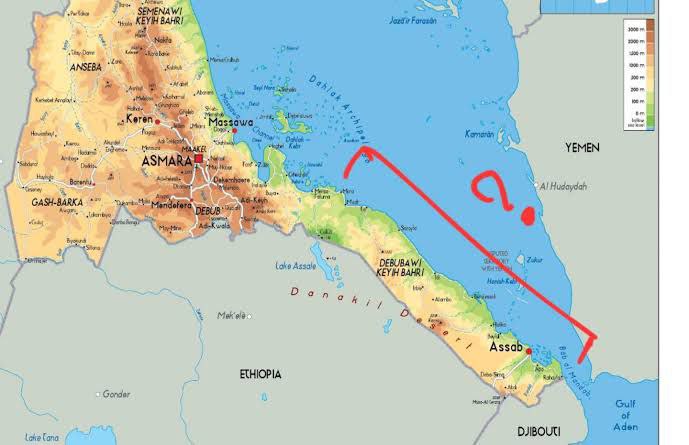
Implications for the Red Sea, the Nile, and U.S. Engagement in the Horn of Africa
At the margins of the United Nations General Assembly in New York, Eritrea signaled a notable shift in its regional diplomacy. In a meeting with Masad Boulos, senior advisor to then-U.S. President Donald Trump, Eritrean Foreign Minister Osman Saleh expressed his country’s readiness to engage in dialogue on issues central to the Horn of Africa’s stability: the Red Sea, the Nile Basin, and broader regional security.
Eritrea’s Calculated Openness
Eritrea’s foreign policy has long been characterized by caution and a strong emphasis on sovereignty. By declaring its willingness to participate in meaningful talks, particularly on the Red Sea and Nile issues that directly affect regional power balances Asmara appears to be recalibrating its posture. This move suggests that Eritrea recognizes both the risks and opportunities arising from growing international focus on the Red Sea corridor, a strategic artery for global trade and energy flows.
Minister Saleh underscored Eritrea’s position: dialogue will not come at the expense of national sovereignty, but the government is committed to contributing to lasting peace and sustainable development in the Horn of Africa. This framing positions Eritrea as a stakeholder rather than an outlier in regional conversations long dominated by larger neighbors such as Ethiopia, Sudan, and Egypt.
Washington’s Strategic Lens
For Washington, Boulos emphasized that the United States views the Horn of Africa as pivotal to global commerce, counterterrorism, and maritime security. The Red Sea’s maritime routes carry vital global trade, while the Nile remains a critical axis of regional politics. Eritrea’s geographic location at the nexus of these dynamics makes it a potential partner for U.S. strategic interests, despite its history of strained relations with the West.
The U.S. signal of interest also reflects a recognition that stability in the Horn requires broader engagement beyond Ethiopia, traditionally the centerpiece of American policy in the region. With Boulos’ recent visit to Addis Ababa and subsequent stop in New York to meet Eritrean officials, Washington appears intent on rebalancing its diplomatic outreach.
Opportunities and Risks Ahead
Both sides framed the talks as a potential “new chapter” in bilateral relations, with possibilities spanning trade, investment, infrastructure, communications, and security cooperation. Importantly, the conversation also acknowledged the need to address long-standing disputes through constructive mechanisms rather than isolation.
However, significant challenges remain. Eritrea’s history of estrangement from international institutions and sanctions has left scars of mistrust. Moreover, unresolved tensions with Ethiopia and broader regional rivalries could complicate Eritrea’s efforts to assume a constructive role in Red Sea and Nile Basin dialogues.
The Bigger Picture
Eritrea’s willingness to engage in structured dialogue represents more than a bilateral development with the United States. It reflects an emerging recognition that the Horn of Africa cannot remain on the margins of global geopolitical shifts. As external actors, from Gulf states to major powers, compete for influence in the Red Sea corridor, Eritrea’s decisions will shape not only its own trajectory but also the balance of power in the wider region.
If sustained, this diplomatic opening could offer a pathway for Eritrea to transition from isolation toward integration, a shift with implications for regional peace, U.S. policy, and the evolving geopolitics of the Red Sea.