Nature as Witness: What Sudan’s Floods Reveal About the GERD Dispute
Politicians may twist facts, but nature never lies.
Just days after Egypt and Sudan accused Ethiopia’s Grand Renaissance Dam (GERD) of threatening their water supply, Sudan issued a “red alert” warning of potential floods in five provinces along the Nile.
The rising waters—driven by surges from the Nile and its main tributary, the Abay River in Ethiopia—tell a very different story.
What we’re witnessing isn’t just a weather event. It’s nature’s verdict in one of Africa’s most politicized water disputes.
A Tale of Two Realities: Floods at Home, Shortages Abroad
Earlier this week, Sudan’s Irrigation Ministry confirmed that water levels had remained high for four consecutive days, prompting flood warnings across key provinces: Khartoum, River Nile, White Nile, Sennar, and Blue Nile.
Yet only days earlier, at the UN General Assembly in New York, Sudan and Egypt’s representatives declared that Ethiopia’s dam was starving the river and threatening regional water security.
The contradiction is glaring: politicians warn of droughts while citizens brace against floods.
Egypt even went further, sending a letter to the UN Security Council condemning GERD’s inauguration as a violation of international law that endangered downstream nations’ “existential interests.”
But on the ground, nature had other plans—overflowing waters, not empty riverbeds.
A Pattern Written by Water, Not Politics
This is not the first time such contradictions have emerged.
Since Ethiopia began filling the GERD, hydrologists and international observers have consistently reported no reduction in downstream flow.
No drought.
No famine.
No water shortages.
Instead, Sudan’s recurring crisis has been floods.
In 2020, before the dam’s first filling, Sudan endured its worst flooding in a century—killing at least 100 people and destroying more than 100,000 homes.
In 2022, severe floods again displaced thousands and ravaged farmlands.
Now, in 2025, even as Egypt insists the GERD is stealing water, Sudan faces yet another season of high waters.
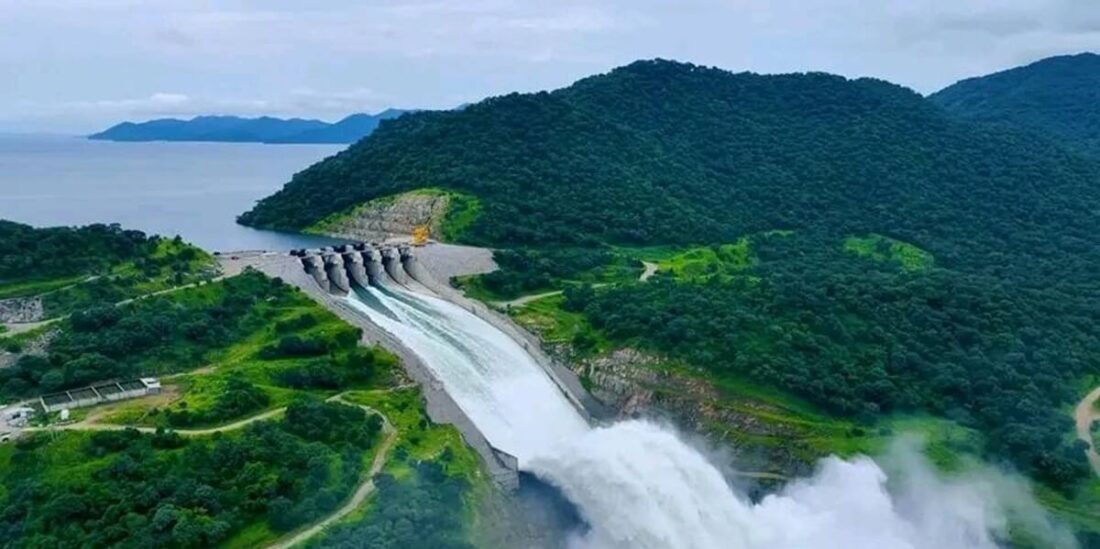
Ethiopia, for its part, argues that the GERD can help prevent such disasters—by storing excess flows during heavy rains and releasing them gradually.
If managed cooperatively, the dam could actually protect Sudanese farmers from the very floods that devastate their livelihoods year after year.
Beyond Politics: What the Evidence Shows
No dam can fully prevent the extremes of climate or make up for weak infrastructure.
But after more than a decade of heated accusations, no evidence shows that Ethiopia’s GERD has harmed its neighbors.
In fact, the opposite may be true:
- Downstream flows remain stable.
- Flood risks persist, not droughts.
- Regional tensions, not science, fuel opposition.
Much of the dispute is rooted in geopolitics and outdated colonial-era treaties that granted Egypt overwhelming control over the Nile—despite the fact that 70% of the river’s water originates in Ethiopia’s highlands.
Nature’s Verdict
After five successful fillings and fourteen years of construction, the record speaks for itself.
The Nile has not dried up.
Sudan has not starved.
And the GERD continues to operate without depriving downstream nations.
What persists are the floods—a constant reminder of the very problem the GERD could help solve.
The question, then, is not whether the dam threatens the Nile.
It doesn’t.
The real question is whether Sudan and Egypt are ready to accept what nature and data already show—or keep waging a battle built on fear and politics.
The Nile’s waters carry a truth that speeches cannot erase.
As Sudan issues flood warnings, the myth of GERD-induced drought grows harder to sustain.
Nature, as always, has given its testimony.
Will the region finally listen?