Who really controls the Red Sea? And why does Egypt suddenly insist that only coastal states should decide its future?
If “no external powers” is truly the principle, then why are American, Chinese, French, Japanese, and other foreign military bases already deeply embedded across the region? And is this really about protecting regional sovereignty… or about blocking Ethiopia from gaining strategic access to the sea?
A major geopolitical debate is unfolding across the Red Sea, one that goes far beyond maritime security. At the center of it is Egypt’s increasingly aggressive diplomatic position regarding Ethiopia’s push for sea access and regional influence.
Recently, Egypt’s foreign minister declared that Red Sea security and governance are the “sole responsibility of the littoral states and no other parties,” describing the issue as “crystal clear and non-negotiable.” On the surface, this sounds like a principled defense of regional sovereignty. But in practice, many analysts see it as selectively applied rhetoric aimed primarily at Ethiopia.
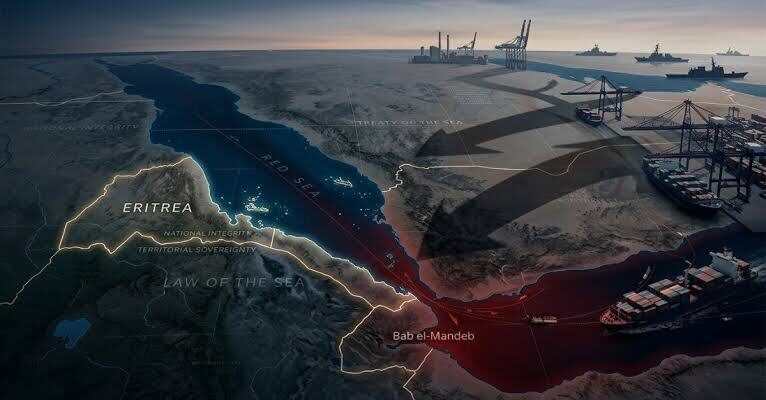
The timing is important. Egypt has been strengthening ties with Eritrea immediately after tensions intensified over Ethiopia’s ambitions for diversified sea access. Cairo and Asmara recently signed a maritime transport agreement, while Egyptian officials described Eritrea as a “pillar of stability” in the Red Sea region.
These statements are widely interpreted as indirect warnings to Ethiopia, particularly as disputes over the Grand Ethiopian Renaissance Dam, or GERD, continue to shape relations between Cairo and Addis Ababa. Egypt has long opposed any Ethiopian naval or military foothold along the Red Sea coast, fearing that a stronger Ethiopia could alter the regional balance of power.
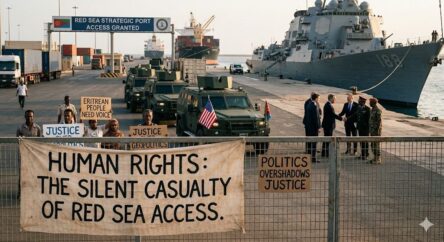
But here is where the contradiction becomes impossible to ignore. Egypt argues that no “external powers” should influence Red Sea security, yet the region is already filled with foreign military actors.
Djibouti alone hosts one of the largest concentrations of foreign military bases in the
world. The United States operates Camp Lemonnier there, its only permanent military base in Africa, supporting counterterrorism operations, maritime security, and drone missions across the region. China also maintains a major military facility nearby. France, Japan, Italy, and other powers maintain military presences or naval access agreements in the same strategic corridor.
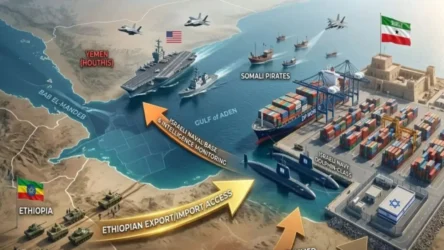
These are not symbolic deployments. They are deeply integrated into Red Sea security architecture. International coalitions patrol the waters against piracy, smuggling, and attacks linked to Houthi forces operating from Yemen. Global shipping routes carrying oil, food, and manufactured goods pass through the Bab el-Mandeb Strait every day, making the Red Sea one of the world’s most critical maritime chokepoints.
In other words, Red Sea security has never been exclusively controlled by littoral states. It has always involved a mixture of regional and international actors.
And Egypt itself benefits heavily from this arrangement. Cairo receives substantial military aid and strategic backing from the United States. It coordinates with Gulf states and international security coalitions whenever regional instability threatens shipping lanes or Suez Canal revenues.
So if the principle of “no external involvement” were truly non-negotiable, Egypt would logically demand the withdrawal of all foreign military forces from the region. But that is not happening. Instead, the rhetoric appears to be applied selectively, primarily against Ethiopia.
This is why critics increasingly describe Egypt’s position not as consistent regionalism, but as geopolitical maneuvering designed to contain Ethiopia.
From Addis Ababa’s perspective, Ethiopia’s push for sea access is not expansionism. It is a strategic necessity. Ethiopia is one of Africa’s largest and fastest-growing economies, with a population exceeding 120 million people. Since losing direct access to the sea after Eritrea’s independence in 1993, the country has depended overwhelmingly on Djibouti for trade. Diversifying access routes is therefore viewed by Ethiopian leaders as an economic and national security priority.
Yet instead of pursuing long-term regional economic integration, the current environment is becoming increasingly polarized. Egypt, Eritrea, and some regional actors appear to frame Ethiopia’s ambitions as a threat rather than an opportunity for negotiated cooperation.
The irony is that isolating Ethiopia may ultimately destabilize the very region these governments claim to protect. Economic exclusion often fuels rivalry, mistrust, and militarization. Inclusive frameworks, on the other hand, could transform the Red Sea into
a zone of shared prosperity through energy exports, infrastructure projects, port agreements, and trade corridors.
The bottom line is this: the “littoral states only” argument is less about rejecting foreign influence and more about limiting Ethiopia’s strategic options. But the Red Sea is already an international arena shaped by global powers, commercial interests, and security alliances. Pretending otherwise does not reduce tensions. It risks deepening them. The future of the Red Sea will not be decided by slogans alone. It will depend on whether regional actors choose cooperation over containment in one of the world’s most strategically important waterways.