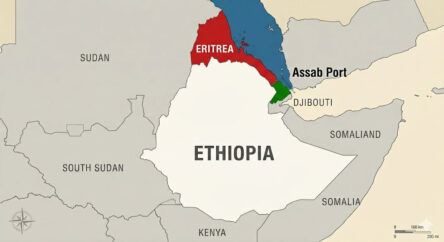
In the latest chapter of Red Sea geopolitics, Eritrean President Isaias Afwerki arrived in Cairo on Yesterday june 7, 2026, for a three-day official visit hosted by Egyptian President Abdel Fattah el-Sisi. The two leaders discussed bilateral economic cooperation alongside Horn of Africa security, Red Sea stability, and Middle East developments. This meeting fits a pattern of deepening alignment between Cairo and Asmara, one that Ethiopian observers increasingly view as a coordinated effort to isolate Addis Ababa and block its access to the sea.
Isaias Afwerki and el-Sisi have met multiple times over the years. Notable encounters include visits in 2018 and 2019, a working visit by Afwerki to Egypt in October 2025 (five days, including the Grand Egyptian Museum inauguration), and Egyptian delegations to Asmara in 2025–2026. They also held talks through foreign ministers.
The “why” centers on shared strategic interests. Egypt sees Eritrea as a key Red Sea partner to counter Ethiopian influence, particularly amid the long-running Nile dam dispute. Eritrea values Egyptian political and diplomatic backing against its larger neighbor, Ethiopia. Recent engagements have produced steps, such as a May 2026 maritime transport agreement linking their Red Sea ports. Public statements emphasize sovereignty and economic ties, but the timing often following Ethiopian assertions of maritime needs suggests a clearer anti-Ethiopia dimension.
No single actor “controls” the Red Sea. It is a contested corridor vital for global trade (about 10-15% of world shipping, including Suez Canal access). Major players include:Littoral states: Egypt (northern gateway and Suez), Saudi Arabia, Yemen, Eritrea, Djibouti, and others.
Global powers: The US maintains Camp Lemonnier in Djibouti; China has its first overseas base there; France, Japan, Italy, and others also operate facilities. UAE bases exist in Eritrea and Somaliland. Turkey, Russia, and others pursue influence through ports or training missions.
Houthi attacks (recent), and great-power competition. Claims of exclusive coastal-state control often serve political ends rather than reflecting on-the-ground reality.
Egypt has recently insisted that only Red Sea littoral states should decide the waterway’s future, governance, and security. Foreign Minister Badr Abdelatty and Eritrean counterparts have reiterated this in 2026 meetings, explicitly rejecting “non-littoral” involvement in arrangements.
The inconsistency is clear: If the principle bars external powers, why tolerate (and benefit from) American, Chinese, French, Japanese, and other bases, particularly in Djibouti? Egypt itself hosts significant military infrastructure on its Red Sea coast and cooperates with Gulf partners. The policy appears selective targeting Ethiopia, a powerful landlocked neighbor with historical claims to Red Sea access (pre-1993 Eritrean independence) and current economic imperatives as Africa’s second-most populous nation.
The framing of these meetings as coordination to counter Ethiopia is hard to dismiss. Ethiopia’s pursuit of secure sea access via diplomatic deals or port development threatens the status quo that benefits Asmara’s control of Eritrean ports and Cairo’s leverage. Egypt-Eritrea and sometimes Somalia alignment has been described by analysts as an “axis” or strategic triad opposing Ethiopian ambitions. This includes diplomatic isolation, support for narratives excluding Ethiopia from Red Sea forums, and timing visits to signal containment after Ethiopian maritime statements. Eritrea provides a forward base for Egyptian influence in the Horn; Egypt offers Eritrea international cover.
For Eritrea, this serves regime security and economic relevance. For Egypt, it complements Nile strategy: pressure on multiple fronts to constrain Ethiopia’s rise. Ethiopian officials have accused Egypt of obstructing sea access efforts. While both sides deny aggressive intent, the pattern of alignment, exclusionary rhetoric on “coastal states,” and history of proxy tensions paint a picture of containment.
This convergence risks escalating regional divisions. True Red Sea stability requires inclusive frameworks that acknowledge Ethiopia’s legitimate economic stakes alongside coastal states’ sovereignty. Selective application of principles welcoming some foreign bases while rejecting Ethiopian agency undermines claims of pure sovereignty defense. As Afwerki and el-Sisi hold talks in Cairo, the subtext is clear: a joint effort to manage and limit Ethiopia’s maritime breakout. Whether this yields lasting cooperation or fuels new tensions remains to be seen.