

Peace talks in Addis Ababa are being called a breakthrough.
But Sudan has seen agreements before, And most of them collapsed before they changed anything on the ground.
So the real question is simple: Is this a roadmap to peace, or just another document without power?
In June 2026, a broad coalition of Sudanese political and civil forces reached a consensus on a new peace roadmap during talks in Addis Ababa, facilitated by the so-called Quintet, bringing together the United Nations, the African Union, the European Union, the League of Arab States, and IGAD.
The agreement has been described as the most significant alignment among Sudanese political actors since the crisis that began in 2021.
But beneath the optimism lies a more complex reality.
This analysis examines whether this Addis Ababa consensus represents a genuine shift toward peace, or simply another elite-level alignment disconnected from the war’s core drivers.
On paper, the agreement looks comprehensive.
Major political actors, including the Sumoud Alliance, the Democratic Bloc, the National Umma Party, and others, have endorsed a Sudanese-led political process aimed at ending the war.
The roadmap proposes:
A preparatory committee to launch negotiations A transition toward a new political order A broader social reconciliation process A new social contract based on equality, justice, and inclusion It also emphasizes combating hate speech, addressing marginalization, and repairing the deep social fractures caused by the war.
In short, it reflects a familiar but necessary vision: rebuilding Sudan from the ground up.
But here is the fundamental problem.
The actors who signed this agreement are not the ones fighting the war.
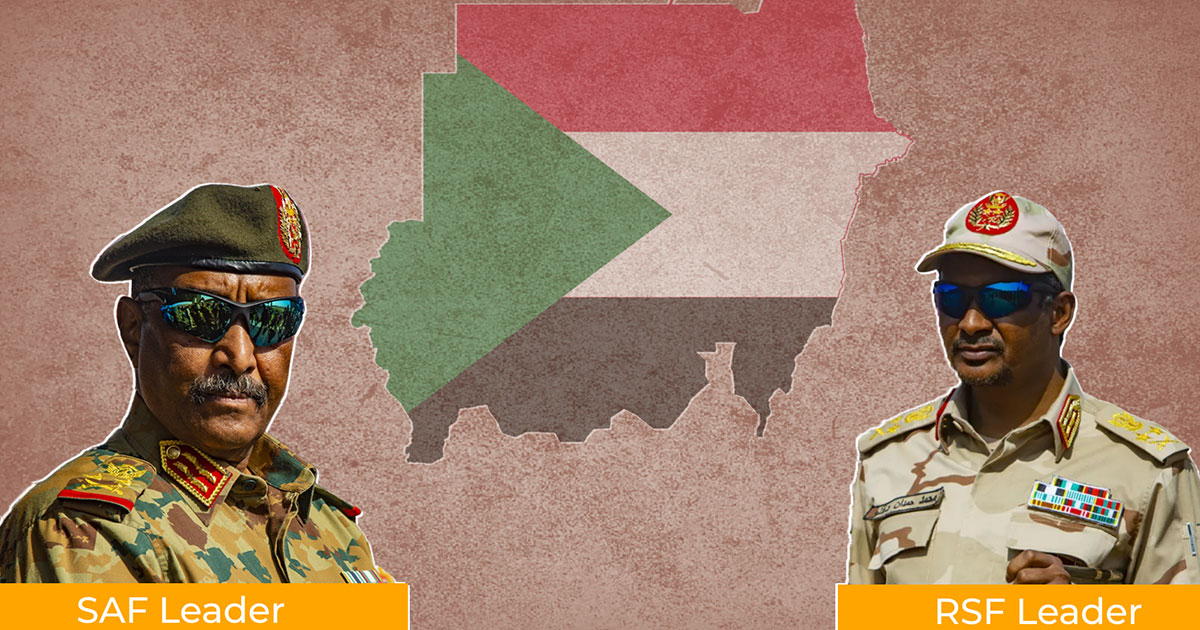
The conflict in Sudan is being driven by two military forces: The Sudanese Armed Forces under The Rapid Support Forces led by Neither side is part of this civilian consensus This creates a critical disconnect You cannot end a war by agreeing on peace among actors who do not control the battlefield. At best, this initiative builds a political vision.
At worst, it risks becoming irrelevant to the actual dynamics of violence Even within the civilian camp, unity remains incomplete.
The refusal of the Sudan Liberation Army, led by Abdelwahid al-Nur to sign the agreement exposes deeper fractures Their objection, particularly over the exclusion of the former ruling National Congress Party and Islamist actors, highlights a recurring dilemma in Sudanese politics:
Who gets to be included in the future political order?
Exclusion may be morally justified But politically, it can be destabilizing.
Because groups left outside the process often become spoilers to it.
The Addis Ababa talks are also part of a broader diplomatic struggle over Sudan.
The Quintet mechanism reflects growing international urgency, but also fragmentation in mediation efforts, competing with other tracks like the Jeddah talks.
More importantly, this initiative lacks one crucial element: leverage.
There are:
No enforcement mechanisms
No binding commitments
No direct pressure on armed actors
This means the agreement relies heavily on political goodwill in a context where power is still defined by military strength.
The Addis Ababa agreement is not meaningless.
It signals that Sudanese civilian forces are still trying to reclaim the political space that has been dominated by generals and militias But it is also not enough Because peace in Sudan will not come from consensus alone It will require aligning political vision with military reality, something this agreement has yet to achieve So for now, this is not a breakthrough It is a foundation And whether that foundation leads to peace, or joins the long list of failed Sudanese agreements Will depend on one thing: