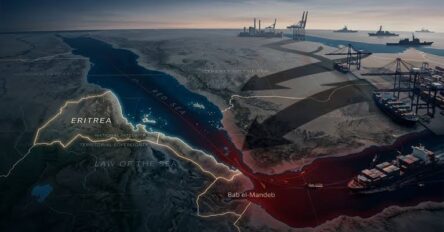
Reports that Iran has instructed Yemen’s Houthi forces to consider closing the Bab al-Mandeb Strait in the event of a U.S. strike mark a dangerous escalation in the militarization of global trade chokepoints. The Bab al-Mandeb is not a peripheral passage, it is one of the world’s most critical maritime arteries, linking the Red Sea to the Gulf of Aden and facilitating a substantial share of Europe–Asia trade. Any disruption would reverberate far beyond the immediate region, driving up shipping costs, delaying supply chains, and injecting volatility into already fragile global markets.
The threat underscores a structural vulnerability: the concentration of global commerce through narrow, easily disruptable corridors. Over the past decade, both state and non-state actors have increasingly recognized the leverage offered by such chokepoints. A closure, even temporary, would not only impact commercial vessels but also constrain naval mobility, complicating response options for external powers, particularly the United States and its allies.The Berbera Factor
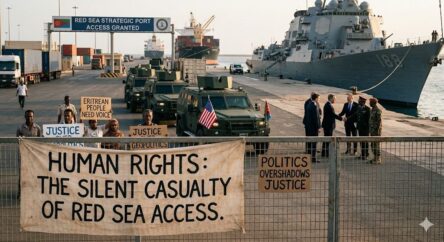
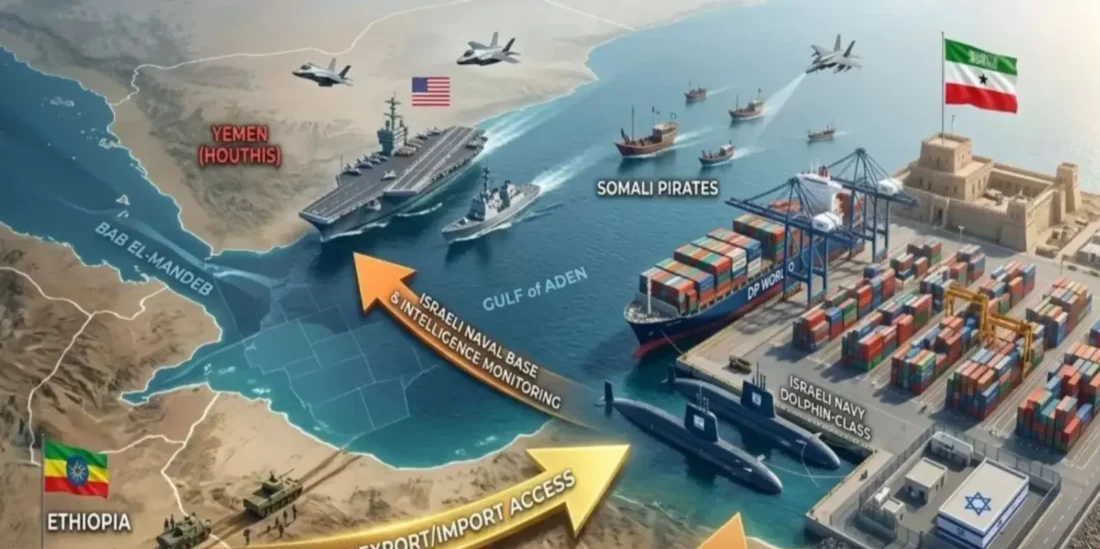
Within this context, the strategic relevance of Berbera on the Gulf of Aden becomes more pronounced. A potential U.S. military presence there would provide an alternative logistical and surveillance hub, enhancing maritime domain awareness and enabling faster response times to disruptions in the Bab al-Mandeb corridor. Its geographic position offers a vantage point that complements existing bases in Djibouti while reducing overreliance on a single host nation.
However, such a development is not purely a military calculation. It is deeply entangled in questions of sovereignty and international recognition. The absence of formal recognition of Somaliland remains the principal obstacle to any sustained U.S. basing arrangement. Without a shift in diplomatic posture, particularly from Washington-Berbera’s strategic potential is likely to remain underutilized.
The reported Iranian signaling should be understood less as an immediate operational directive and more as a reminder of the region’s latent escalation pathways. Yet even as a contingency, it forces a reassessment of existing security architectures in the Red Sea corridor. The intersection of maritime security, great power competition, and unresolved political status questions suggests that the debate over Berbera is no longer hypothetical, it is becoming strategically urgent.