

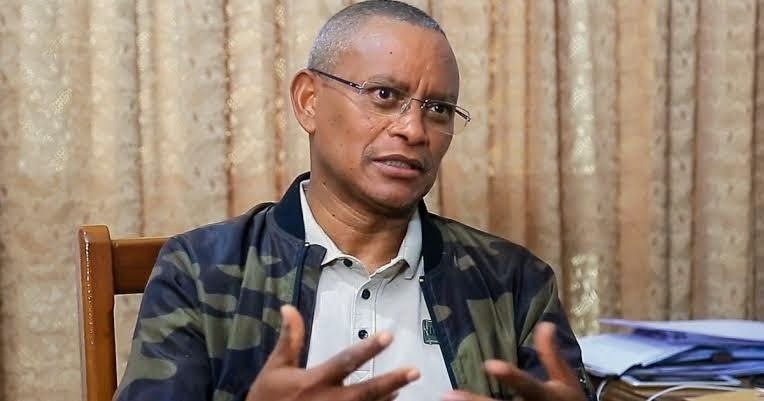
Reports on Tigray People’s Liberation Front (TPLF) handed over hardline leaders to Eritrea highlight the extreme power struggles, shifting tactical realignments, and political calculations . Beyond current geopolitical maneuverings, the TPLF’s long political and military history reveals an organization defined by rigid internal control, autocratic governance, and severe human rights abuses.
Throughout its history from its origins as a Marxist-Leninist guerrilla movement in the 1970s to its decades as the ruling party of Ethiopia the TPLF has operated on strict centralism and internal discipline. When strategic miscalculations occur, the party hierarchy historically shifts blame toward internal dissidents, purges rival factions, or scapegoats individual leaders to preserve core party control.
During severe political crises, hardline leadership has repeatedly prioritized survival over internal loyalty. Reports of purge operations or handing over compromised commanders to rival external actors reflect a recurring pattern: commanders and officials who fall out of favor or lose strategic utility are systematically stripped of power, detained, or sacrificed to protect the inner circle.
For nearly three decades (1991–2018), the TPLF dominated the Ethiopian People’s Revolutionary Democratic Front (EPRDF) coalition, exercising virtually unchecked authority across Ethiopia. Human rights organizations including Amnesty International and Human Rights Watch documented widespread systemic brutality under TPLF governance:
- Suppression of Political Dissent: Opposition politicians, journalists, and activists faced arbitrary arrest, exile, or long prison sentences under sweeping anti-terrorism laws.
- Torture and Secret Detention: Security forces routinely utilized forced confessions and harsh interrogation tactics at detention facilities such as Maekelawi prison in Addis Ababa.
- Consolidation of Power: Electoral processes were tightly controlled, culminating in elections where the ruling coalition claimed 100% of parliamentary seats.
The outbreak of conflict in November 2020 demonstrated how military necessity further amplified brutal tactics on the ground. TPLF-aligned forces were repeatedly cited by international observers for severe abuses:
- Extrajudicial Executions: Human rights investigations documented massacres committed by TPLF-aligned militias and forces, such as the November 2020 killings in Mai Kadra, where hundreds of civilians were targeted.
- Abuses During Expansion: As TPLF forces advanced into the neighboring Amhara and Afar regions in 2021, human rights organizations recorded cases of summary executions, widespread looting of civilian infrastructure, destruction of healthcare facilities, and gang rapes committed against local populations.
- Child Recruitment and Forced Conscription: Independent reports documented allegations of forced conscription and the enlistment of underage fighters into command structures.
The willingness of TPLF factions to forge opportunistic alliances even with former arch-enemies like the Eritrean regime under Isaias Afwerki underscores a core characteristic: pragmatic survival overrides ideological consistency. After fighting a devastating war against Eritrean and Ethiopian federal forces, internal splits within the TPLF between hardline party leadership and regional interim leaders led factions to seek external backing to secure their hold on regional institutions.Whether purging internal members, suppressing domestic dissent, or sacrificing former allies, the TPLF’s history illustrates an organization whose authority has consistently relied on uncompromising control and political opportunism.