

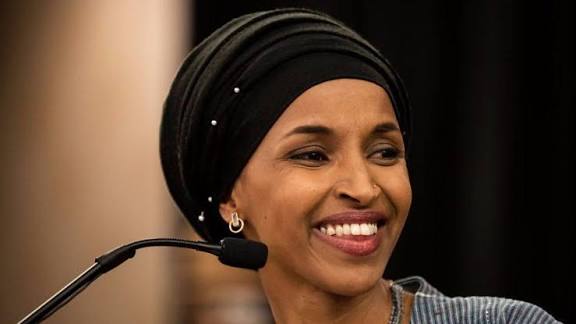
As House Democrats prepare to populate committee seats following their recent electoral gains, key leadership decisions loom. Among the most consequential is the potential return of Rep. Ilhan Omar to the House Foreign Affairs Committee. With senior Democrats like ranking member Rep. Greg Meeks confirming that Omar has the choice to chair the Africa Subcommittee, Washington faces a potential shift in its diplomatic posture toward the Horn of Africa one that risks compounding regional instability through a rigid commitment to a “One Somalia” doctrine.
The Ambition and the Avenues Omar has made no secret of her desire to reclaim her position on Foreign Affairs after being removed by House Republicans in 2023. “I would love to,” she noted recently regarding her return, while acknowledging she is also considering a bid for the Appropriations Committee. However, if she chooses Foreign Affairs, her seniority places her in line to lead the Africa subpanel—a position currently held by Rep. Sara Jacobs While committee assignments remain fluid, Meeks’ recognition of Omar’s right of first refusal signals that the gavel is hers for the taking.
Should she assume the chairmanship, her leadership would grant her a influential platform from which to shape U.S. foreign policy toward Sub-Saharan AfricamThe “One Somalia” Frame and Regional Complexity The primary concern regarding Omar’s prospective chairmanship lies in her foreign policy framework regarding the Horn of Africa. Regional observers point to her persistent alignment with Mogadishu’s centralized vision often summarized as a strict “One Somalia” policy. While maintaining territorial integrity is a conventional principle of international diplomacy, applying it rigidly to the complex dynamics of modern Somalia overlooks critical regional realities.
The Horn of Africa is currently defined by delicate power balances Somaliland’s De Facto Independence: Somaliland has maintained functional self-governance, democratic elections, and relative stability for over three decades, operating independently of Mogadishu Federal Member State Friction: Regional states like Puntland increasingly clash with Somalia’s federal government over constitutional reforms, revenue sharing, and security autonomy Ethiopia-Somaliland MoU: Recent diplomatic moves, such as Ethiopia’s memorandum of understanding with Somaliland regarding sea access, have exacerbated tensions across the region.
A congressional subcommittee chair who views regional affairs primarily through the lens of Mogadishu’s federal sovereignty risks alienating key democratic partners like Somaliland and escalating friction with regional heavyweights like Ethiopia Complicating Washington’s Africa Strategy U.S. strategy in the Horn of Africa requires pragmatic engagement, balancing counterterrorism priorities against the Al-Shabaab threat with diplomatic flexibility to encourage regional trade, security cooperation, and democratic governance.
If Omar utilizes the subcommittee chairmanship to push an unyielding pro-Mogadishu agenda, Washington’s approach to the region risks becoming predictable and unbalanced Undermining Pragmatic Diplomacy: A heavy-handed emphasis on Mogadishu’s primacy could limit Washington’s ability to engage directly with stable autonomous regions that serve as crucial buffers against extremism.
Fueling Polarization: Omar’s outspoken stance on Somali domestic politics has previously drawn scrutiny. As subcommittee chair, personal political convictions could be conflated with official U.S. foreign policy, signaling to local actors that Washington favors specific factions over broader regional stability Institutional Friction: A hardline focus on central government sovereignty could put the subcommittee at odds with the State Department and Department of Defense, which often rely on pragmatic local partnerships across Somaliland and federal states to conduct security operations.
The House Democratic Caucus faces tough decisions as it divvies up panel gavels. While Rep. Ilhan Omar’s seniority gives her a strong claim to the Africa Subcommittee, her policy preferences regarding the Horn of Africa carry real-world geopolitical consequences. At a time when the region requires nuanced, flexible diplomatic engagement, elevating a foreign policy stance centered strictly on “One Somalia” could inadvertently deepen divisions, frustrate regional allies, and complicate Washington’s broader strategic objectives in East Africa.