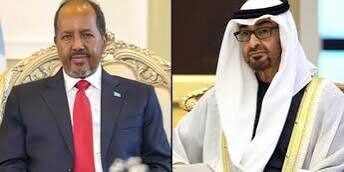
Somalia has ordered the United Arab Emirates’ ambassador to leave within 72 hours, recalled its own ambassador from Abu Dhabi, and accused the Gulf state of undermining its sovereignty and territorial integrity. The UAE has responded by accusing Mogadishu of allowing internal political struggles to damage bilateral relations. But this diplomatic confrontation goes far beyond the expulsion of an ambassador. At its centre is a struggle over who controls Somalia’s foreign relations, security partnerships, and strategic infrastructure, and how far external powers can exercise influence through the country’s federal divisions.
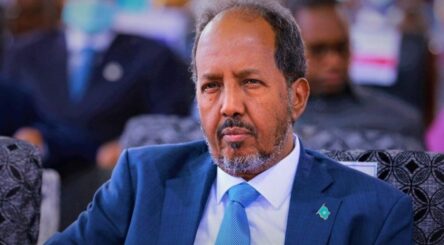
On November 19, Somalia’s Council of Ministers ordered the UAE ambassador to leave the country within 72 hours and recalled Somalia’s ambassador from Abu Dhabi for consultations. The decision followed accusations by President Hassan Sheikh Mohamud that the UAE was supporting armed forces outside federal control and undermining Somalia’s national unity. Mogadishu also instructed its foreign ministry to inform international governments and organisations about what it describes as Emirati interference.
Abu Dhabi condemned the decision as escalatory and hostile, arguing that Somalia was allowing internal political power struggles to undermine relations between the two countries. The UAE also pointed out that it had already closed its embassy in Mogadishu and withdrawn diplomatic personnel in January 2026 following earlier tensions over Somalia’s cancellation of bilateral agreements.
The confrontation reflects a much deeper deterioration in relations. Somalia is challenging the UAE’s political, commercial, and security relationships with regional administrations, while Abu Dhabi maintains that its engagement should not be subordinated to Mogadishu’s domestic political
disputes. The central issue is whether Somalia can establish a coherent federal foreign policy while external actors continue to cultivate relationships with authorities beyond the federal government.
The UAE has developed a substantial economic and security presence in Somalia over the past decade. Its engagement includes investments in strategic ports, military training, security cooperation, and commercial infrastructure. Its relationships with Somaliland, Puntland, and Jubbaland have provided Abu Dhabi with influence across strategically important parts of the Somali coastline.
For the UAE, these relationships serve broader economic and geopolitical interests. Somalia occupies a strategically important position along the Gulf of Aden and the approaches to the Red Sea. Its coastline offers access to vital maritime routes, while ports such as Berbera, Bosaso, and Kismayo have commercial and strategic significance. Developing relationships with regional administrations therefore gives Abu Dhabi economic opportunities and a wider regional footprint.
However, these relationships have created a fundamental dispute with Mogadishu. Somalia’s federal government argues that agreements involving national ports, defence, and security arrangements cannot be concluded independently of the constitutional federal authorities. It has particularly objected to military structures and security partnerships operating outside the national command framework.
This is the substance of Somalia’s sovereignty argument. Foreign governments cannot disregard the constitutional authority of a recognised national government simply because regional administrations offer alternative political or commercial arrangements. At the same time, Somalia’s federal system requires meaningful cooperation with its constituent states. The dispute cannot be resolved through declarations of federal authority alone. Mogadishu must also establish the political and institutional mechanisms necessary to exercise that authority.
Perhaps the most consequential dimension of this confrontation is the relationship between Mogadishu and Somalia’s federal member states. Somaliland, Puntland, and Jubbaland have maintained relationships with Abu Dhabi that the federal government considers inconsistent with its national sovereignty. Earlier this year, Mogadishu annulled its agreements with the UAE, including port, defence, and security arrangements. However, regional authorities rejected the federal government’s attempt to invalidate agreements involving territories under their administration.
This reveals the structural weakness confronting Somalia’s federal government. Its international recognition gives it authority to represent the country diplomatically, but that recognition does not automatically translate into effective political control across the federation. Where regional administrations maintain separate external partnerships, the federal government struggles to implement a unified foreign and security policy.
The timing makes the situation even more complicated. Somalia is experiencing an internal political crisis involving disagreements over constitutional arrangements and the electoral process. The recent political confrontation has included armed clashes in Mogadishu, while the country’s Supreme Court has ruled on President Hassan Sheikh Mohamud’s term and called for elections within 90 days. The closure of the United Nations political mission has also removed an important channel that previously supported negotiations between Somali political actors.
These domestic divisions weaken Mogadishu’s diplomatic position. They also create opportunities for external actors to deepen relationships with political authorities whose interests do not necessarily align with the federal government. The UAE’s response, therefore, is not entirely disconnected from Somalia’s internal political environment. But domestic fragmentation does not invalidate Somalia’s right to determine the framework governing its foreign relations.
The federal government’s challenge is to turn its sovereignty argument into an effective political settlement with the regional administrations. Without resolving the federal dispute, diplomatic confrontation with Abu Dhabi alone will not eliminate the underlying sources of Emirati influence.
The consequences extend beyond Somalia’s bilateral relationship with the UAE. The country’s coastline occupies a strategically important position along the Gulf of Aden, connecting the western Indian Ocean with the Red Sea and Bab el-Mandeb. The competition for influence over ports, military facilities, and maritime infrastructure is therefore part of a wider geopolitical contest involving Gulf powers and other international actors.
The UAE’s relationships across the Somali coastline must be understood within this broader strategic environment. Its investments and security partnerships provide commercial access and regional influence, but they also create political sensitivities when they operate through authorities whose relationship with the federal government remains contested The dispute also intersects with the Somaliland question. Somalia has strongly opposed external
steps that could undermine its territorial integrity, including Israel’s recognition of Somaliland. Mogadishu has alleged that the UAE has played a role in developments that threaten its territorial unity. These allegations form part of Somalia’s wider concerns about Abu Dhabi’s regional relationships, although the specific claims require independent substantiation.
For the wider Horn of Africa, the danger is that strategic competition becomes increasingly entangled with domestic political divisions. External partnerships can provide investment, security assistance, and infrastructure development. But when competing regional authorities use these relationships to strengthen their positions against one another, the result can be deeper fragmentation and a more contested security environment.
This is particularly consequential for Ethiopia and other neighbouring countries. Somalia’s internal stability is closely connected to security across the Horn, including counterterrorism cooperation, maritime security, trade, and regional diplomatic relations. A prolonged breakdown between Mogadishu and Abu Dhabi could disrupt existing security arrangements and complicate cooperation against Al-Shabaab.
Somalia’s decision to expel the UAE ambassador marks a serious escalation in an already deteriorating relationship. But the deeper issue is not the diplomatic status of one ambassador. It is whether Somalia can establish a coherent national framework for managing its foreign relations, strategic infrastructure, and security partnerships.
The UAE must recognise that its economic and security interests cannot indefinitely be pursued through arrangements that disregard Somalia’s federal institutions and territorial integrity. Mogadishu, however, must also address the political divisions that allow external actors to cultivate competing relationships within the country.
Somalia cannot defend its sovereignty effectively through diplomatic expulsions alone. It needs stronger federal institutions, a negotiated relationship with its member states, and a unified national position on foreign security and commercial agreements.
Ultimately, the sovereignty of Somalia will depend not only on how it responds to external influence, but also on whether it can establish the internal political cohesion necessary to resist fragmentation.