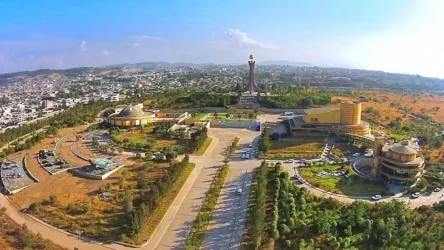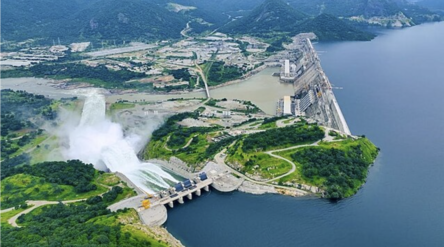
Egypt’s long struggle over the Nile, centered on Ethiopia’s Grand Ethiopian Renaissance Dam (GERD), has reached a decisive phase. The dam was inaugurated in September 2025 and is now a functioning part of Ethiopia’s power system, generating thousands of megawatts.
Ethiopia is already advancing plans for additional upstream projects on the Blue Nile. Cairo’s years of diplomatic pressure, appeals to the African Union, the United Nations Security Council, and Western capitals failed to halt construction or secure a binding agreement on filling and operations that met Egyptian demands. This outcome is not a temporary setback. It marks a structural shift in the Nile basin’s power balance that Egyptian officials and many public voices still struggle to acknowledge.
The facts on the ground are clear. Ethiopia financed and built the GERD largely on its own terms after negotiations repeatedly stalled. International law and contemporary practice favor equitable and reasonable utilization of shared watercourses rather than the absolute downstream vetoes embedded in colonial-era arrangements that Egypt still invokes. Ethiopia controls the source of the majority of the Nile’s flow and has demonstrated the capacity to develop it.
Downstream concerns about drought management, data sharing, and potential flow reductions are legitimate, yet they have not translated into enforceable constraints. Egypt’s water stress is real its per capita share has fallen toward scarcity thresholds, and the country depends almost entirely on the river but rhetorical escalation and appeals to historical rights have not altered Ethiopia’s trajectory.
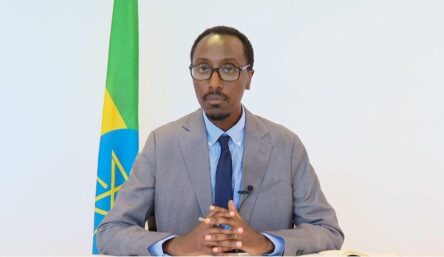
Recent Egyptian statements demanding compensation or branding the dam “illegitimate” reflect frustration more than leverage.Ethiopia’s broader rise compounds the difficulty. Membership in BRICS, growing regional economic weight, and continued hydropower ambitions signal a country that no longer accepts a subordinate position in basin politics. When Ethiopian officials or accounts speak of a “natural place among the greats,” they are articulating a self-perception backed by completed infrastructure and diversified partnerships.
Cairo’s inability to prevent the GERD or shape the next wave of projects has exposed the limits of its traditional influence. Military threats or talk of “self-defense” under the UN Charter raise the temperature without changing the engineering or diplomatic reality. A war over the dam would be catastrophic for the entire region and is not a serious policy option for a state already managing multiple external and domestic pressures.In this context, the performance of some Egyptian writers and journalists has been particularly counterproductive.
Instead of sober analysis of the new hydropolitical facts, a portion of the commentary remains trapped in sharp nationalism, dismissiveness, and occasional threats. Khaled Mahmoud, an Egyptian writer and journalist active on X, provides a consistent example. His posts on Ethiopia frequently adopt a tone of superiority and confrontation centered on the Nile, GERD, and regional ambitions. A typical recent intervention, responding to an official Ethiopian Arabic-language account asserting Ethiopia’s place among major powers and referencing a BRICS gathering in India, declared that Ethiopia’s real status is “second class as long as we [Egypt] are in the scene,” accompanied by video.
Similar output over time has included language about drums of war, red lines, the supposed ease of disciplining Addis Ababa, and Egypt’s inherent primacy.Such commentary is futile and unprofessional for several reasons. First, it substitutes emotion for strategy. Declaring a neighbor “second class” does not generate electricity for Egyptian households, secure drought protocols, or expand water efficiency at home. It reinforces Ethiopian narratives of Egyptian arrogance and colonial hangover, making compromise harder. Second, it misreads power.
Ethiopia completed a multi-billion-dollar dam against sustained opposition; empty claims of hierarchy do not reverse that fact. Third, it crowds out more useful public discussion technical assessments of reservoir operations, realistic options for cooperation on future dams, domestic water management reforms, or quiet diplomacy with other basin states. Professional journalism on a national security issue of this magnitude requires precision, evidence, and an honest appraisal of constraints, not performative dominance.
The pattern is not unique to one writer. Segments of Egyptian media and online discourse have long framed the dispute in zero-sum, existential terms that leave little room for the mutual gains possible in non-consumptive hydropower and coordinated basin management. Ethiopia’s argument that the GERD is primarily for electricity and can regulate flow in ways that benefit downstream users has gained traction internationally precisely because Egypt’s counter-messaging has often remained maximalist.
When negotiations fail and infrastructure proceeds anyway, the public is left with escalating rhetoric rather than adjusted policy.Egypt is not without cards. Its size, military capacity, Arab and international relationships, and genuine water vulnerability give it standing. Sudan’s parallel concerns offer potential alignment. Technical cooperation on drought rules, joint monitoring, and shared benefits from additional generation remains possible if both sides prioritize practicality over prestige.
Yet continuing to treat Ethiopia as a junior actor that can be talked into submission, or that exists in Egypt’s shadow, is a losing approach. The Nile debate has already moved past the stage where colonial treaties and superior status claims determine outcomes. Ethiopia has built and is operating. Further projects are under discussion. The question for Cairo is whether it will adapt to the 2026 reality or persist with strategies that have already proven insufficient.Commentators who specialize in dismissive nationalism and threatening tone do their audience a disservice.
They amplify frustration without illuminating options. Egypt’s interests on the Nile require clear-eyed realism, professional analysis, and sustained diplomacy not declarations that a rising upstream neighbor remains “second class.” The longer such unprofessional commentary dominates the public conversation, the harder it becomes for Egyptian policy to adjust to a basin in which power is more evenly distributed and infrastructure is already in place. The GERD is operating. The debate has moved on. Rhetoric that refuses to follow only deepens the loss.