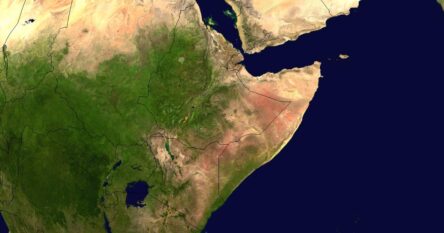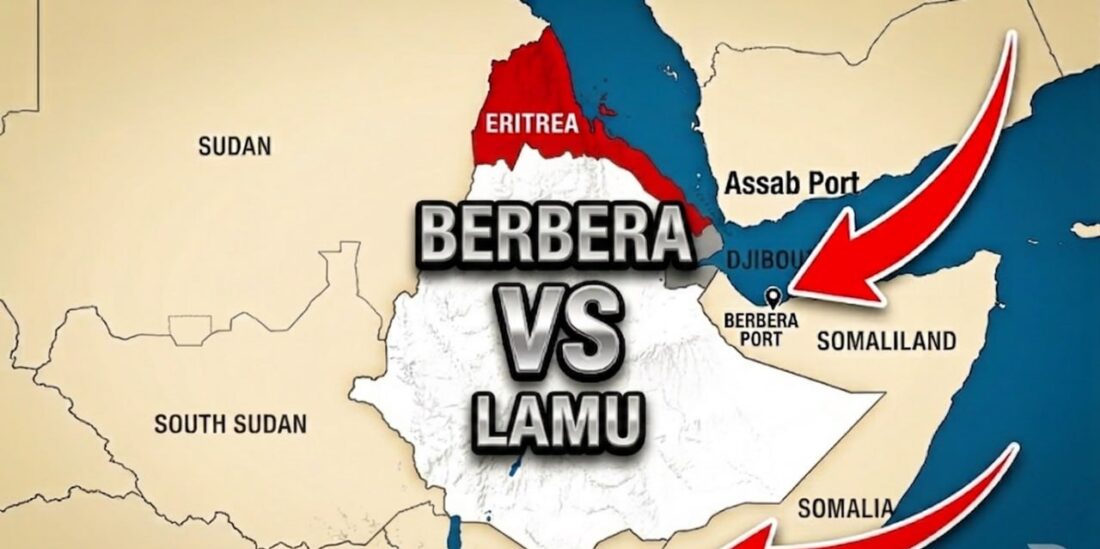
“For decades, Ethiopia has been a ‘land-locked giant,’ its economic heartbeat dependent on a single lifeline through Djibouti. But today, a silent war is being fought not with weapons, but with concrete, cranes, and deep-water berths. From the suspension of services at Berbera to the massive multi-billion dollar ambitions of Kenya’s Lamu Port, the race to control Ethiopia’s trade is entering a dangerous new phase. By the end of this video, you’ll see the secret data that shows which regional power is actually winning the fight for the Horn of Africa.”
“Many analysts look at these ports as simple logistics hubs. They’re wrong. These are geopolitical chess pieces. If Ethiopia successfully diversifies its trade, the entire power balance of East Africa shifts overnight. But there’s a problem. Recent suspensions and regional tensions are making the ‘Berbera dream’ look more like a gamble. Is Kenya’s LAPSSET corridor ready to step in, or is Ethiopia about to find itself more isolated than ever? Let’s dive into the numbers.”
“Berbera was supposed to be the game-changer. Backed by DP World and the UAE, it offered Ethiopia a direct alternative to Djibouti. Your comments on our last video pointed out the strategic importance of this route, but recent suspensions have raised a red flag. When a global shipping giant like Maersk pauses operations, it isn’t just about ‘operational issues’ it’s a signal of regional instability. If the Berbera corridor stalls, Ethiopia loses its most immediate secondary lung. This leaves a massive opening for a southern neighbor.”
“This brings us to Kenya. The Lamu Port, part of the LAPSSET corridor, is one of Africa’s most ambitious infrastructure projects. Unlike the established routes, Lamu is built for the largest ships on the planet. But the challenge isn’t the water; it’s the land. Over 1,000 kilometers of terrain stand between Lamu and the Ethiopian border. While the ‘Kenya vs. Ethiopia’ rivalry is often discussed in terms of GDP, the real competition is now about who can build the fastest road to
the sea. Data suggests that if Kenya completes its rail link first, the economic gravity of the Horn will shift south for the first time in a century.”
“So, who wins? Djibouti currently handles over 90% of Ethiopian trade, but that monopoly is crumbling. Our analysis shows that Ethiopia isn’t just looking for one winner; they are playing Berbera and Lamu against each other to drive down costs. However, the ‘Port War’ has a hidden cost: regional tension. As Somalia, Somaliland, Kenya, and Djibouti vie for these billions in transit fees, the risk of a diplomatic or even military flare-up grows. The data is clear: the country that secures Ethiopia’s cargo doesn’t just get the money they get the political leverage over the region’s fastest-growing economy.”