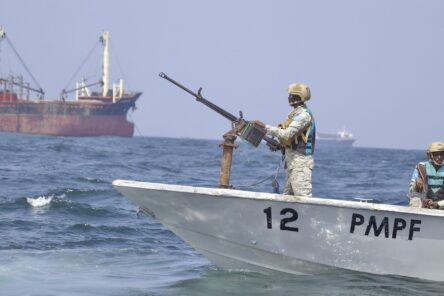
As of late April 2026, the Red Sea is no longer just a trade route, it’s a danger zone. With the hijacking of the oil tanker Honour 25 and the seizure of the Sward, Somali piracy has returned with a vengeance. But while the world watches the headlines, for Ethiopia, this isn’t just news, it’s an existential threat. Today, we analyze why the near-collapse of Red Sea security could bring the Ethiopian economy to a standstill.
You might think maritime security is a problem for foreign navies. You’d be wrong. With 95% of Ethiopia’s trade flowing through Djibouti, every hijacked ship and every spike in insurance premiums is a direct tax on the food, fuel, and fertilizer that 120 million Ethiopians depend on. If the Red Sea closes, Ethiopia’s heart stops beating. Here is why ‘passive observation’ is no longer an option.
We are seeing a dangerous convergence. First, the resurgence of piracy driven by instability in Somalia. Second, the residual Houthi threats. And third, the massive supply chain shocks from the 2026 Iran war. This ‘Triple Threat’ has tripled oil prices in parts of our region and drained foreign exchange reserves. When the UK Maritime Trade Operations raises the threat level to ‘Substantial,’ it’s a signal that the global safety net is fraying. Ethiopia can no longer outsource its survival to others.
International navies are distracted by global crises. They have limited bandwidth. This is where regional ownership comes in. Ethiopia, as the region’s largest economy, has a legitimate stake in these waters. Whether through intelligence sharing with Puntland, diplomatic pressure via IGAD, or supporting hybrid security arrangements with Djibouti and Somaliland, the Horn of Africa must police its own backyard. Securing diversified port access like Berbera or Lamu is only half the battle. You have to secure the water that leads to them.
The April 2026 piracy spike is a wake-up call. Ethiopia’s size and strategic position give it the leverage to shape a new maritime order. By taking a lead role in security, Ethiopia doesn’t just protect its own cargo, it demonstrates regional leadership. The era of being a landlocked bystander is over. In 2026, stability is a shared responsibility.