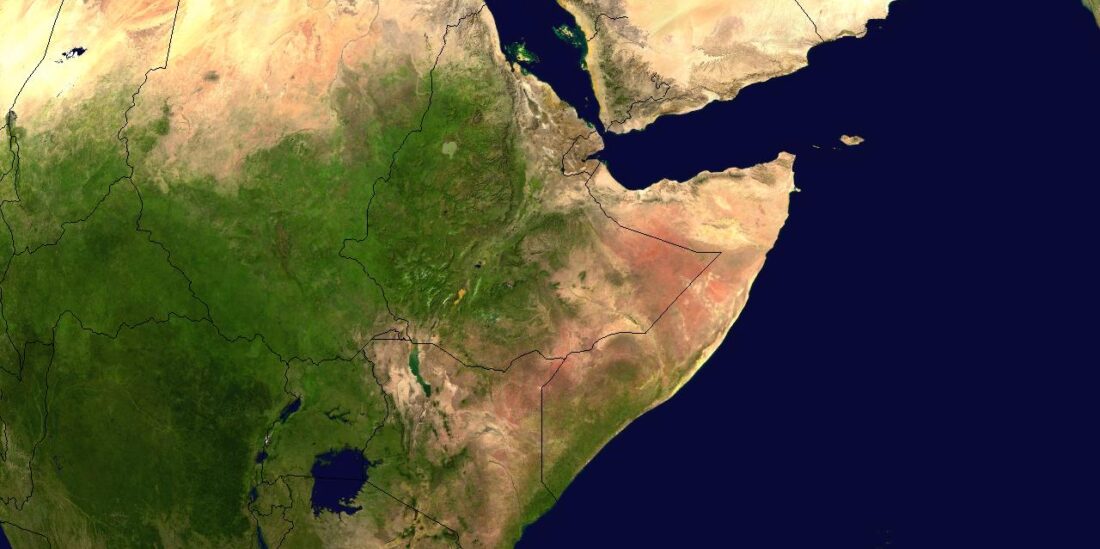
From a bird’s-eye view, the Red Sea appears as a narrow artery pulsing with global commerce. Zoom closer, and the perspective shifts: for landlocked Ethiopia, it is the singular vein supplying oxygen to 120 million people. Today, that lifeline is under acute stress. The hijacking of the oil tanker Honour 25 on April 21, 2026, followed days later by the seizure of the cement carrier Sward off Somalia’s coast, signals a sharp resurgence of piracy.
While distant capitals debate naval patrols, Addis Ababa cannot afford detachment. Over 95% of Ethiopia’s trade still flows through Djibouti’s ports. Every delayed ship, every spiked insurance premium, directly inflates the cost of food, fuel, and fertilizer.
From a Regional Lens Viewed through Ethiopia’s strategic aperture, three converging risks demand urgent attention. First, Somali piracy has roared back, exploiting naval resources diverted elsewhere. Pirates operate close to shore, hijacking vessels and anchoring them near Garacad or Bander Beyla, turning historic patterns into present danger. Second, residual Houthi capabilities linger despite reduced attacks post-2025 ceasefires. The Bab el-Mandeb Strait remains a fragile chokepoint where missiles, drones, or opportunistic boardings can escalate quickly. Third, the 2026 Iran war delivered massive supply shocks. Disruptions around the Strait of Hormuz drove Brent crude prices surging over 50% at peaks, straining foreign exchange reserves already stretched thin in the Horn. Oil at elevated levels cascades into higher transport costs, inflation, and reduced purchasing power for Ethiopian imports.
This convergence is no abstract headline. When UK Maritime Trade Operations flags elevated threats, the message is clear: the global safety net is thinning. International navies juggle multiple crises; they cannot guarantee Ethiopia’s corridor indefinitely.
Ethiopia has wisely pursued port diversification, Berbera in Somaliland, potential access via Lamu in Kenya, or renewed interest in Assab. These reduce over-reliance on Djibouti. Yet ports without secure sea lanes are half-measures. The waters approaching them must be policed. From a Horn-of-Africa perspective, stability requires local ownership. Ethiopia, as the region’s demographic and economic heavyweight, holds natural leverage to shape outcomes.
Practical steps include deeper intelligence sharing with Puntland authorities, who have historically curbed piracy through coastal governance. Hybrid arrangements with Djibouti and Somaliland could pool resources for joint patrols or monitoring. Ethiopia
could also invest in maritime domain awareness, satellite tracking, coastal radar, and trained personnel—without immediately building a blue-water navy. A modest naval or coast guard presence, focused on escorting national-flagged or high-value cargo near key routes, would signal resolve. Critics may call it overreach for a historically landlocked nation, but geography has changed politics. Ethiopia’s push for functional maritime access reflects pragmatic adaptation, not expansionism. Sovereignty today includes securing economic lifelines in an interconnected world.
Seen from 10,000 feet, the Red Sea crisis exposes the limits of distant powers managing regional disorder. Ethiopia can flip the script by leading on shared security. By contributing to anti-piracy efforts, supporting capacity-building in Somalia, and advocating for coordinated Horn-of-Africa maritime frameworks, Addis demonstrates maturity. This is not charity; it protects Ethiopian cargo while fostering a more resilient neighborhood.The April 2026 piracy spike serves as a stark wake-up call. Passivity risks economic strangulation. Proactive investment in maritime security through diplomacy, technology, intelligence, and measured operational capabilities offers the surest path to resilience.The Red Sea is Ethiopia’s lifeline. In an era of cascading global shocks, waiting for others to safeguard it is no longer viable. The era of being a passive bystander has ended. Stability in these waters is now a shared regional responsibility that Ethiopia, by virtue of its size and stakes, must help shoulder.
.