

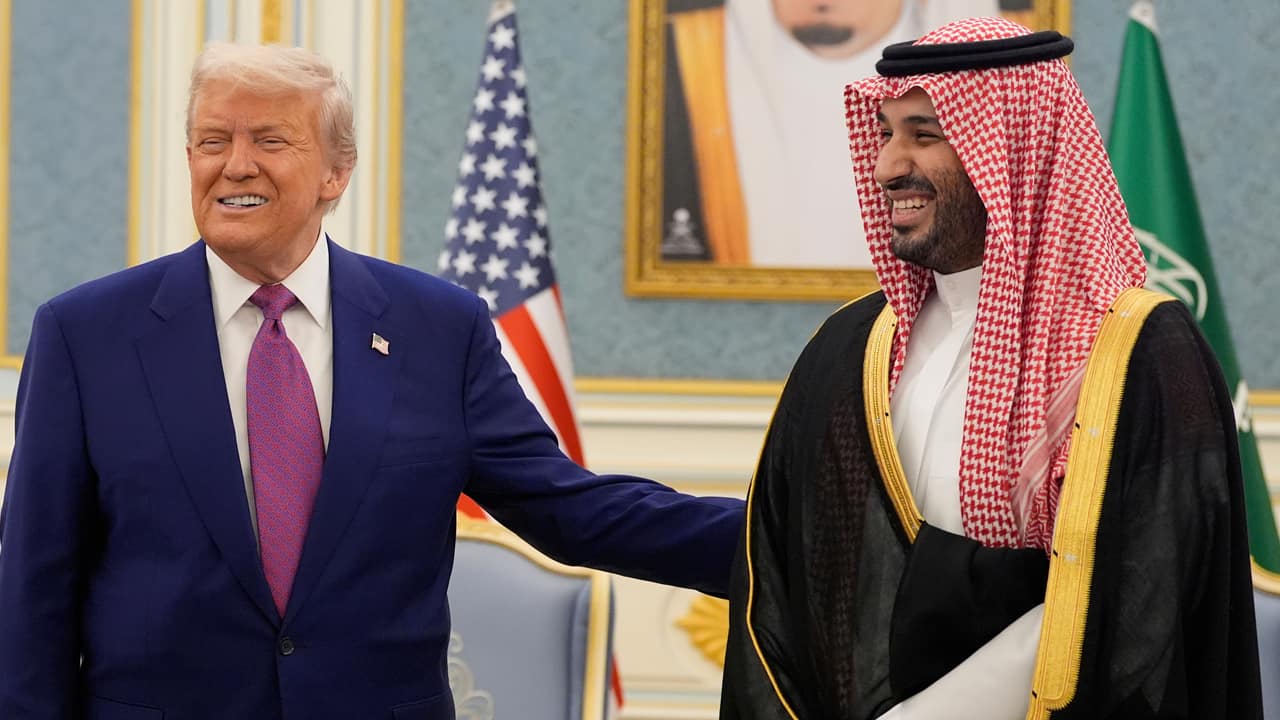
As Saudi Arabia’s crown prince lands in Washington, headlines focus on business deals and a possible F-35 fighter-jet sale a major step if it goes through.
Big arms packages are often sold as deterrence.
But in this region, they also tend to pull new players in and push old rivalries harder.
That is why the visit matters on both sides of the Red Sea.
Saudi Arabia brings unusual weight.
It is a top oil power in an oil-dependent world.
It anchors the petrodollar system and has kept the riyal pegged near 3.75 to the U.S. dollar for decades.
That link, plus large reserves and energy exports, gives Riyadh financial reach and political leverage far beyond the Gulf.
It isn’t a marginal actor; it is one of the region’s heavyweights.
From the Levant to the Horn of Africa, Saudi influence shows up in energy policy, security partnerships, and diplomacy.
Along the Red Sea, Riyadh helped launch a council bringing together Egypt, Sudan, Djibouti, Somalia, Eritrea, Yemen, and Jordan to coordinate maritime security.
The message was simple: Saudi wants a say in the rules of this corridor.
You see the same instinct in Yemen policy, in mediation over Sudan, and in financial support that moves quickly when friends are in trouble.
This is how a heavyweight operates through oil, money, diplomacy, and when needed, force.
But Saudi influence never moves in a vacuum.
The Gulf’s rivalries and partnerships travel with it.
The UAE builds and runs ports and logistics corridors, projecting power into Yemen, Somaliland, and along the Gulf of Aden, even as it rotates footprints up or down.
Turkey trains Somali forces from its base in Mogadishu and looks west across the Red Sea with its own ambitions.
Qatar channels aid and diplomacy to keep a seat at the table in Horn politics.
Iran backs actors opposed to Riyadh and Abu Dhabi, including the Houthis.
These rivalries start in the Gulf, but they play out on Red Sea shores in ports, airstrips, training missions, and the quiet details of financing.
This is where the Horn feels it.
In Yemen, years of fighting pushed surveillance, drones, and naval patrols across Bab al-Mandab and into the western littoral.
In Sudan, Saudi hosts talks even as outside money and weapons harden fronts and lengthen the war.
In Somalia and Somaliland, Gulf investments reshape trade lanes and political alignments, while Turkish training and Qatari diplomacy tug in their own directions.
In Eritrea and Ethiopia, Red Sea access and corridor projects become leverage points that outside powers influence heavily.
At face value, ports modernize and jobs arrive, but so do agendas.
Every runway built “for security” can tie local governments into someone else’s contest.
That’s why the Washington visit matters beyond the photo-ops.
If Saudi exits with deeper defense ties and new tools, it will project that confidence into the same theaters where its influence is already strong the Middle East, the Red Sea, and the Horn.
More capability can deter real threats; it can also raise the temperature if rival capitals answer in kind.
The difference will come down to how deals are written and how force is used: toward stabilizing trade routes and political settlements, or toward another round of proxy moves that crowd coastal states with other people’s ambitions.
If Gulf interest becomes transparent investment, balanced security ties, and real local gains safer sea lanes, steadier prices, and jobs—then the region wins.
But history teaches more guns bring fewer solutions.
These are the lesson from Yemen’s long war, Sudan’s grinding conflict, and the Red Sea’s rising tension, where foreign rivalries keep fueling the fire.
The road to stability and peace for the Horn and the Red Sea is long and difficult and, too often, it runs through Riyadh, Doha, and Abu Dhabi and other distant capitals, rather than through the capitals of the Horn itself.