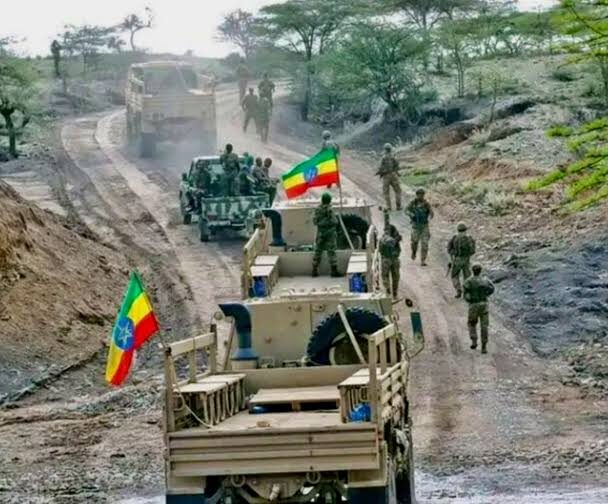
In the volatile Horn of Africa, few nations have demonstrated the strategic restraint that Ethiopia has shown toward its northern neighbor, Eritrea. Despite repeated provocations territorial incursions, support for armed groups inside Ethiopian borders, and open displays of defiance Addis Ababa has largely prioritized diplomacy, internal development, and the avoidance of full-scale war.
This patience is not weakness; it is a commitment to regional stability and national progress at a time when escalation could devastate millions.The roots of tension run deep. Eritrea gained independence from Ethiopia in 1993 after a long struggle. A brief period of cooperation gave way to the devastating 1998–2000 border war, which killed tens of thousands.
A formal peace agreement in 2018 under Prime Minister Abiy Ahmed ended the state of war and raised hopes for normalized relations. That optimism frayed after the 2020–2022 Tigray conflict and the Pritoria agreement. Ethiopian officials have accused Eritrea of occupying Ethiopian territory along sections of the shared border, particularly in areas of northern Tigray, and of providing material support to militant groups operating inside Ethiopia.
These groups have included hardline elements of the TPLF and certain Fano militias in the Amhara region. Joint military maneuvers near the northwestern border and the movement of heavy weaponry have been cited by Ethiopian authorities as evidence of coordinated efforts to destabilize the federal government. In February 2026, Foreign Minister Gedion Timothewos formally described Eritrean troop incursions as “acts of outright aggression” and demanded immediate withdrawal and an end to cooperation with armed groups.
The pattern continued into August 2026. Reports detailed senior Eritrean military commanders entering the Ethiopian border town of Zalambesa in a highly visible manner, accompanied by the flying of the Eritrean flag. Subsequent accounts indicated the deployment of tanks and other military assets into parts of the Tigray region under the banner of an alliance sometimes referred to as “Tsimdo.”
These actions constitute clear challenges to Ethiopia’s sovereignty and territorial integrity.Throughout these provocations, Ethiopia’s response has been measured. Rather than launching immediate retaliatory military operations, Addis Ababa has issued diplomatic communications, documented the violations, and maintained channels for dialogue. Ethiopian leaders have repeatedly framed the country’s need for reliable Red Sea access lost with Eritrea’s independence as an existential economic interest, while stating a preference for negotiated arrangements over force.
Prime Minister Abiy and senior officials have emphasized building domestic defensive capacity and focusing on internal security rather than opening a front. Landlocked Ethiopia continues to pay substantial fees for access through Djibouti and other ports. Persistent border tensions divert attention and resources from economic recovery and nation-building. Proxy dynamics fuel instability inside Ethiopia, prolonging suffering for civilians in contested areas.
Yet the alternative full-scale interstate war would be catastrophic. The 1998–2000 conflict and the Tigray war demonstrated the enormous human, economic, and regional toll of open fighting in the Horn. Ethiopia’s patience has helped contain the crisis, preserved space for potential mediation, and upheld the principle that disputes between sovereign states should be resolved through law and negotiation rather than faits accomplis.Critics sometimes portray Ethiopia’s sea-access statements as inherently aggressive.
In reality, a nation of more than 120 million people with limited coastline options has legitimate developmental interests. Ethiopia has explored commercial arrangements with multiple neighbors and has reiterated willingness to discuss mutual benefits, including port access, under frameworks that respect existing sovereignty where possible. Eritrea’s reported strategy of leveraging internal Ethiopian divisions and maintaining military presence on Ethiopian soil undermines the very peace both countries once celebrated.Ethiopia’s approach reflects a broader strategic maturity.
By absorbing provocations without immediate large-scale retaliation, the government has sought to deny external actors the narrative of Ethiopian aggression while exposing the pattern of interference. It has also kept international attention on the need for de-escalation and respect for borders. This does not mean infinite forbearance. Officials have made clear that restraint is neither indefinite nor unconditional. Continued occupation of territory, arming of proxies, and public violations of sovereignty eventually force harder choices.
The people of both countries share deep historical, cultural, and economic ties. Ordinary Ethiopians and Eritreans stand to gain far more from cooperation trade, infrastructure, and regional integration than from perpetual confrontation. Ethiopia’s patience has bought time for that possibility to remain open. It is now incumbent on Asmara to match that restraint by withdrawing forces from Ethiopian territory, ending support for armed groups, and engaging constructively on outstanding issues.
Sustainable peace in the Horn of Africa depends on mutual respect for sovereignty, not on testing the limits of a neighbor’s forbearance.Ethiopia’s record in the face of these challenges deserves recognition. Strategic patience, grounded in a preference for diplomacy and development, remains the wiser path, one that protects lives, preserves options, and upholds the possibility of a more stable future for the region.