Rising tensions between Israel and Turkey were underscored this week by reported Israeli airstrikes on the Abu al-Duhur airfield in Syria’s Idlib province. The strikes, which followed a Turkish military delegation’s visit to the site, damaged the runway and infrastructure in what many analysts interpreted as a warning against Turkish efforts to expand influence and help rehabilitate Syrian military facilities.
While claims that the attack specifically destroyed Turkish military equipment remain unconfirmed, the episode highlights the deepening strategic rivalry between the two countries. That competition is not confined to Syria; it extends into the Red Sea and Horn of Africa, where Turkey is expanding its presence, Israel prioritizes the security of vital sea lanes, Egypt seeks to protect its Suez Canal interests, the United Arab Emirates invests in alternative port networks, and landlocked Ethiopia treats reliable Red Sea access as an existential necessity.
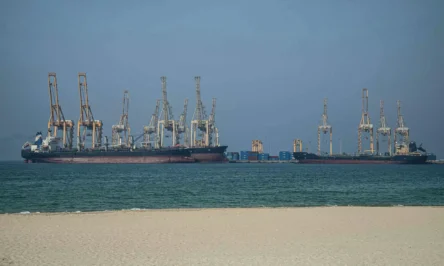
Turkey’s advance forms part of its “Blue Homeland” doctrine, projecting power from the Eastern Mediterranean into the Red Sea. Ankara’s strongest position is in Somalia, where it operates Camp TURKSOM, its largest overseas military base, trains Somali forces, manages key infrastructure including Mogadishu’s port, and has secured oil and gas exploration rights. Naval deployments have been extended into Somali waters and the Gulf of Aden; advanced aircraft have been sent, and discussions continue around a possible additional facility near Laas Qoray.
Turkey has also backed a Saudi-led Red Sea maritime security coalition and maintains longer-term interest in sites such as Sudan’s Suakin Island. These steps give Ankara commercial stakes, training leverage, and a foothold near a critical chokepoint through which roughly 12 percent of global trade passes.Israel views the Red Sea as a core security domain. As a littoral state, it depends on free navigation for trade and energy. Houthi attacks in recent years highlighted the vulnerability of the southern approaches.
In December 2025 Israel became the first UN member state to recognize Somaliland, opening pathways for security cooperation and potential monitoring or logistics presence near Berbera to oversee the Bab el-Mandeb Strait. Jerusalem sees Turkish expansion in Somalia and parallel moves in Syria and the Eastern Mediterranean—as part of an expanding strategic perimeter that could constrain Israeli freedom of action. Securing sea lanes and cultivating alternative partnerships remain central.The United Arab Emirates plays a pivotal enabling role.
Abu Dhabi has invested heavily in regional ports, most notably upgrading Berbera in Somaliland, and has supported Ethiopia’s earlier efforts to secure sea access through arrangements with Hargeisa. Emirati capital and infrastructure capacity often align with Israeli interests, forming part of a pragmatic network that also engages Ethiopia and frequently competes with Turkish projects in Somalia.Egypt approaches the region differently. Cairo prioritizes the security and revenue of the Suez Canal, which remains sensitive to disruptions farther south.
It has long opposed non-littoral powers gaining permanent footholds that could alter the balance among Red Sea states. Egypt coordinates closely with Saudi Arabia, has strengthened ties with Somalia and Eritrea, and remains wary of any Ethiopian maritime breakthrough that might enhance Addis Ababa’s strategic autonomy especially amid the ongoing dispute over the Grand Ethiopian Renaissance Dam. Cairo therefore tends to favor arrangements that reinforce Somalia’s territorial integrity and limit the scope of Somaliland-linked deals.Ethiopia sits at the center of these cross-currents. Since Eritrea’s independence in 1993, it has been landlocked; nearly 95 percent of its trade currently moves through Djibouti at significant cost and strategic risk.
Prime Minister Abiy Ahmed has framed secure Red Sea access whether through Assab, negotiated arrangements with Somalia, or earlier understandings involving Berbera as essential to national development and security. Turkey mediated a framework between Addis Ababa and Mogadishu that reaffirmed Somali sovereignty while opening pathways for Ethiopian maritime access. At the same time, Ethiopia cultivates relations with the UAE and maintains pragmatic ties with Israel.
It must balance carefully: closer alignment with the UAE-Israel-Somaliland track risks alienating Turkey, Egypt, and Somalia, while over-reliance on Turkish mediation can constrain other options.The result is a fluid and competitive landscape. The recent Idlib strikes illustrate how Israel-Turkey rivalry can flare in one theater while shaping calculations in another.
Turkey seeks durable presence along the trade routes. Israel focuses on keeping those routes open. The UAE supplies capital and alternative networks. Egypt works to preserve established littoral interests. For Ethiopia, success or failure in securing reliable sea access will shape its economic trajectory and its ability to navigate these overlapping rivalries in one of the world’s most strategic maritime corridors.